Pair of Stirrups late 18th-mid-19th century Mongolian These stirrups are uniquely Mongolian and are among the most elaborate and ornate examples known of their type. The Mongols are famous cavalrymen, renowned and feared for their prowess in horsemanship for more than 1500 years. As a natural consequence of this, in traditional Mongolian culture great importance was placed on equestrian equipment, with highly decorated saddles, tack, and stirrups serving as indicators of taste, wealth, and social status. Most surviving Mongolian equestrian equipment dates from the 19th century, when Mongolia was part of China under the Qing dynasty. In many cultures, stirrups, in addition to their functionality, were platforms for the display of ornament and craftsmanship, with the best examples becoming independent works of art, uniquely expressive of the applied arts in the cultures from which they originate. The degree and complexity of the decoration of this pair of stirrups, coupled with the fact
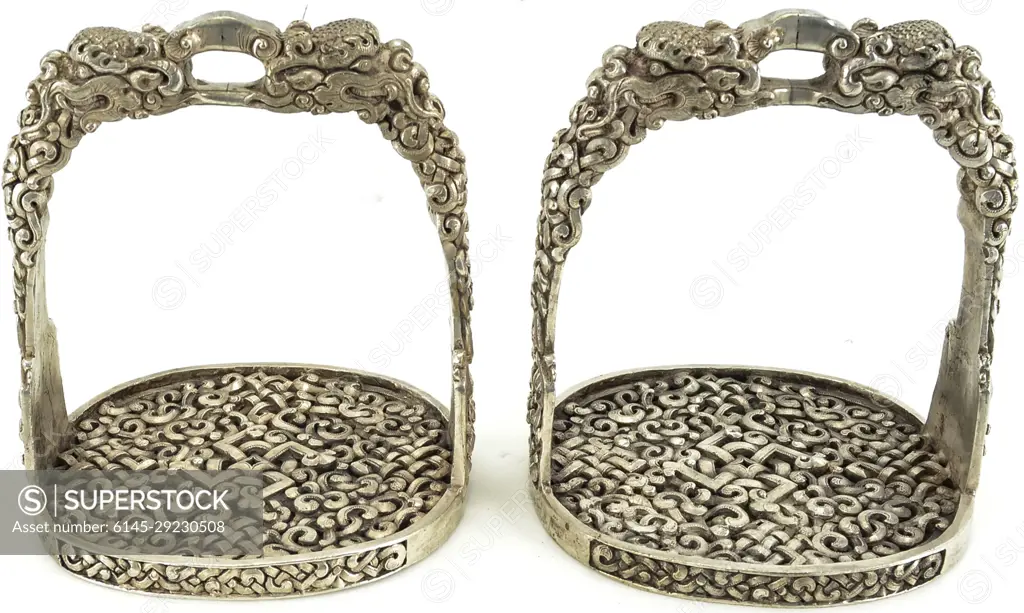
SuperStock offers millions of photos, videos, and stock assets to creatives around the world. This image of Pair of Stirrups late 18th-mid-19th century Mongolian These stirrups are uniquely Mongolian and are among the most elaborate and ornate examples known of their type. The Mongols are famous cavalrymen, renowned and feared for their prowess in horsemanship for more than 1500 years. As a natural consequence of this, in traditional Mongolian culture great importance was placed on equestrian equipment, with highly decorated saddles, tack, and stirrups serving as indicators of taste, wealth, and social status. Most surviving Mongolian equestrian equipment dates from the 19th century, when Mongolia was part of China under the Qing dynasty. In many cultures, stirrups, in addition to their functionality, were platforms for the display of ornament and craftsmanship, with the best examples becoming independent works of art, uniquely expressive of the applied arts in the cultures from which they originate. The degree and complexity of the decoration of this pair of stirrups, coupled with the fact by Piemags/PL Photography Limited is available for licensing today.
Looking for a license?
Click here, and we'll help you find it! Questions? Just ask!
Click here, and we'll help you find it! Questions? Just ask!
DETAILS
Image Number: 6145-29230508Royalty FreeCredit Line:Piemags/PL Photography Limited/SuperStockCollection:PL Photography Limited Contributor:Piemags Model Release:NoProperty Release:NoResolution:2761×1654