Pair of Flower Style Doors second half 17th century The flower style associated with the height of Mughal aesthetics and refinement finds expression in this pair of carved wood doors. The depiction of complete flowering plants, carved in low relief and placed in a symmetrical arrangement, is the hallmark of this style, which had its genesis in the reign of the Mughal emperor Jahangir (1605-27). In accordance with their patrons' interests, artists of this period studied European herbals, borrowing the techniques of combining front and side views and infusing the petals and leaves of the plants with a sense of movement. During the reign of Jahangir's son Shah Jahan (1627-58), and especially from the 1630s on, the plant studies were transformed into decorative motifs, arranged in rows to cover textiles, objects, and architectural spaces. As they were incorporated into stylized, symmetrically balanced compositions like those on the carved dadoes and inlaid panels at the Taj Mahal, the plan
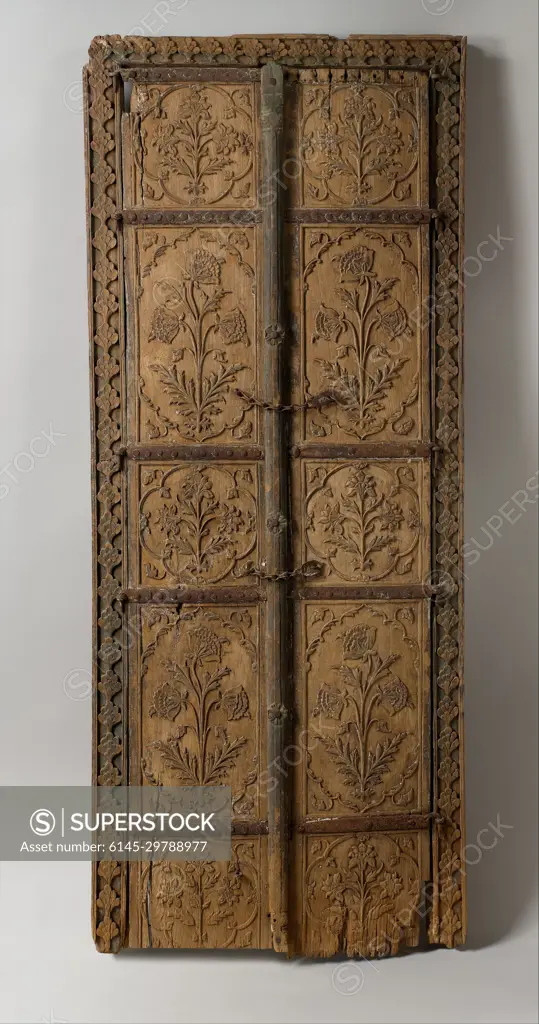
SuperStock offers millions of photos, videos, and stock assets to creatives around the world. This image of Pair of Flower Style Doors second half 17th century The flower style associated with the height of Mughal aesthetics and refinement finds expression in this pair of carved wood doors. The depiction of complete flowering plants, carved in low relief and placed in a symmetrical arrangement, is the hallmark of this style, which had its genesis in the reign of the Mughal emperor Jahangir (1605-27). In accordance with their patrons' interests, artists of this period studied European herbals, borrowing the techniques of combining front and side views and infusing the petals and leaves of the plants with a sense of movement. During the reign of Jahangir's son Shah Jahan (1627-58), and especially from the 1630s on, the plant studies were transformed into decorative motifs, arranged in rows to cover textiles, objects, and architectural spaces. As they were incorporated into stylized, symmetrically balanced compositions like those on the carved dadoes and inlaid panels at the Taj Mahal, the plan by Piemags/PL Photography Limited is available for licensing today.
Looking for a license?
Click here, and we'll help you find it! Questions? Just ask!
Click here, and we'll help you find it! Questions? Just ask!
DETAILS
Image Number: 6145-29788977Royalty FreeCredit Line:Piemags/PL Photography Limited/SuperStockCollection:PL Photography Limited Contributor:Piemags Model Release:NoProperty Release:NoResolution:2035×3866