Openwork furniture plaque with head of a sphinx. Culture: Assyrian. Dimensions: 4.12 x 4.5 in. (10.46 x 11.43 cm). Date: ca. 9th-8th century B.C..During the early first millennium B.C., ivory carving was one of the major luxury arts that flourished throughout the ancient Near East. Elephant tusks were carved into small decorative objects such as cosmetic boxes and plaques used to adorn wooden furniture. Gold foil, paint, and semiprecious stone and glass inlay embellishments enlivened these magnificent works of art. Based on certain stylistic, formal, and technical characteristics also visible in other media, scholars have distinguished several coherent style groups of ivory carving that belong to different regional traditions including Assyrian, Phoenician, North Syrian and South Syrian (the latter also known as Intermediate).Several ivories in the Metropolitan Museum's collection are from the Aramaean town of Arslan Tash, ancient Hadatu, in northern Syria just east of the Euphrates
This asset has restrictions and cannot be purchased online. Get in touch for more details.
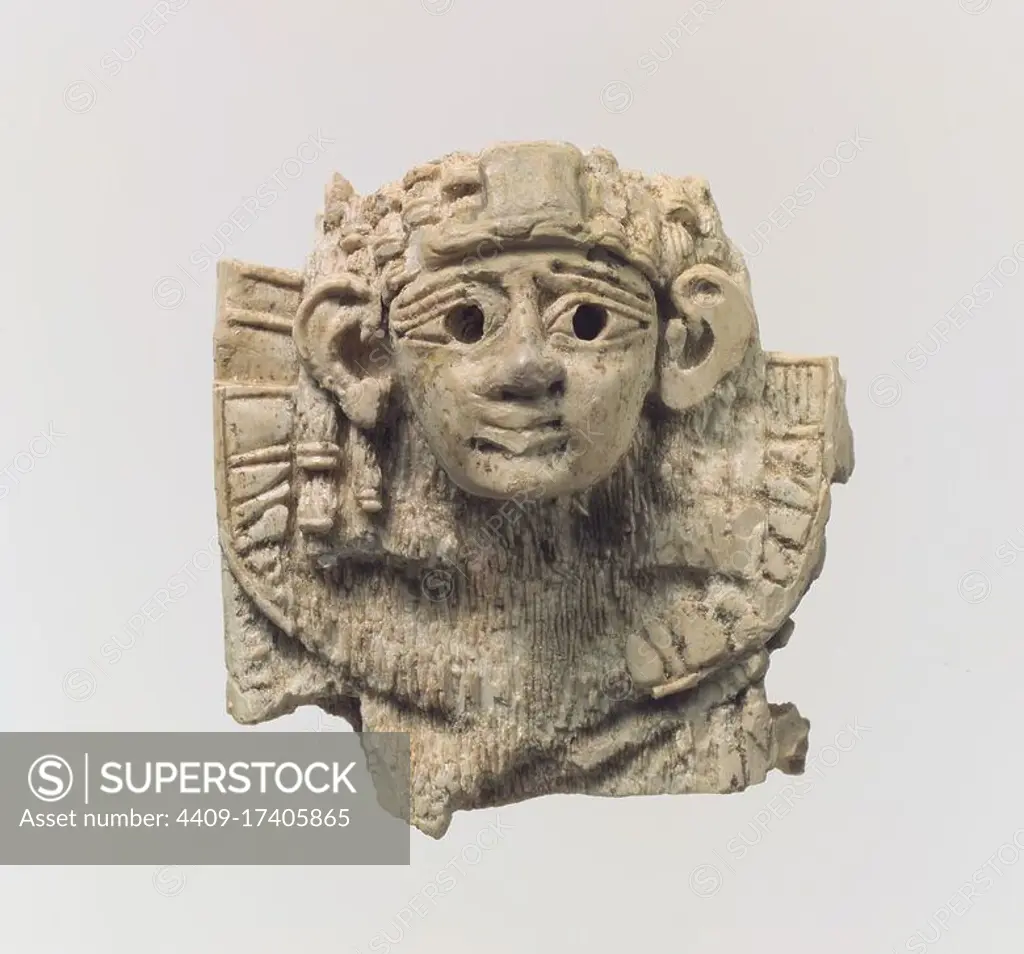
SuperStock offers millions of photos, videos, and stock assets to creatives around the world. This image of Openwork furniture plaque with head of a sphinx. Culture: Assyrian. Dimensions: 4.12 x 4.5 in. (10.46 x 11.43 cm). Date: ca. 9th-8th century B.C..During the early first millennium B.C., ivory carving was one of the major luxury arts that flourished throughout the ancient Near East. Elephant tusks were carved into small decorative objects such as cosmetic boxes and plaques used to adorn wooden furniture. Gold foil, paint, and semiprecious stone and glass inlay embellishments enlivened these magnificent works of art. Based on certain stylistic, formal, and technical characteristics also visible in other media, scholars have distinguished several coherent style groups of ivory carving that belong to different regional traditions including Assyrian, Phoenician, North Syrian and South Syrian (the latter also known as Intermediate).Several ivories in the Metropolitan Museum's collection are from the Aramaean town of Arslan Tash, ancient Hadatu, in northern Syria just east of the Euphrates by Album/Metropolitan Museum of Art, NY/Album Archivo is available for licensing today.
Looking for a license?
Click here, and we'll help you find it! Questions? Just ask!
Click here, and we'll help you find it! Questions? Just ask!
DETAILS
Image Number: 4409-17405865Rights ManagedCredit Line:Album/Metropolitan Museum of Art, NY/Album Archivo/SuperStockCollection:Album Archivo Contributor:Album / Metropolitan Museum of Art, NY Model Release:NoProperty Release:NoResolution:3965×3697