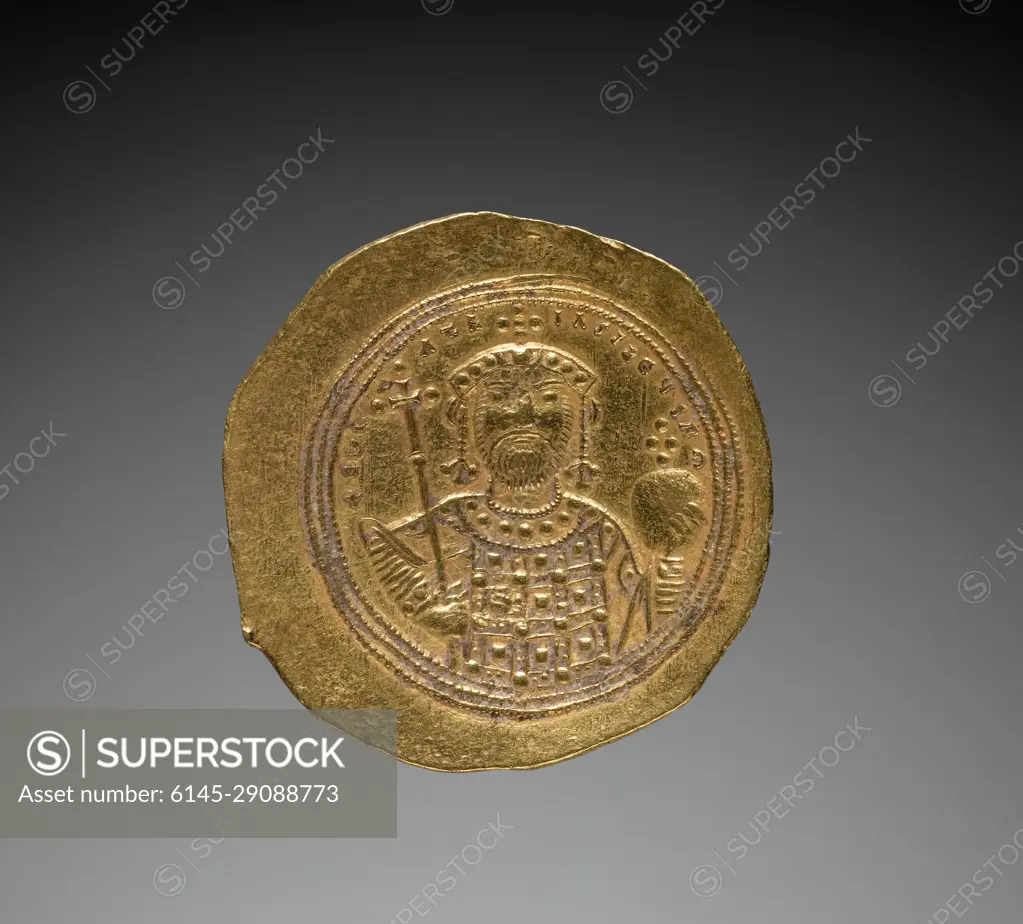
Nomisma with Constantine IX Monomachus (reverse), 1042-1055. Byzantium, 11th century. Gold; diameter: 2.9 cm (1 1/8 in.). Byzantine Gold Coins The vast number of surviving Byzantine coins attests to the level of trade across the empire. Controlled and supervised by the emperor, the producers of coins took care to represent his authority and reflect his stature. Talented artists were recruited to engrave the dies (molds) used for the striking of coins. Emperors increasingly came to include their heirs and co-emperors on their coinage, as well as other family members or even earlier rulers. Coins were recognized, then as now, as small, portable works of art. With their inscriptions and images, Byzantine coins provide valuable documentation of historical events and a record of the physical appearance of the emperors. The coins shown here include the solidus, the basic gold coin of 24 karats; the tremissis, a gold coin of one-third the weight and value of the solidus; and the nomisma, whi
SuperStock offers millions of photos, videos, and stock assets to creatives around the world. This image of Ancient Byzantine Gold Coin: Explore Historical Numismatic Artistry and Heritage by Piemags/PL Photography Limited is available for licensing today.
Looking for a license?
Click here, and we'll help you find it! Questions? Just ask!
Click here, and we'll help you find it! Questions? Just ask!
DETAILS
Image Number: 6145-29088773Royalty FreeCredit Line:Piemags/PL Photography Limited/SuperStockCollection:PL Photography Limited Contributor:Piemags Model Release:NoProperty Release:NoResolution:3400×3068