Noh Robe (Atsuita) with Cloud-Shaped Gongs and Chinese Flowers” first half of the 19th century Japan The term atsuita originally referred to high-quality fabrics imported from China as bolts rolled around thick wood boards” (atsu-ita). In the Muromachi period (1392-1573), warlords acquired these fabrics through private trade and presented them to Noh actors. The costumes made from such fabrics also came to be called atsuita. In the Edo period, these robes were made from twill-weave fabric produced in Japan and mainly worn by male leads playing warlords, gods, or demons. Costumes for violent gods and demons were decorated with powerful motifs, including dragons, clouds, zigzag patterns known as hammer-wheels on lightning,” and cloud-shaped, flat gongs, as seen on this robe.. Noh Robe (Atsuita) with Cloud-Shaped Gongs and Chinese Flowers”. Japan. first half of the 19th century. Twill weave silk brocade. Edo period (1615-1868). Textiles-Costumes
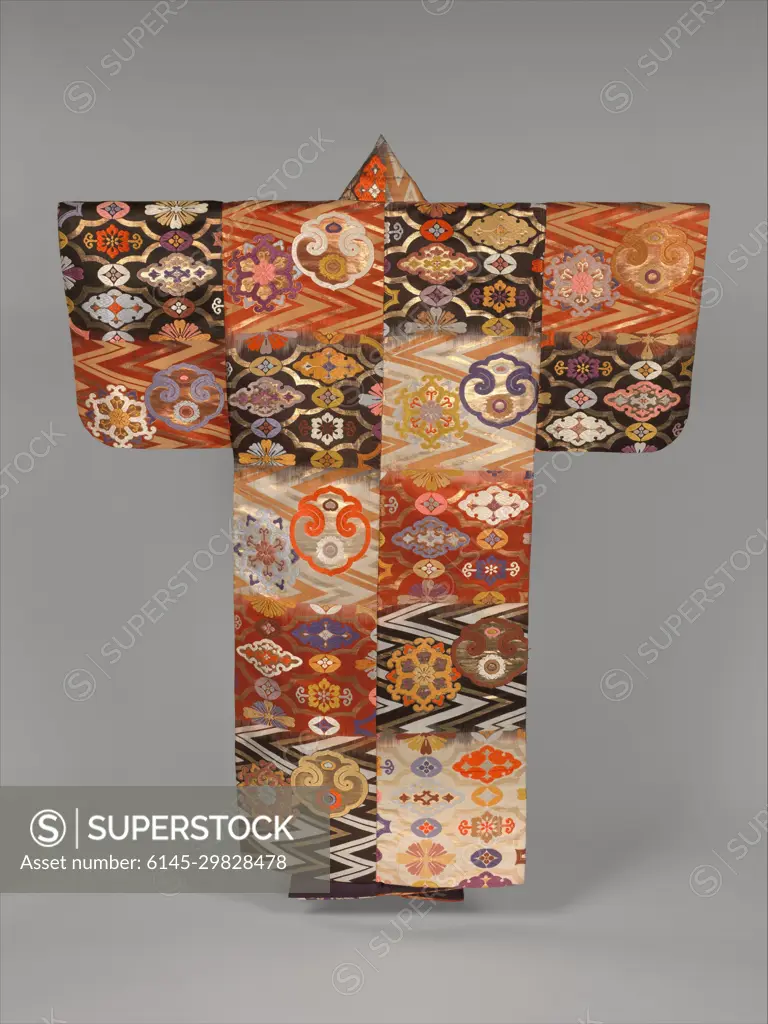
SuperStock offers millions of photos, videos, and stock assets to creatives around the world. This image of Noh Robe (Atsuita) with Cloud-Shaped Gongs and Chinese Flowers” first half of the 19th century Japan The term atsuita originally referred to high-quality fabrics imported from China as bolts rolled around thick wood boards” (atsu-ita). In the Muromachi period (1392-1573), warlords acquired these fabrics through private trade and presented them to Noh actors. The costumes made from such fabrics also came to be called atsuita. In the Edo period, these robes were made from twill-weave fabric produced in Japan and mainly worn by male leads playing warlords, gods, or demons. Costumes for violent gods and demons were decorated with powerful motifs, including dragons, clouds, zigzag patterns known as hammer-wheels on lightning,” and cloud-shaped, flat gongs, as seen on this robe.. Noh Robe (Atsuita) with Cloud-Shaped Gongs and Chinese Flowers”. Japan. first half of the 19th century. Twill weave silk brocade. Edo period (1615-1868). Textiles-Costumes by Piemags/PL Photography Limited is available for licensing today.
Looking for a license?
Click here, and we'll help you find it! Questions? Just ask!
Click here, and we'll help you find it! Questions? Just ask!
DETAILS
Image Number: 6145-29828478Royalty FreeCredit Line:Piemags/PL Photography Limited/SuperStockCollection:PL Photography Limited Contributor:Piemags Model Release:NoProperty Release:NoResolution:2911×3880