Noh Costume (Nuihaku) with Phoenixes and Peonies second half 18th century Japan Nuihaku robes are elegant Noh costumes with very fine embroidery applied on a metal-leaf ground. Mainly used in plays featuring young female protagonists, they are worn around the waist beneath sumptuous outer robes. In the Momoyama (1573-1615) and early Edo periods, before outer robes became lavish garments, nuihaku were the most splendid part of the costume and were themselves used as outer robes. This exquisite example in the phoenix flying through peonies” pattern is embellished with phoenixes, auspicious symbols of prosperity, fidelity, and good deeds as well as with peonies, the king of flowers,” representing good fortune and honor. The composition is based on a design created by Maruyama Ōkyo (1733-1795), a prolific Kyoto-based painter whose style incorporated Western naturalism into East Asian painting traditions.. Noh Costume (Nuihaku) with Phoenixes and Peonies 65353
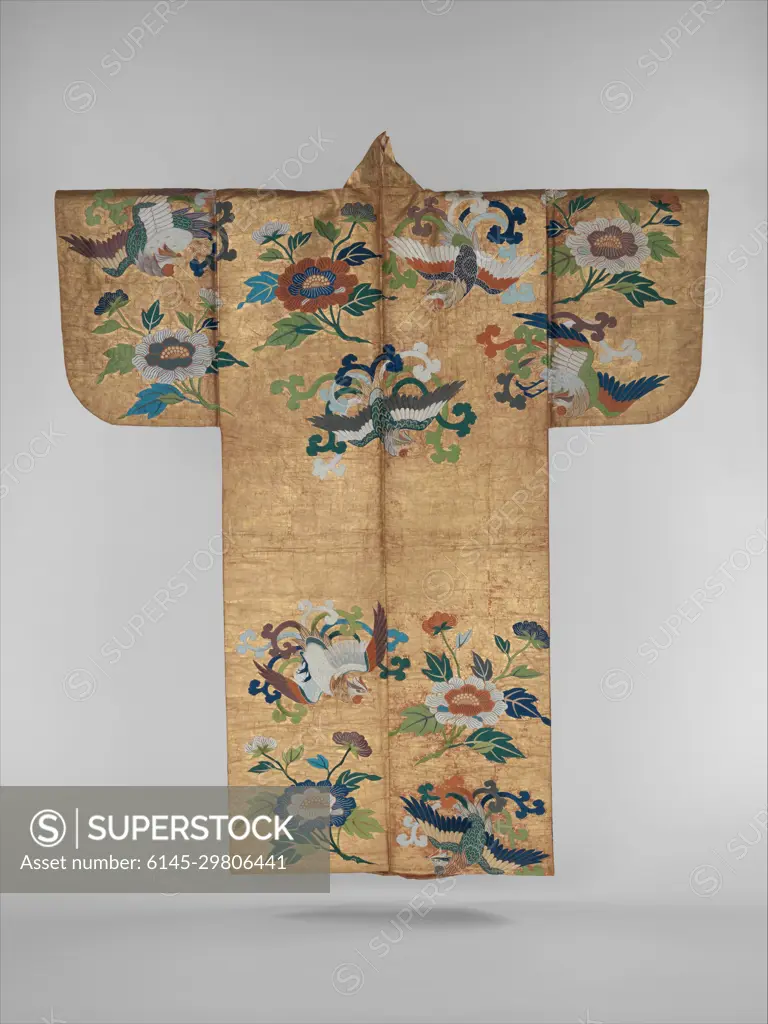
SuperStock offers millions of photos, videos, and stock assets to creatives around the world. This image of Noh Costume (Nuihaku) with Phoenixes and Peonies second half 18th century Japan Nuihaku robes are elegant Noh costumes with very fine embroidery applied on a metal-leaf ground. Mainly used in plays featuring young female protagonists, they are worn around the waist beneath sumptuous outer robes. In the Momoyama (1573-1615) and early Edo periods, before outer robes became lavish garments, nuihaku were the most splendid part of the costume and were themselves used as outer robes. This exquisite example in the phoenix flying through peonies” pattern is embellished with phoenixes, auspicious symbols of prosperity, fidelity, and good deeds as well as with peonies, the king of flowers,” representing good fortune and honor. The composition is based on a design created by Maruyama Ōkyo (1733-1795), a prolific Kyoto-based painter whose style incorporated Western naturalism into East Asian painting traditions.. Noh Costume (Nuihaku) with Phoenixes and Peonies 65353 by Piemags/PL Photography Limited is available for licensing today.
Looking for a license?
Click here, and we'll help you find it! Questions? Just ask!
Click here, and we'll help you find it! Questions? Just ask!
DETAILS
Image Number: 6145-29806441Royalty FreeCredit Line:Piemags/PL Photography Limited/SuperStockCollection:PL Photography Limited Contributor:Piemags Model Release:NoProperty Release:NoResolution:2911×3880