Nock of a bow Japan The Jmon period is the earliest period in Japanese history, lasting from roughly 14,000 to 300 BCE. This device, called a nock, would have held the string onto a bow, facilitating the use of the bow and arrow to hunt a wide variety of land animals which were key to the survival of the Jmon people’s hunter-gatherer society. Archaeological evidence indicates that the Jmon hunted over 60 species of mammal throughout the Japanese archipelago, including tanuki (Japanese raccoon dogs) and monkeys, both of which would likely be considered unpalatable in contemporary Japanese society.. Nock of a bow. Japan. Bone. Final Jmon period (ca. 1000-300 B.C.). Bone
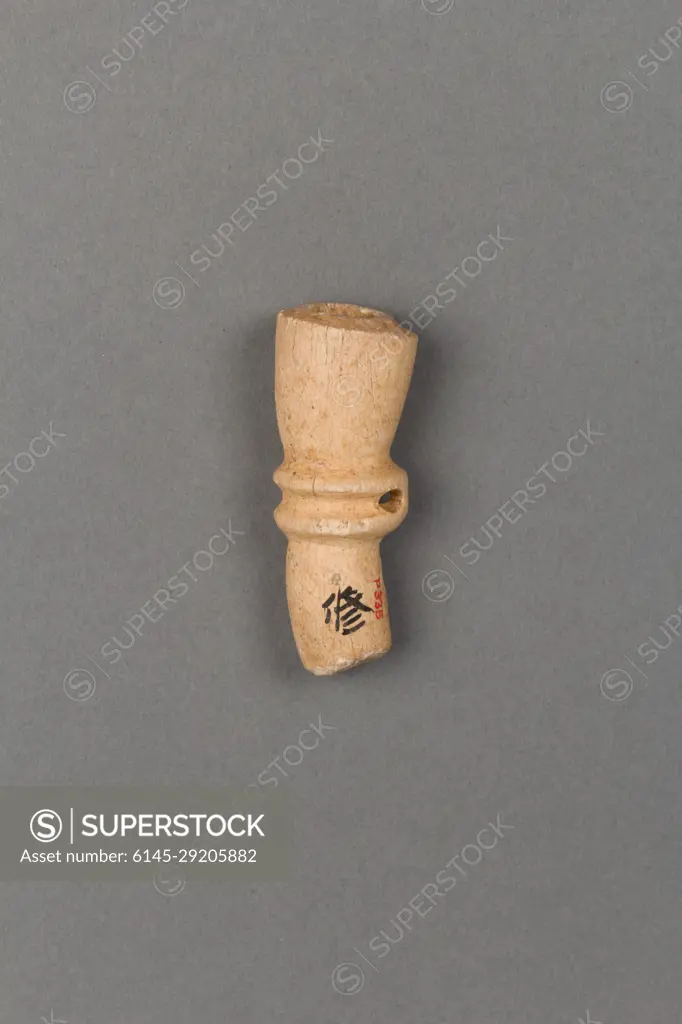
SuperStock offers millions of photos, videos, and stock assets to creatives around the world. This image of Nock of a bow Japan The Jmon period is the earliest period in Japanese history, lasting from roughly 14,000 to 300 BCE. This device, called a nock, would have held the string onto a bow, facilitating the use of the bow and arrow to hunt a wide variety of land animals which were key to the survival of the Jmon people’s hunter-gatherer society. Archaeological evidence indicates that the Jmon hunted over 60 species of mammal throughout the Japanese archipelago, including tanuki (Japanese raccoon dogs) and monkeys, both of which would likely be considered unpalatable in contemporary Japanese society.. Nock of a bow. Japan. Bone. Final Jmon period (ca. 1000-300 B.C.). Bone by Piemags/PL Photography Limited is available for licensing today.
Looking for a license?
Click here, and we'll help you find it! Questions? Just ask!
Click here, and we'll help you find it! Questions? Just ask!
DETAILS
Image Number: 6145-29205882Royalty FreeCredit Line:Piemags/PL Photography Limited/SuperStockCollection:PL Photography Limited Contributor:Piemags Model Release:NoProperty Release:NoResolution:2667×4000