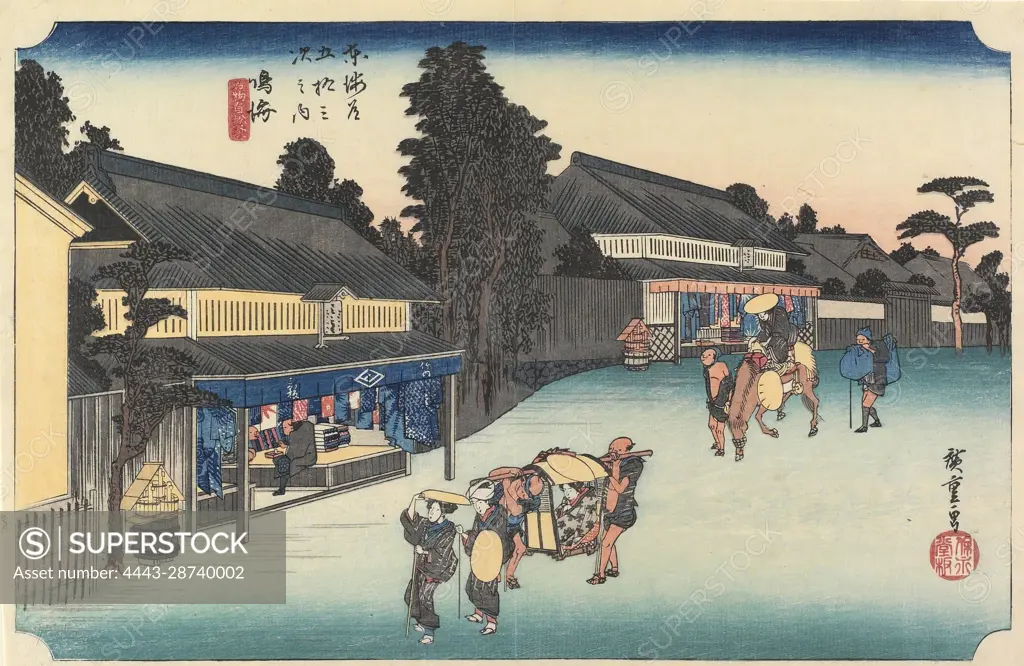
Narumi: Famous Arimatsu Tie-dyed Fabric, c. 1832-1833, Utagawa Hiroshige; Publisher: Takenouchi Magohachi, Japanese, 1797 - 1858, 9 1/2 × 14 5/16 in. (24.1 × 36.4 cm) (sheet, horizontal ōban), Woodblock print (nishiki-e); ink and color on paper, Japan, 19th century, The village of Arimatsu was founded in 1608 along the Tōkaidō, Japans most important road, which connected Edo (todays Tokyo) with Kyoto. The area east of what today is the city of Nagoya was uncultivated, and robberies were frequent. Clay in the soil didnt allow for rice farming, but indigo could be planted. After a long period of military conflicts ended, people became more affluent and were interested in nicer clothes. Before long, tie-dyed textiles (shibori) became Arimatsus main enterprise; by the 1640s, 'Arimatsu shibori' was known all over the country as a special product purchased by many travelers.
SuperStock offers millions of photos, videos, and stock assets to creatives around the world. This image of Narumi: Famous Arimatsu Tie-dyed Fabric, c. 1832-1833, Utagawa Hiroshige; Publisher: Takenouchi Magohachi, Japanese, 1797 - 1858, 9 1/2 × 14 5/16 in. (24.1 × 36.4 cm) (sheet, horizontal ōban), Woodblock print (nishiki-e); ink and color on paper, Japan, 19th century, The village of Arimatsu was founded in 1608 along the Tōkaidō, Japans most important road, which connected Edo (todays Tokyo) with Kyoto. The area east of what today is the city of Nagoya was uncultivated, and robberies were frequent. Clay in the soil didnt allow for rice farming, but indigo could be planted. After a long period of military conflicts ended, people became more affluent and were interested in nicer clothes. Before long, tie-dyed textiles (shibori) became Arimatsus main enterprise; by the 1640s, 'Arimatsu shibori' was known all over the country as a special product purchased by many travelers. by Artokoloro is available for licensing today.
Looking for a license?
Click here, and we'll help you find it! Questions? Just ask!
Click here, and we'll help you find it! Questions? Just ask!
DETAILS
Image Number: 4443-28740002Rights ManagedCredit Line:Artokoloro/SuperStockCollection:Artokoloro Model Release:NoProperty Release:NoResolution:3726×2425