Mortar with Animal Frieze 1603 Modeled by Caspar Gras Mortars were used in daily life in domestic settings to grind seeds, grains, spices and herbs as well as numerous ingredients for cooking, and simple medicines and cosmetics. The sculptor Caspar Gras (1585-1674) worked for the Innsbruck Habsburg court from 1613 to 1632. Through his training with Hubert Gerhard, himself student of Giambologna in Florence. Gras became one of the artists who was instrumental in the transmission of Giambolognas style to the Northern Europe. Dated "1603" this mortar is the sculptors earliest work presently known.. Mortar with Animal Frieze. German, Innsbruck. 1603. Bronze. Sculpture-Bronze
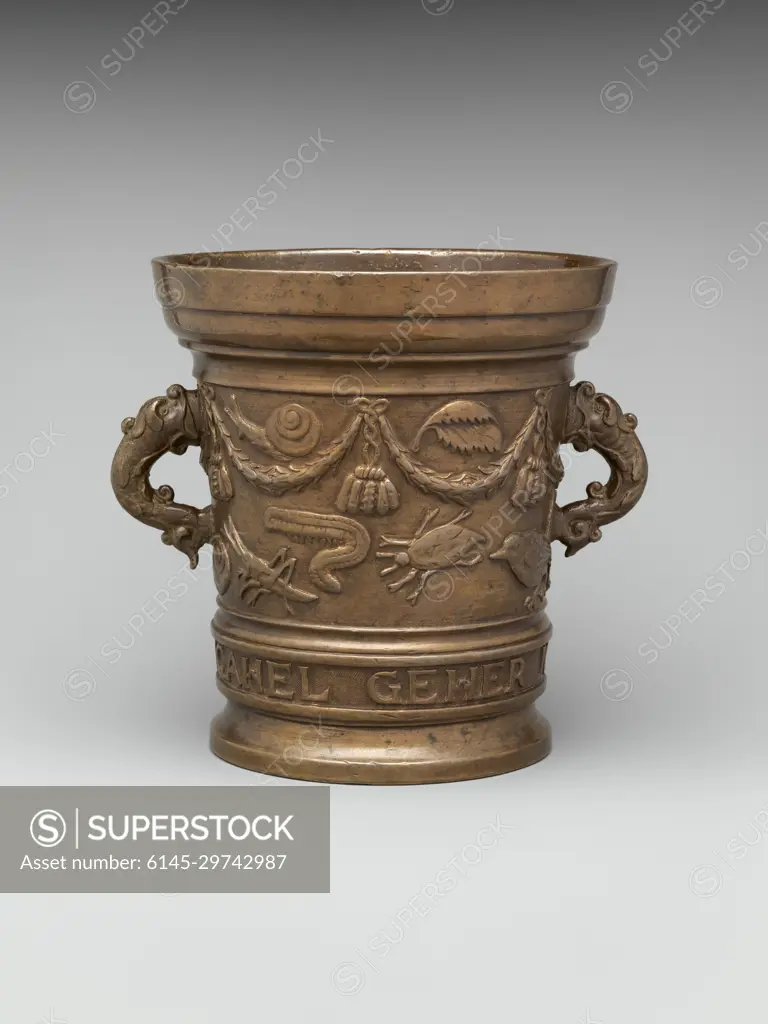
SuperStock offers millions of photos, videos, and stock assets to creatives around the world. This image of Mortar with Animal Frieze 1603 Modeled by Caspar Gras Mortars were used in daily life in domestic settings to grind seeds, grains, spices and herbs as well as numerous ingredients for cooking, and simple medicines and cosmetics. The sculptor Caspar Gras (1585-1674) worked for the Innsbruck Habsburg court from 1613 to 1632. Through his training with Hubert Gerhard, himself student of Giambologna in Florence. Gras became one of the artists who was instrumental in the transmission of Giambolognas style to the Northern Europe. Dated "1603" this mortar is the sculptors earliest work presently known.. Mortar with Animal Frieze. German, Innsbruck. 1603. Bronze. Sculpture-Bronze by Piemags/PL Photography Limited is available for licensing today.
Looking for a license?
Click here, and we'll help you find it! Questions? Just ask!
Click here, and we'll help you find it! Questions? Just ask!
DETAILS
Image Number: 6145-29742987Royalty FreeCredit Line:Piemags/PL Photography Limited/SuperStockCollection:PL Photography Limited Contributor:Piemags Model Release:NoProperty Release:NoResolution:3000×4000