Medicine case with cranes and waves, 1810s-1820s, Hara Yōyūsai; Designer: Sakai Hōitsu, Japanese, 1761 - 1828, 2 3/4 × 2 3/16 × 15/16 in. (6.99 × 5.56 × 2.38 cm) (inro)7 1/2 × 2 3/16 × 15/16 in. (19.05 × 5.56 × 2.38 cm) (including cord and netsuke ), Black lacquer with gold and silver maki-e and shell inlay; silk cord, Japan, 19th century, Inrō, sometimes called 'medicine cases,' were used to carry a variety of small articles, not just medicine. The owner would typically hang an inrō over a sash worn at the waist. The inrō was connected by a cord to a counterweight, called a netsuke, which kept it from falling off. This lacquer inrō was produced by Hara Yōyūsai who decorated it with a motif of cranes and waves designed by the Rinpa painter, Sakai Hōitsu.
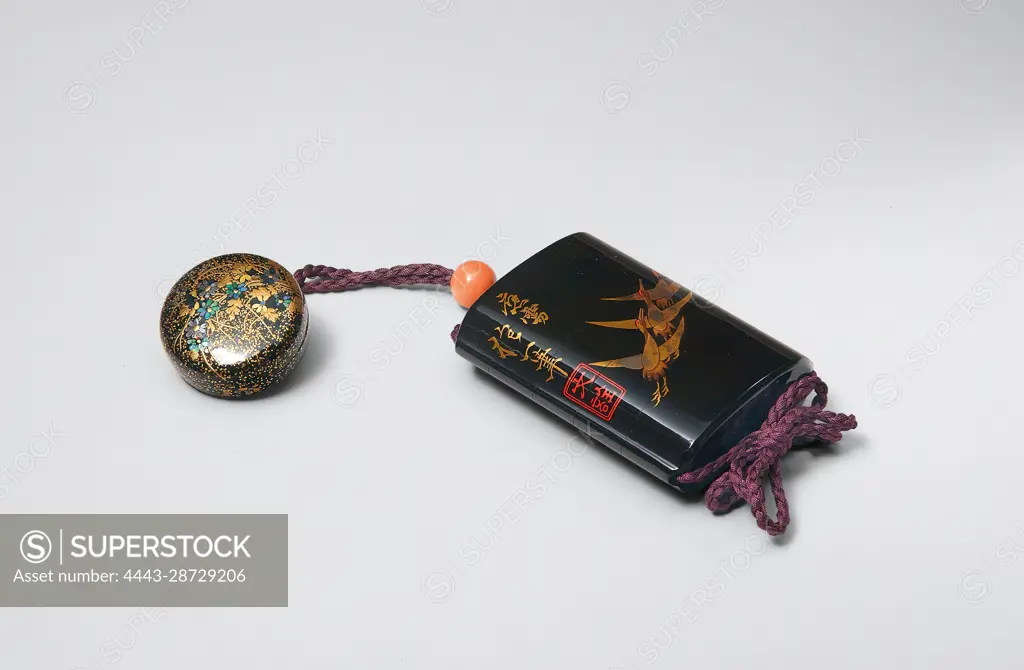
SuperStock offers millions of photos, videos, and stock assets to creatives around the world. This image of Medicine case with cranes and waves, 1810s-1820s, Hara Yōyūsai; Designer: Sakai Hōitsu, Japanese, 1761 - 1828, 2 3/4 × 2 3/16 × 15/16 in. (6.99 × 5.56 × 2.38 cm) (inro)7 1/2 × 2 3/16 × 15/16 in. (19.05 × 5.56 × 2.38 cm) (including cord and netsuke ), Black lacquer with gold and silver maki-e and shell inlay; silk cord, Japan, 19th century, Inrō, sometimes called 'medicine cases,' were used to carry a variety of small articles, not just medicine. The owner would typically hang an inrō over a sash worn at the waist. The inrō was connected by a cord to a counterweight, called a netsuke, which kept it from falling off. This lacquer inrō was produced by Hara Yōyūsai who decorated it with a motif of cranes and waves designed by the Rinpa painter, Sakai Hōitsu. by Artokoloro is available for licensing today.
Looking for a license?
Click here, and we'll help you find it! Questions? Just ask!
Click here, and we'll help you find it! Questions? Just ask!
DETAILS
Image Number: 4443-28729206Rights ManagedCredit Line:Artokoloro/SuperStockCollection:Artokoloro Model Release:NoProperty Release:NoResolution:4068×2663