Mantle 2nd-1st century B.C. Ocucaje Images of twelve "oculate beings" are worked into this mantle by a technique called sprang, which replicates the pattern in mirror image on either side of the vertical center. The oculate beings are composed of stylized frontal heads with concentrically ringed eyes (from which they get their name) and semierect spotted bodies. They stand in two horizontal registers, alternately right side up and upside down across the width of the mantle. Their heads, too, can be read two ways, indicating yet again the visual complexity of which the ancient Peruvians were capable. The mantle is an early example of a textile type thought to be a man's cloaklike garment that was long in use in Precolumbian Peru. Fully articulated by the late centuries B.C.E., mantles continued to be made until long after the Spanish conquest of the sixteenth century. A number of complete early mantles are known from Ocucaje in the southern Ica Valley, the source of this example. It is
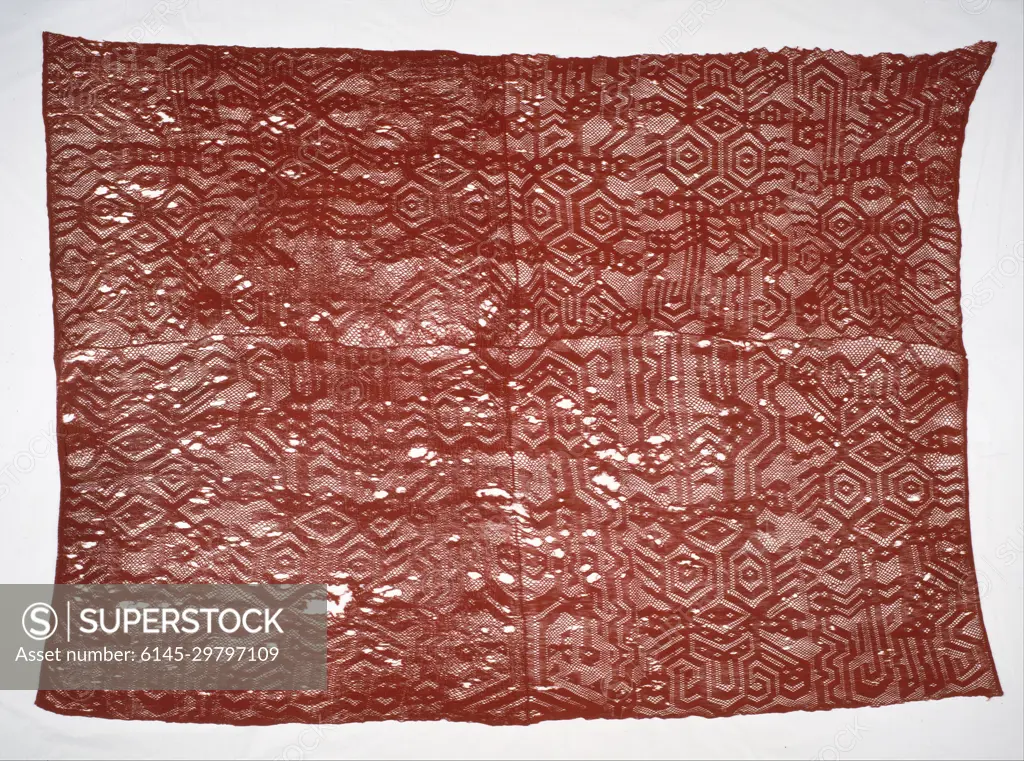
SuperStock offers millions of photos, videos, and stock assets to creatives around the world. This image of Mantle 2nd-1st century B.C. Ocucaje Images of twelve "oculate beings" are worked into this mantle by a technique called sprang, which replicates the pattern in mirror image on either side of the vertical center. The oculate beings are composed of stylized frontal heads with concentrically ringed eyes (from which they get their name) and semierect spotted bodies. They stand in two horizontal registers, alternately right side up and upside down across the width of the mantle. Their heads, too, can be read two ways, indicating yet again the visual complexity of which the ancient Peruvians were capable. The mantle is an early example of a textile type thought to be a man's cloaklike garment that was long in use in Precolumbian Peru. Fully articulated by the late centuries B.C.E., mantles continued to be made until long after the Spanish conquest of the sixteenth century. A number of complete early mantles are known from Ocucaje in the southern Ica Valley, the source of this example. It is by Piemags/PL Photography Limited is available for licensing today.
Looking for a license?
Click here, and we'll help you find it! Questions? Just ask!
Click here, and we'll help you find it! Questions? Just ask!
DETAILS
Image Number: 6145-29797109Royalty FreeCredit Line:Piemags/PL Photography Limited/SuperStockCollection:PL Photography Limited Contributor:Piemags Model Release:NoProperty Release:NoResolution:1905×1417