Manhattan's Chinatown, home to the largest enclave of Chinese people in the Western hemisphere, is located in the borough of Manhattan in New York City. Manhattan's Chinatown is one of the oldest ethnic Chinese enclaves outside of Asia. Until the 1960s, the majority of the Chinese population in Chinatown emigrated from Guangdong province and Hong Kong, thus they were native speakers of Cantonese, especially the Canton and Taishan dialects. A minority of Hakka was also represented. Mandarin was rarely spoken by residents even well into the 1980s. Since the late 1980s and 1990s, the vast majority of new Chinese immigrants have come from mainland China, especially Fujian Province, and tend to speak Foochow (Fuzhou) along with Mandarin.
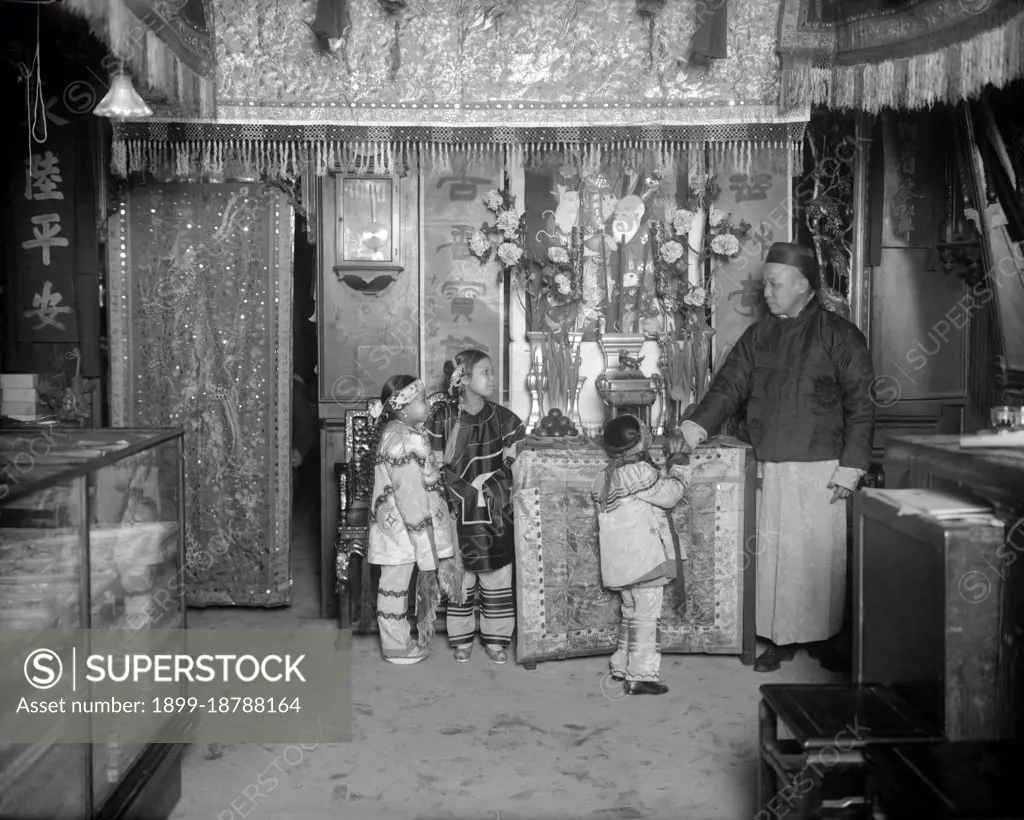
SuperStock offers millions of photos, videos, and stock assets to creatives around the world. This image of Manhattan's Chinatown, home to the largest enclave of Chinese people in the Western hemisphere, is located in the borough of Manhattan in New York City. Manhattan's Chinatown is one of the oldest ethnic Chinese enclaves outside of Asia. Until the 1960s, the majority of the Chinese population in Chinatown emigrated from Guangdong province and Hong Kong, thus they were native speakers of Cantonese, especially the Canton and Taishan dialects. A minority of Hakka was also represented. Mandarin was rarely spoken by residents even well into the 1980s. Since the late 1980s and 1990s, the vast majority of new Chinese immigrants have come from mainland China, especially Fujian Province, and tend to speak Foochow (Fuzhou) along with Mandarin. by Pictures From History/Universal Images is available for licensing today.
Looking for a license?
Click here, and we'll help you find it! Questions? Just ask!
Click here, and we'll help you find it! Questions? Just ask!
DETAILS
Image Number: 1899-18788164Rights ManagedCredit Line:Pictures From History/Universal Images/SuperStockCollection:Universal Images Contributor:Pictures From History Model Release:NoProperty Release:NoResolution:4700×3765