Male Figure with Raised Arms. Culture: Dogon peoples. Dimensions: H. 82 7/8 x W. 14 1/4 x D. 8 3/8 in. (210.5 x 36.2 x 21.3 cm). Date: 14th-17th century.The Dogon live in the elevated rocky heights of Mali's Bandiagara Escarpment. They rely on agriculture and manage to wrest subsistence crops from poor soil in an area that receives little rain. This monumental figure is one of the largest Dogon sculptures known. The region's dry climate has preserved Dogon works far longer than is usual for African wood sculpture, and radiocarbon testing of this work suggests that it may date as far back as the fifteenth century.Dogon sculpture is primarily concerned with the spirits responsible for the fertility of both land and people. These include a family's real and mythical ancestors, the souls of women who died in childbirth, and water spirits. While the exact functions and meanings of individual works often remain obscure, scholars agree that Dogon sculptures were created for shrines.The mos
This asset has restrictions and cannot be purchased online. Get in touch for more details.
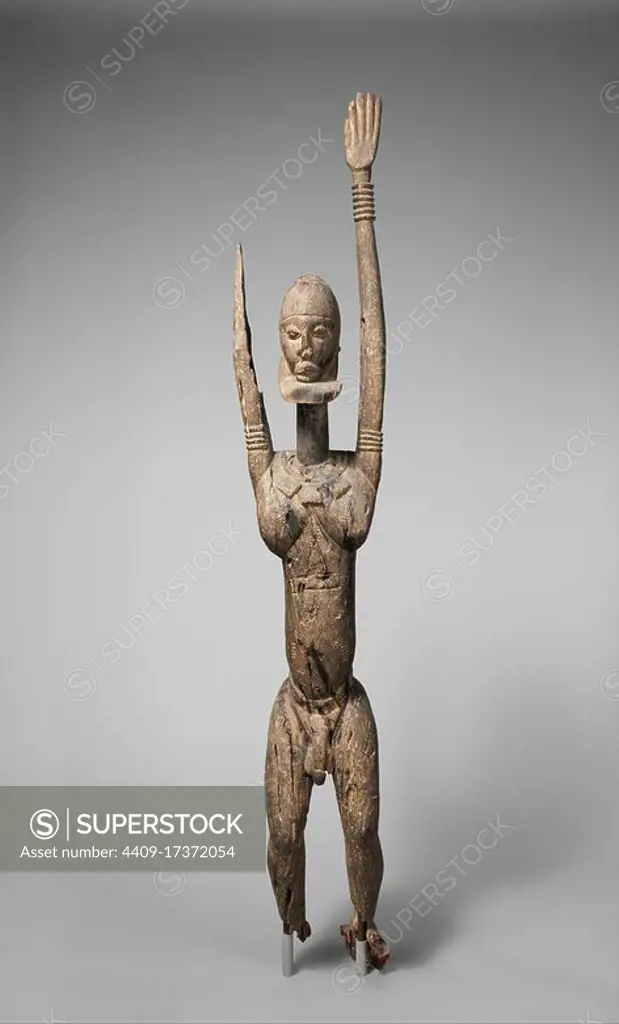
SuperStock offers millions of photos, videos, and stock assets to creatives around the world. This image of Male Figure with Raised Arms. Culture: Dogon peoples. Dimensions: H. 82 7/8 x W. 14 1/4 x D. 8 3/8 in. (210.5 x 36.2 x 21.3 cm). Date: 14th-17th century.The Dogon live in the elevated rocky heights of Mali's Bandiagara Escarpment. They rely on agriculture and manage to wrest subsistence crops from poor soil in an area that receives little rain. This monumental figure is one of the largest Dogon sculptures known. The region's dry climate has preserved Dogon works far longer than is usual for African wood sculpture, and radiocarbon testing of this work suggests that it may date as far back as the fifteenth century.Dogon sculpture is primarily concerned with the spirits responsible for the fertility of both land and people. These include a family's real and mythical ancestors, the souls of women who died in childbirth, and water spirits. While the exact functions and meanings of individual works often remain obscure, scholars agree that Dogon sculptures were created for shrines.The mos by Album/Metropolitan Museum of Art, NY/Album Archivo is available for licensing today.
Looking for a license?
Click here, and we'll help you find it! Questions? Just ask!
Click here, and we'll help you find it! Questions? Just ask!
DETAILS
Image Number: 4409-17372054Rights ManagedCredit Line:Album/Metropolitan Museum of Art, NY/Album Archivo/SuperStockCollection:Album Archivo Contributor:Album / Metropolitan Museum of Art, NY Model Release:NoProperty Release:NoResolution:2593×4283