Maize Deity (Chicomecoatl) 15th-early 16th century Aztec Maize (corn) was the main food staple of the Mesoamerican diet and formed an important facet of native religious beliefs. Among the Aztecs, specific aspects of maize and its growth cycle were represented in the form of beautiful and potent deities, such as Cinteotl ("deified corn," a youthful god) and Xilonen ("fresh, tender corn," a virginal goddess). The sculpture seen here likely depicts the goddess Chicomecoatl ("7 Serpent"), the personification of mature, ripened corn.Seated in a kneeling position with her feet turned inward beneath her, the deity holds a pair of corncobs in each hand and wears a towering headdress called a "paper house" (amacalli). Pinwheel-shaped rosettes decorate each of the upper corners, as a group of streamers descends down the figures sides and back. The central panel of the headdress features an ornamental device made of folded bark paper (amatl) and is framed, above and below, with twisted ropes. A
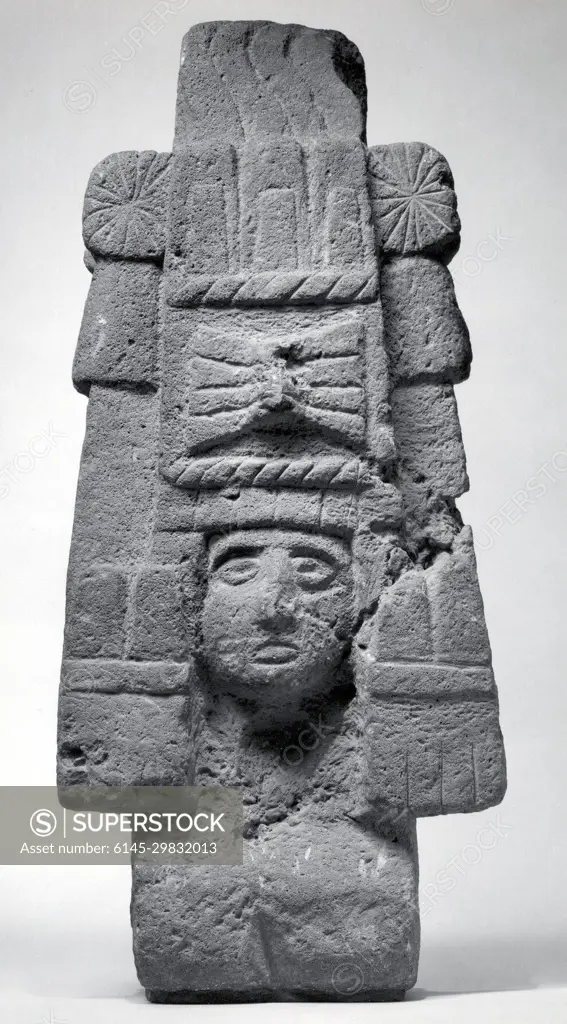
SuperStock offers millions of photos, videos, and stock assets to creatives around the world. This image of Maize Deity (Chicomecoatl) 15th-early 16th century Aztec Maize (corn) was the main food staple of the Mesoamerican diet and formed an important facet of native religious beliefs. Among the Aztecs, specific aspects of maize and its growth cycle were represented in the form of beautiful and potent deities, such as Cinteotl ("deified corn," a youthful god) and Xilonen ("fresh, tender corn," a virginal goddess). The sculpture seen here likely depicts the goddess Chicomecoatl ("7 Serpent"), the personification of mature, ripened corn.Seated in a kneeling position with her feet turned inward beneath her, the deity holds a pair of corncobs in each hand and wears a towering headdress called a "paper house" (amacalli). Pinwheel-shaped rosettes decorate each of the upper corners, as a group of streamers descends down the figures sides and back. The central panel of the headdress features an ornamental device made of folded bark paper (amatl) and is framed, above and below, with twisted ropes. A by Piemags/PL Photography Limited is available for licensing today.
Looking for a license?
Click here, and we'll help you find it! Questions? Just ask!
Click here, and we'll help you find it! Questions? Just ask!
DETAILS
Image Number: 6145-29832013Royalty FreeCredit Line:Piemags/PL Photography Limited/SuperStockCollection:PL Photography Limited Contributor:Piemags Model Release:NoProperty Release:NoResolution:988×1782