Mace. Culture: Iranian. Dimensions: L. 32 1/2 in. (82.6 cm); Wt. 1 lb. 15 oz. (879 g); head: 4 3/4 x 5 3/4 in. (12 x 14.5 cm). Date: 19th century.The ox-headed mace is associated with the heroes of the Shahnama (Book of Kings), the poet Firdausi's epic of pre-Islamic Iran completed in a.d. 1010. The mace reproduces the hero Bahram Gur's weapon made in memory of the cow that nursed him. An emblem of power and good, it was inherited by other heroes in the epic, notably Feridun and Rustam. This example is representative of the Qajar revival of ancient Iranian imagery. It bears the false signature of a legendary smith, Haji 'Abbas, and the equally spurious date A.H. 951 (A.D. 1544-45). Museum: Metropolitan Museum of Art, New York, USA.
This asset has restrictions and cannot be purchased online. Get in touch for more details.
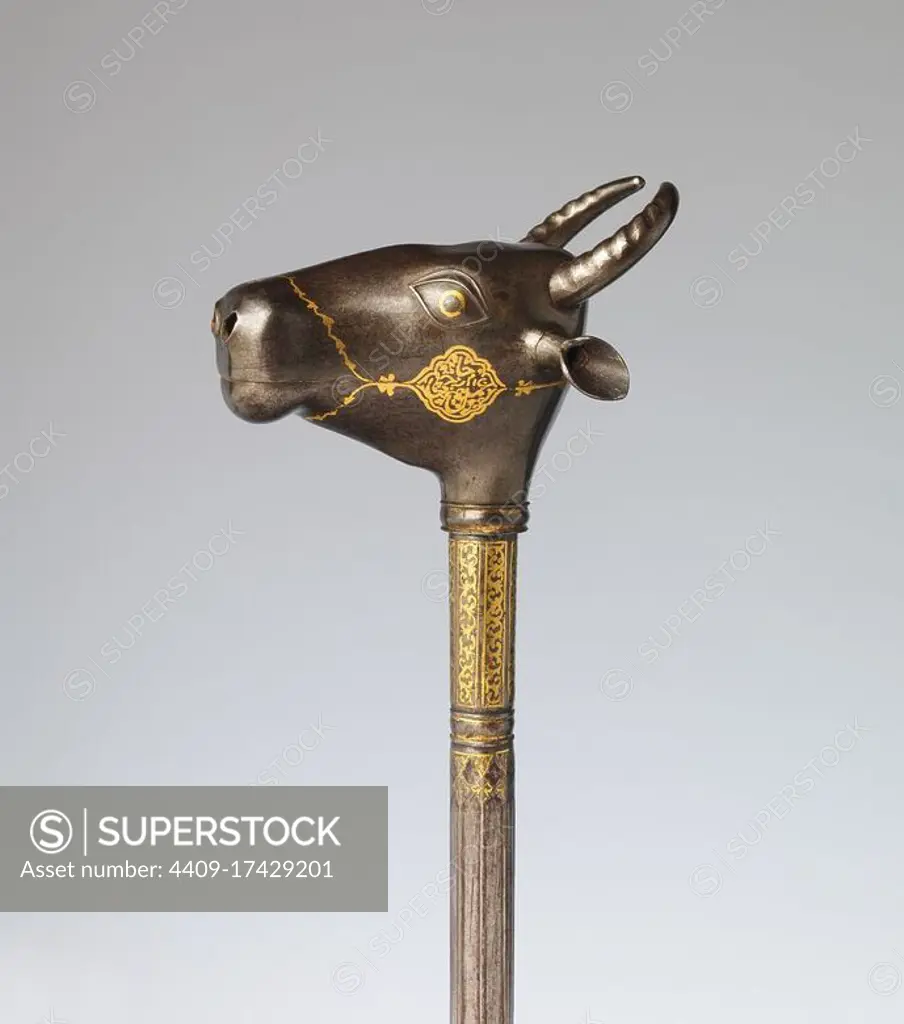
SuperStock offers millions of photos, videos, and stock assets to creatives around the world. This image of Mace. Culture: Iranian. Dimensions: L. 32 1/2 in. (82.6 cm); Wt. 1 lb. 15 oz. (879 g); head: 4 3/4 x 5 3/4 in. (12 x 14.5 cm). Date: 19th century.The ox-headed mace is associated with the heroes of the Shahnama (Book of Kings), the poet Firdausi's epic of pre-Islamic Iran completed in a.d. 1010. The mace reproduces the hero Bahram Gur's weapon made in memory of the cow that nursed him. An emblem of power and good, it was inherited by other heroes in the epic, notably Feridun and Rustam. This example is representative of the Qajar revival of ancient Iranian imagery. It bears the false signature of a legendary smith, Haji 'Abbas, and the equally spurious date A.H. 951 (A.D. 1544-45). Museum: Metropolitan Museum of Art, New York, USA. by Album/Metropolitan Museum of Art, NY/Album Archivo is available for licensing today.
Looking for a license?
Click here, and we'll help you find it! Questions? Just ask!
Click here, and we'll help you find it! Questions? Just ask!
DETAILS
Image Number: 4409-17429201Rights ManagedCredit Line:Album/Metropolitan Museum of Art, NY/Album Archivo/SuperStockCollection:Album Archivo Contributor:Album / Metropolitan Museum of Art, NY Model Release:NoProperty Release:NoResolution:3713×4200