Lower Part of a Statue ca. 1479-1458 B.C. New Kingdom There is no inscription to identify the king depicted in this seated statue. However, the fact that it was found in fragments with the smashed statues of Hatshepsut suggests that this, too, represented the female pharaoh. For more than 1500 years before Hatshepsut ascended the throne, the ideal Egyptian king had been represented as a young man in the prime of life. This ideal applied whether the ruler was an old man, a young child, or a woman. Two of Hatshepsut's statues depict her as a female ruler (29.3.2), but most of them depict her as the ideal king (30.3.1). However, this should not be taken as a sign that she was trying to fool anyone into believing she was a man. The inscriptions on the masculine statues generally included either a feminine grammatical form or her personal name, Hatshepsut, which literally means "Foremost of Noblewomen." She had also been in the public eye since childhood, first as "king's daughter" of Thutm
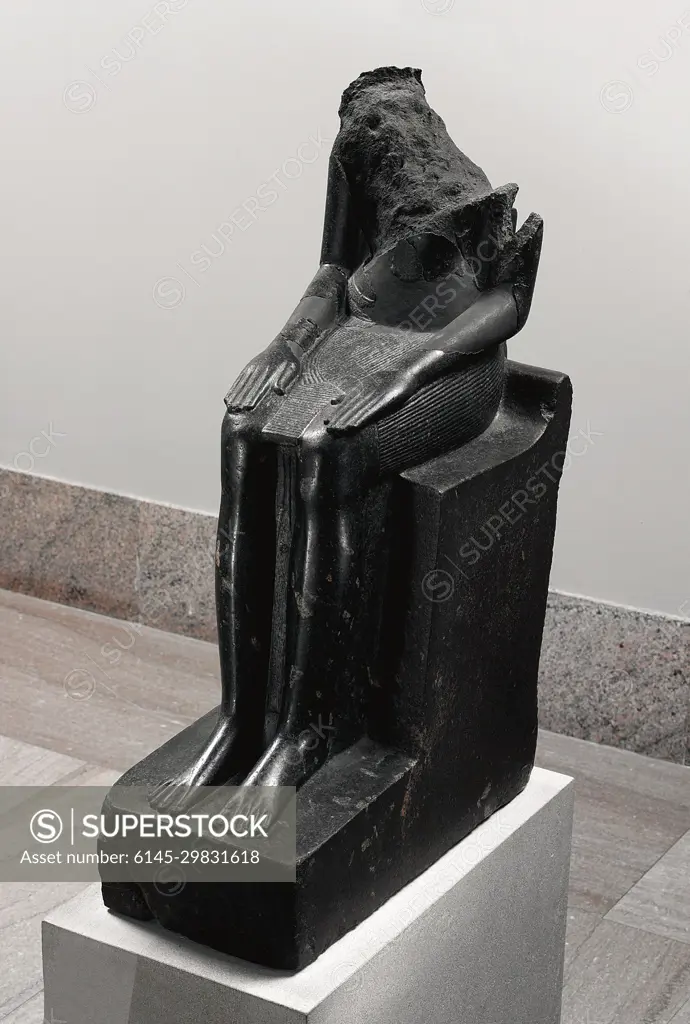
SuperStock offers millions of photos, videos, and stock assets to creatives around the world. This image of Lower Part of a Statue ca. 1479-1458 B.C. New Kingdom There is no inscription to identify the king depicted in this seated statue. However, the fact that it was found in fragments with the smashed statues of Hatshepsut suggests that this, too, represented the female pharaoh. For more than 1500 years before Hatshepsut ascended the throne, the ideal Egyptian king had been represented as a young man in the prime of life. This ideal applied whether the ruler was an old man, a young child, or a woman. Two of Hatshepsut's statues depict her as a female ruler (29.3.2), but most of them depict her as the ideal king (30.3.1). However, this should not be taken as a sign that she was trying to fool anyone into believing she was a man. The inscriptions on the masculine statues generally included either a feminine grammatical form or her personal name, Hatshepsut, which literally means "Foremost of Noblewomen." She had also been in the public eye since childhood, first as "king's daughter" of Thutm by Piemags/PL Photography Limited is available for licensing today.
Looking for a license?
Click here, and we'll help you find it! Questions? Just ask!
Click here, and we'll help you find it! Questions? Just ask!
DETAILS
Image Number: 6145-29831618Royalty FreeCredit Line:Piemags/PL Photography Limited/SuperStockCollection:PL Photography Limited Contributor:Piemags Model Release:NoProperty Release:NoResolution:1411×2092