Longcase equation regulator ca. 1752 Clockmaker: Ferdinand Berthoud French clocks with long pendulums and weights are called régulateurs (regulators). This clock, presented in April 1752 to the Royal Academy of Sciences in Paris, appears to be the first equation clock by Berthoud, who came to specialize in timekeepers showing both solar time, which varies slightly according to the season, and mean solar time, which is stable throughout the year. The trunk of Lieutauds case swells just above the base, enclosing a shaped opening to show the pendulum. The curved outline of the case is not only in keeping with the rococo style popular in the mid-eighteenth century but also highlights Berthouds cutting-edge technology of the time.. Longcase equation regulator. French. ca. 1752. Oak veneered with satinwood and kingwood; gilt-bronze mounts, glass, enamel, steel, and brass. Horology
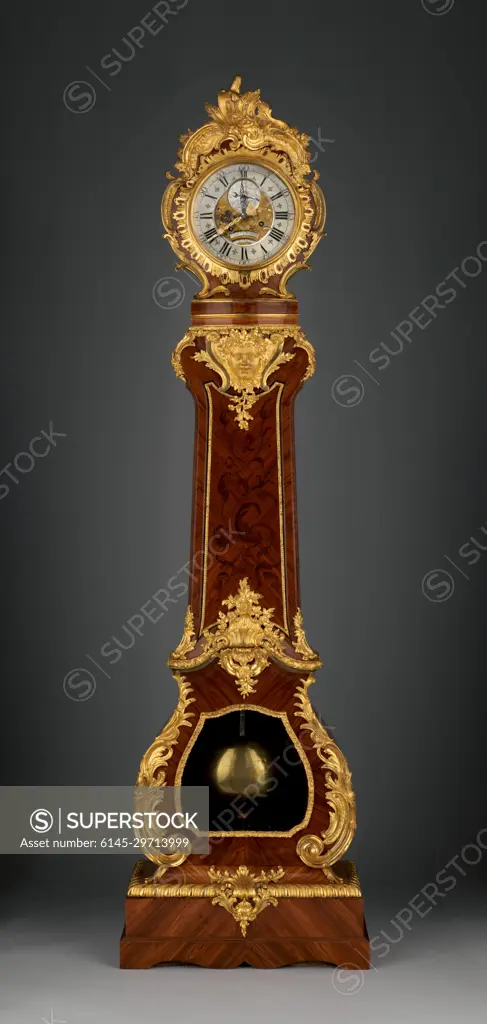
SuperStock offers millions of photos, videos, and stock assets to creatives around the world. This image of Longcase equation regulator ca. 1752 Clockmaker: Ferdinand Berthoud French clocks with long pendulums and weights are called régulateurs (regulators). This clock, presented in April 1752 to the Royal Academy of Sciences in Paris, appears to be the first equation clock by Berthoud, who came to specialize in timekeepers showing both solar time, which varies slightly according to the season, and mean solar time, which is stable throughout the year. The trunk of Lieutauds case swells just above the base, enclosing a shaped opening to show the pendulum. The curved outline of the case is not only in keeping with the rococo style popular in the mid-eighteenth century but also highlights Berthouds cutting-edge technology of the time.. Longcase equation regulator. French. ca. 1752. Oak veneered with satinwood and kingwood; gilt-bronze mounts, glass, enamel, steel, and brass. Horology by Piemags/PL Photography Limited is available for licensing today.
Looking for a license?
Click here, and we'll help you find it! Questions? Just ask!
Click here, and we'll help you find it! Questions? Just ask!
DETAILS
Image Number: 6145-29713999Royalty FreeCredit Line:Piemags/PL Photography Limited/SuperStockCollection:PL Photography Limited Contributor:Piemags Model Release:NoProperty Release:NoResolution:1903×4000