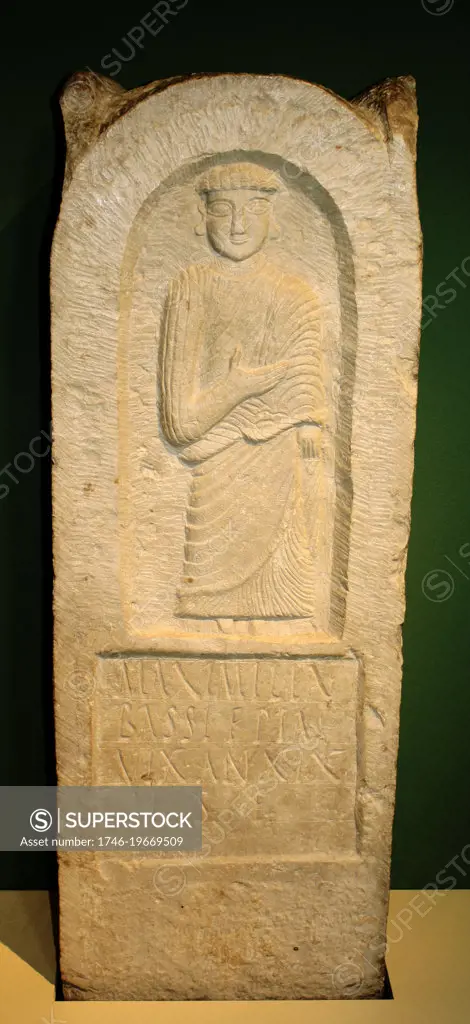
Limestone tombstone for Maximilla Bassi. Tunisia, Punic, 2nd-3rd century AD from Carthage. This finely carved monument was set up in memory of a woman called maximilla Bassi. The Latin inscription says 'Maximilla Bassi, pious daughter, lived nineteen years. Here she is placed.' After the Roman annexation of Carthage in 146BC it became more fashionable to use Latin for inscriptions although Phoenician remained the everyday language used. The shallow niche is carved with an image of a female figure wearing a pleated tunic and mantle, presumably Maximilla.
SuperStock offers millions of photos, videos, and stock assets to creatives around the world. This image of Limestone tombstone for Maximilla Bassi. Tunisia, Punic, 2nd-3rd century AD from Carthage. This finely carved monument was set up in memory of a woman called maximilla Bassi. The Latin inscription says 'Maximilla Bassi, pious daughter, lived nineteen years. Here she is placed.' After the Roman annexation of Carthage in 146BC it became more fashionable to use Latin for inscriptions although Phoenician remained the everyday language used. The shallow niche is carved with an image of a female figure wearing a pleated tunic and mantle, presumably Maximilla. by World History Archive/Image Asset Management is available for licensing today.
Looking for a license?
Click here, and we'll help you find it! Questions? Just ask!
Click here, and we'll help you find it! Questions? Just ask!
DETAILS
Image Number: 1746-19669509Rights ManagedCredit Line:World History Archive/Image Asset Management/SuperStockCollection:Image Asset Management Contributor:World History Archive Model Release:NoProperty Release:NoResolution:3000×6527