Limestone Keystone from a Vaulted Ceiling ca. 1220-30 German During the 1100s and 1200s, fortified settlements were built in the Holy Land by knights from western Europe trying to establish a Christian kingdom with Jerusalem as its capital. Founded by French Crusaders in the 1100s, Castle Montfort was purchased in the 1220s by the Teutonic Knights, German Crusaders who rebuilt it and renamed it Starkenberg. The stonemason who carved this keystone, probably during the Teutonic Knights restoration of the site, left his mark, a cross, inscribed on its left end. In 1272 after a heavy siege, the castle fell to Baybars, the Mamluk sultan of Egypt. The surviving knights retired to Acre (now Akko, Israel), the last Christian stronghold in the Holy Land. In 1926 the Museum took part in the excavation of the ruined castle.. Limestone Keystone from a Vaulted Ceiling. German. ca. 1220-30. Limestone. Sculpture-Architectural
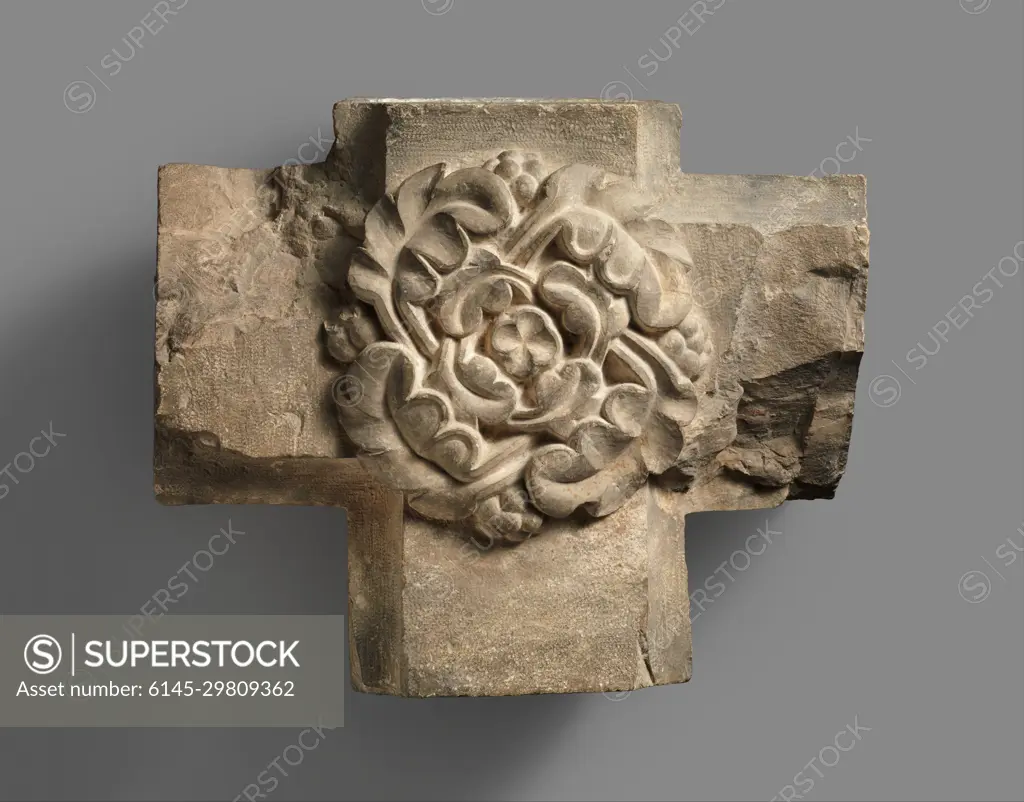
SuperStock offers millions of photos, videos, and stock assets to creatives around the world. This image of Limestone Keystone from a Vaulted Ceiling ca. 1220-30 German During the 1100s and 1200s, fortified settlements were built in the Holy Land by knights from western Europe trying to establish a Christian kingdom with Jerusalem as its capital. Founded by French Crusaders in the 1100s, Castle Montfort was purchased in the 1220s by the Teutonic Knights, German Crusaders who rebuilt it and renamed it Starkenberg. The stonemason who carved this keystone, probably during the Teutonic Knights restoration of the site, left his mark, a cross, inscribed on its left end. In 1272 after a heavy siege, the castle fell to Baybars, the Mamluk sultan of Egypt. The surviving knights retired to Acre (now Akko, Israel), the last Christian stronghold in the Holy Land. In 1926 the Museum took part in the excavation of the ruined castle.. Limestone Keystone from a Vaulted Ceiling. German. ca. 1220-30. Limestone. Sculpture-Architectural by Piemags/PL Photography Limited is available for licensing today.
Looking for a license?
Click here, and we'll help you find it! Questions? Just ask!
Click here, and we'll help you find it! Questions? Just ask!
DETAILS
Image Number: 6145-29809362Royalty FreeCredit Line:Piemags/PL Photography Limited/SuperStockCollection:PL Photography Limited Contributor:Piemags Model Release:NoProperty Release:NoResolution:3915×3070