Limestone funerary relief ca. 325-300 B.C. Greek, South Italian, Tarentine Tarentum (modern Taranto) was a wealthy Greek colony on the southeast coast of Italy, a pivotal location along the trade routes between Greece and Italy. During the fourth century B.C., ostentatious grave monuments in the form of small temple-like buildings decorated with painted sculpture filled the city cemetery. This relief must come from such a building. It represents a young warrior and a woman standing by an altar. Between them is a vase for pouring a libation on the altar. On the wall behind them hang a cuirass, a helmet, and a sword, presumably the arms of the dead warrior for whom they mourn. It has been suggested that the relief illustrates a scene from Greek tragedy.. Limestone funerary relief. Greek, South Italian, Tarentine. ca. 325-300 B.C.. Limestone. Hellenistic. Stone Sculpture
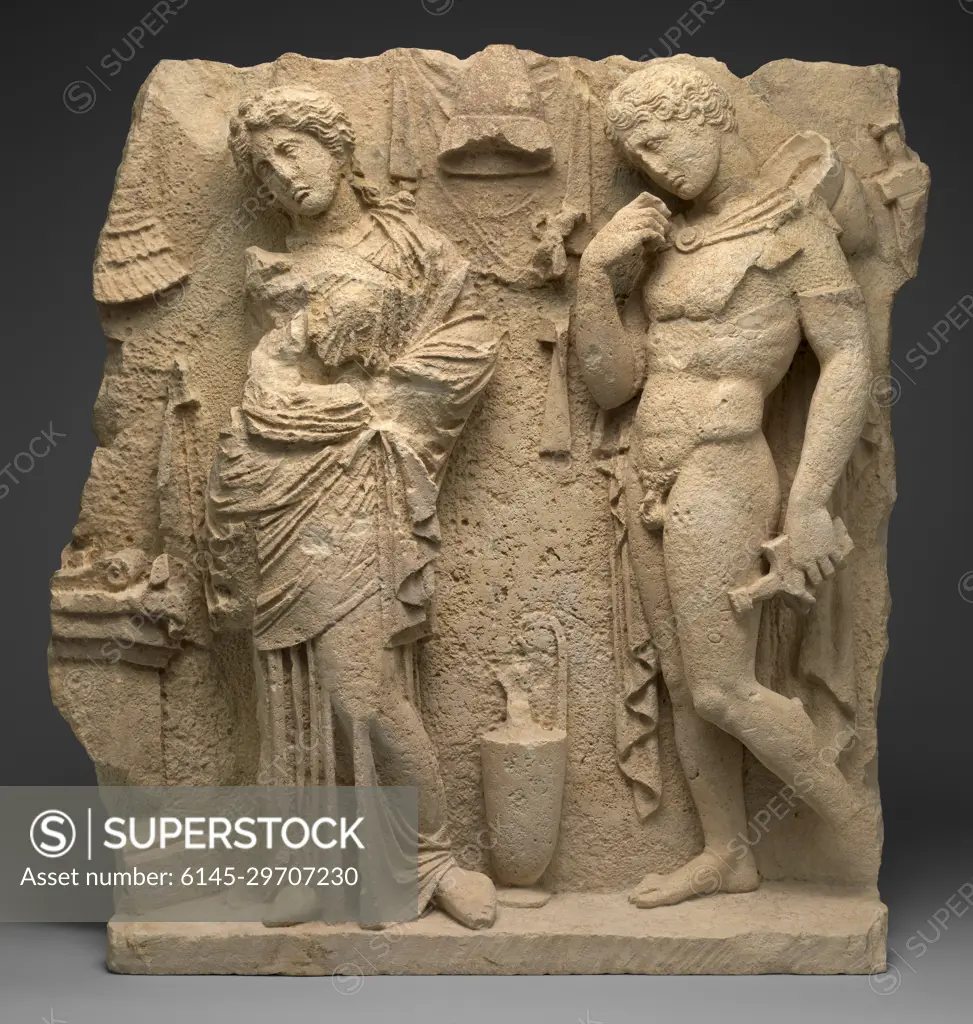
SuperStock offers millions of photos, videos, and stock assets to creatives around the world. This image of Limestone funerary relief ca. 325-300 B.C. Greek, South Italian, Tarentine Tarentum (modern Taranto) was a wealthy Greek colony on the southeast coast of Italy, a pivotal location along the trade routes between Greece and Italy. During the fourth century B.C., ostentatious grave monuments in the form of small temple-like buildings decorated with painted sculpture filled the city cemetery. This relief must come from such a building. It represents a young warrior and a woman standing by an altar. Between them is a vase for pouring a libation on the altar. On the wall behind them hang a cuirass, a helmet, and a sword, presumably the arms of the dead warrior for whom they mourn. It has been suggested that the relief illustrates a scene from Greek tragedy.. Limestone funerary relief. Greek, South Italian, Tarentine. ca. 325-300 B.C.. Limestone. Hellenistic. Stone Sculpture by Piemags/PL Photography Limited is available for licensing today.
Looking for a license?
Click here, and we'll help you find it! Questions? Just ask!
Click here, and we'll help you find it! Questions? Just ask!
DETAILS
Image Number: 6145-29707230Royalty FreeCredit Line:Piemags/PL Photography Limited/SuperStockCollection:PL Photography Limited Contributor:Piemags Model Release:NoProperty Release:NoResolution:3804×4000