Limestone cippus base ca. 500-450 B.C. Etruscan, probably Chiusine A cippus is a large stone marker used by the Etruscans to establish a boundary or, more commonly, to mark the location of a tomb. The Etruscans produced several types of cippi. This example, the only one in the Museum's collection, is a cubic block that originally would have supported a large spherical, onion-shaped, or pointed stone. Each side of the block is carved with an identical scene showing symmetrically disposed horsemen. These almost certainly represent the twin gods, Castur and Pultuce (Roman: Castor and Pollux), among the most popular deities worshiped by the Etruscans. This type of cippus is closely associated with Chiusi, an important city in Central Italy.. Limestone cippus base. Etruscan, probably Chiusine. ca. 500-450 B.C.. Limestone. late Archaic-Classical. Stone Sculpture
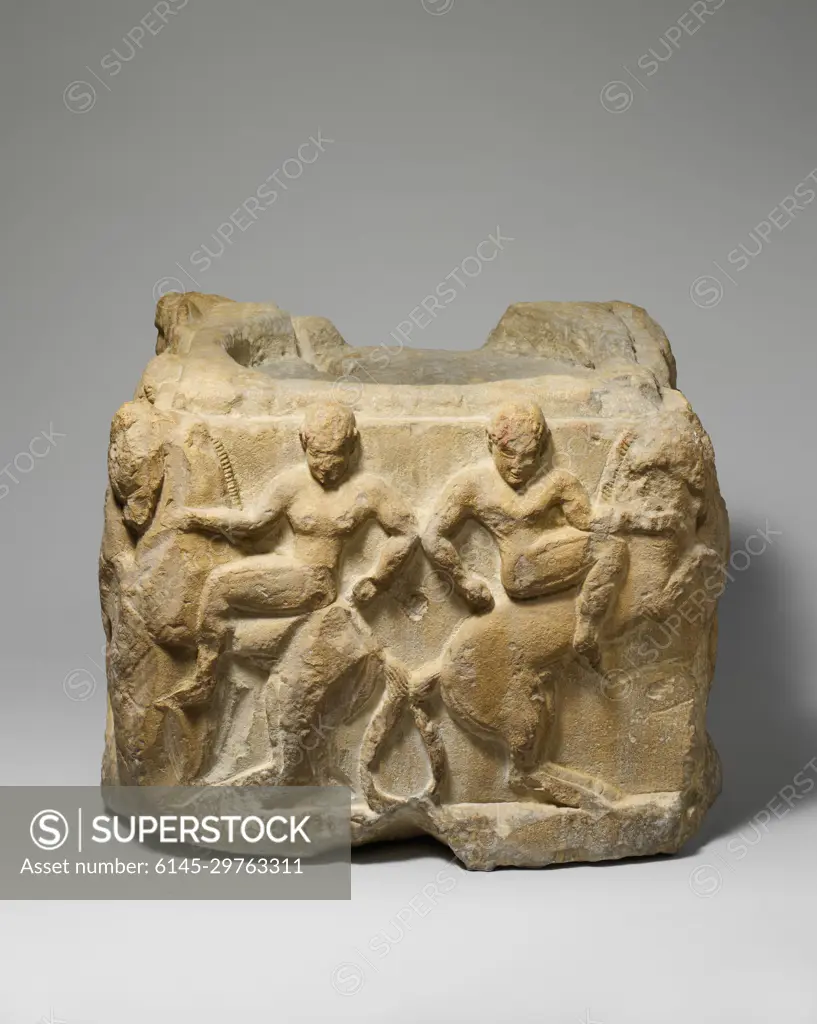
SuperStock offers millions of photos, videos, and stock assets to creatives around the world. This image of Limestone cippus base ca. 500-450 B.C. Etruscan, probably Chiusine A cippus is a large stone marker used by the Etruscans to establish a boundary or, more commonly, to mark the location of a tomb. The Etruscans produced several types of cippi. This example, the only one in the Museum's collection, is a cubic block that originally would have supported a large spherical, onion-shaped, or pointed stone. Each side of the block is carved with an identical scene showing symmetrically disposed horsemen. These almost certainly represent the twin gods, Castur and Pultuce (Roman: Castor and Pollux), among the most popular deities worshiped by the Etruscans. This type of cippus is closely associated with Chiusi, an important city in Central Italy.. Limestone cippus base. Etruscan, probably Chiusine. ca. 500-450 B.C.. Limestone. late Archaic-Classical. Stone Sculpture by Piemags/PL Photography Limited is available for licensing today.
Looking for a license?
Click here, and we'll help you find it! Questions? Just ask!
Click here, and we'll help you find it! Questions? Just ask!
DETAILS
Image Number: 6145-29763311Royalty FreeCredit Line:Piemags/PL Photography Limited/SuperStockCollection:PL Photography Limited Contributor:Piemags Model Release:NoProperty Release:NoResolution:3192×4000