Landscape of the Four Seasons late 16th-early 17th century Unkoku Tgan The four seasons of the year progress across the surface of this pair of screens, beginning at the right, with spring, and concluding with winter at the far left. The imaginary landscape, with rocky land masses, towering mountains, pavilions, and human activity, recalls aspects of the Chinese theme “Eight Views of the Xiao and Xiang Rivers,” particularly with its depiction of geese descending to a sandbar in the distance.Tgan, founder of the Unkoku school, was one of the most important ink painters of the Momoyama period. This panoramic landscape composition reflects the influence of the earlier, Muromachi-period ink master, Sessh Ty (1420-1506), whose studio, the Unkoku-an, was bestowed upon Tgan in the 1590s and from which he adopted his family name. The sharp outlines and architectonic treatment of land masses visible in this work appear in other screens by Tgan, some of which also feature gilded backgroun
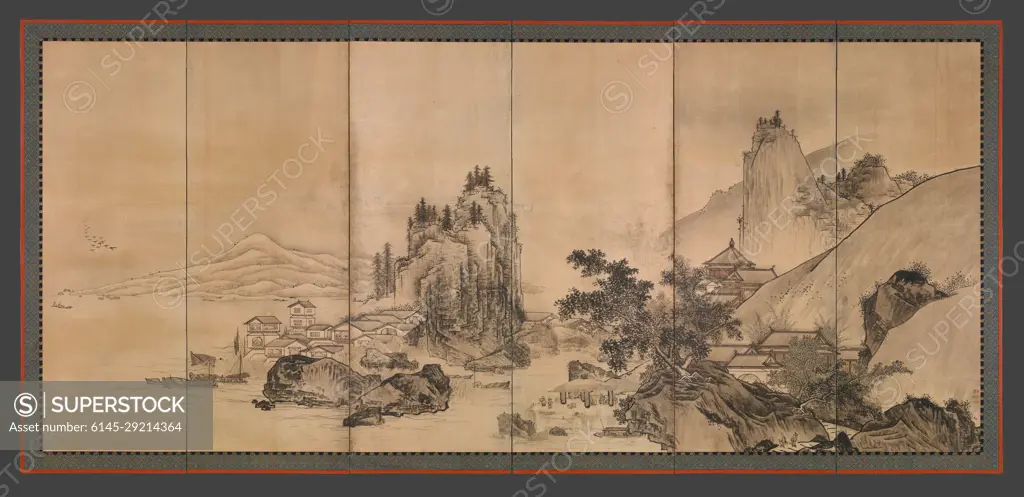
SuperStock offers millions of photos, videos, and stock assets to creatives around the world. This image of Landscape of the Four Seasons late 16th-early 17th century Unkoku Tgan The four seasons of the year progress across the surface of this pair of screens, beginning at the right, with spring, and concluding with winter at the far left. The imaginary landscape, with rocky land masses, towering mountains, pavilions, and human activity, recalls aspects of the Chinese theme “Eight Views of the Xiao and Xiang Rivers,” particularly with its depiction of geese descending to a sandbar in the distance.Tgan, founder of the Unkoku school, was one of the most important ink painters of the Momoyama period. This panoramic landscape composition reflects the influence of the earlier, Muromachi-period ink master, Sessh Ty (1420-1506), whose studio, the Unkoku-an, was bestowed upon Tgan in the 1590s and from which he adopted his family name. The sharp outlines and architectonic treatment of land masses visible in this work appear in other screens by Tgan, some of which also feature gilded backgroun by Piemags/PL Photography Limited is available for licensing today.
Looking for a license?
Click here, and we'll help you find it! Questions? Just ask!
Click here, and we'll help you find it! Questions? Just ask!
DETAILS
Image Number: 6145-29214364Royalty FreeCredit Line:Piemags/PL Photography Limited/SuperStockCollection:PL Photography Limited Contributor:Piemags Model Release:NoProperty Release:NoResolution:4000×1943