Kumarajiva, (Chinese:Jjiumoluoshi; 344 CE - 413 CE) was a Kuchean (Kucha, Kuqa) Buddhist monk, scholar, and translator. He first studied teachings of the Sarvastivada schools, later studied under Buddhasvamin, and finally became a Mahāyāna adherent, studying the Madhyamaka doctrine of Nagarjuna. He settled in Chang'an (modern Xi'an). He is mostly remembered for the prolific translation of Buddhist texts written in Sanskrit to Chinese he carried out during his later life. Wuwei has a population of around 500,000, mainly Han Chinese, but with visible numbers of Hui as well as Mongols and Tibetans. In earlier times it was called Liangzhou. Dominating the eastern end of the Hexi Corridor, it has long played a significant role on this major trade route. Wuweis most famous historic artefact, the celebrated Han Dynasty (206 BCE - 220 CE) bronze horse known as the Flying Horse of Gansu, was discovered here in a tomb beneath Leitai Temple (Leitai Si) in the north part of town. Although the ori
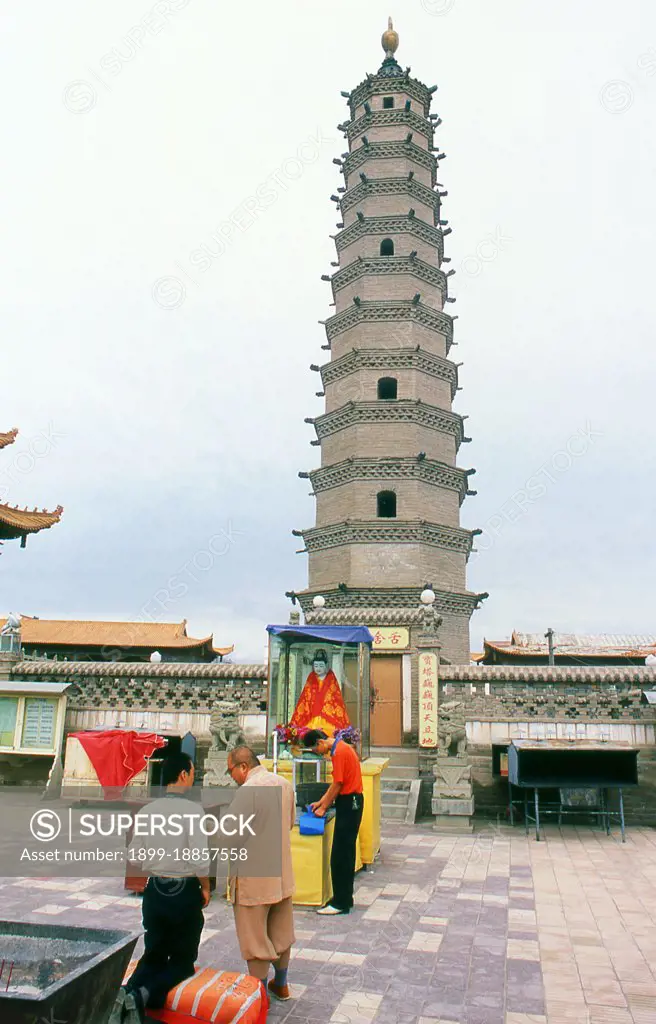
SuperStock offers millions of photos, videos, and stock assets to creatives around the world. This image of Kumarajiva, (Chinese:Jjiumoluoshi; 344 CE - 413 CE) was a Kuchean (Kucha, Kuqa) Buddhist monk, scholar, and translator. He first studied teachings of the Sarvastivada schools, later studied under Buddhasvamin, and finally became a Mahāyāna adherent, studying the Madhyamaka doctrine of Nagarjuna. He settled in Chang'an (modern Xi'an). He is mostly remembered for the prolific translation of Buddhist texts written in Sanskrit to Chinese he carried out during his later life. Wuwei has a population of around 500,000, mainly Han Chinese, but with visible numbers of Hui as well as Mongols and Tibetans. In earlier times it was called Liangzhou. Dominating the eastern end of the Hexi Corridor, it has long played a significant role on this major trade route. Wuweis most famous historic artefact, the celebrated Han Dynasty (206 BCE - 220 CE) bronze horse known as the Flying Horse of Gansu, was discovered here in a tomb beneath Leitai Temple (Leitai Si) in the north part of town. Although the ori by Pictures From History/Universal Images is available for licensing today.
Looking for a license?
Click here, and we'll help you find it! Questions? Just ask!
Click here, and we'll help you find it! Questions? Just ask!
DETAILS
Image Number: 1899-18857558Rights ManagedCredit Line:Pictures From History/Universal Images/SuperStockCollection:Universal Images Contributor:Pictures From History Model Release:NoProperty Release:NoResolution:3262×5085