Kosode with a Paragon of Filial Piety 19th century Japan In the late Edo period, warrior-class women often wore robes ornamented with Japanese or Chinese classical or literary themes. Embedded in the decoration of this robea winter landscape with plum blossoms and chrysanthemumsis a visual reference to the ancient Chinese Confucian legends known as the Twenty-Four Paragons of Filial Piety.The story illustrated here involves Wang Xiang (Japanese: ?sh?), a third-century official who, to fulfill his stepmother's craving for fresh fish in midwinter, caught some fish by lying on the ice until it melted. Wang Xiang is represented by only his clothing: an official's cap in gold with a red cord and a court robe in white with green details lie on the riverbank in front of a fishing pole and creel.. Kosode with a Paragon of Filial Piety. Japan. 19th century. Resist-dyed, painted, and embroidered silk crepe. Edo period (1615-1868). Costumes
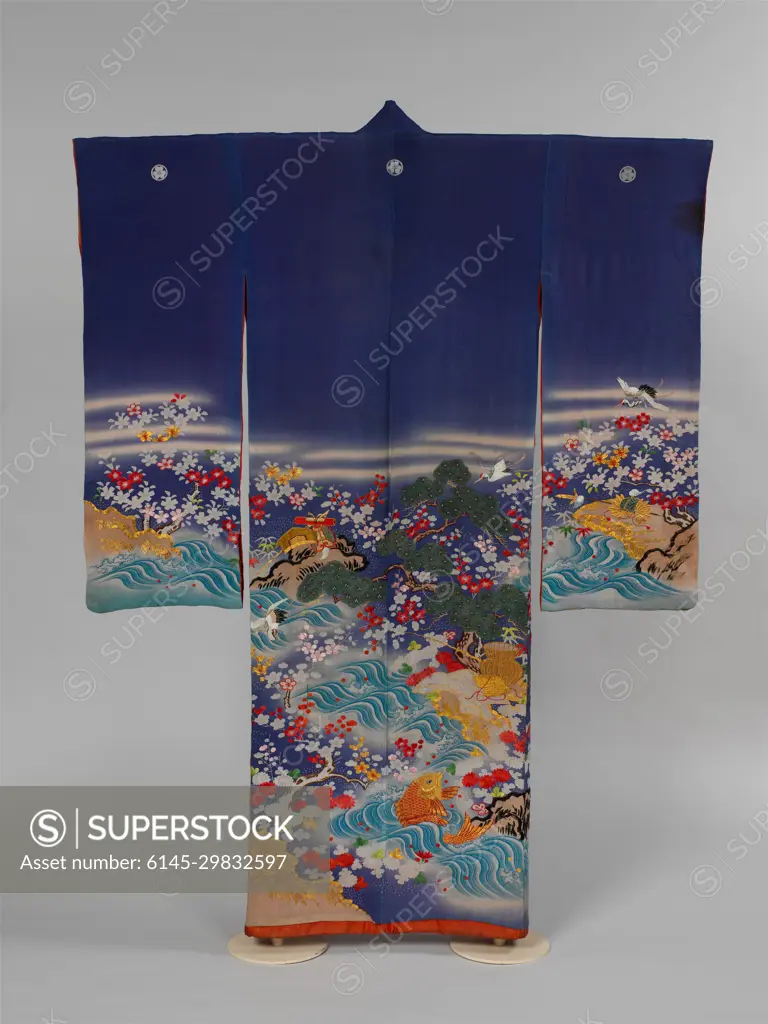
SuperStock offers millions of photos, videos, and stock assets to creatives around the world. This image of Kosode with a Paragon of Filial Piety 19th century Japan In the late Edo period, warrior-class women often wore robes ornamented with Japanese or Chinese classical or literary themes. Embedded in the decoration of this robea winter landscape with plum blossoms and chrysanthemumsis a visual reference to the ancient Chinese Confucian legends known as the Twenty-Four Paragons of Filial Piety.The story illustrated here involves Wang Xiang (Japanese: ?sh?), a third-century official who, to fulfill his stepmother's craving for fresh fish in midwinter, caught some fish by lying on the ice until it melted. Wang Xiang is represented by only his clothing: an official's cap in gold with a red cord and a court robe in white with green details lie on the riverbank in front of a fishing pole and creel.. Kosode with a Paragon of Filial Piety. Japan. 19th century. Resist-dyed, painted, and embroidered silk crepe. Edo period (1615-1868). Costumes by Piemags/PL Photography Limited is available for licensing today.
Looking for a license?
Click here, and we'll help you find it! Questions? Just ask!
Click here, and we'll help you find it! Questions? Just ask!
DETAILS
Image Number: 6145-29832597Royalty FreeCredit Line:Piemags/PL Photography Limited/SuperStockCollection:PL Photography Limited Contributor:Piemags Model Release:NoProperty Release:NoResolution:3000×4000