Kneeling statue of Hatshepsut ca. 1479-1458 B.C. New Kingdom At least eight, and perhaps as many as twelve small kneeling statues of Hatshepsut are thought to have been placed somewhere in the uppermost court of her temple at Deir el-Bahri. In these statues Hatshepsut is represented wearing the khat headcloth, and she offers a nemset vessel with a djed pillar superimposed on the front. It has been suggested that the combined use of the headdress, the vessel, and the djed pillar, which symbolizes endurance, is intended to evoke the setting up of a djed pillar at a kings rejuvenation festival, or Heb Sed. It has also been suggested that Hatshepsut intended to celebrate a Heb Sed toward the end of her reign.. Kneeling statue of Hatshepsut. ca. 1479-1458 B.C.. Granite, paint. New Kingdom. From Egypt, Upper Egypt, Thebes, Deir el-Bahri, "Hatshepsut Hole" (depression east of temple of Thutmose III), MMA excavations, 1922-23. Dynasty 18
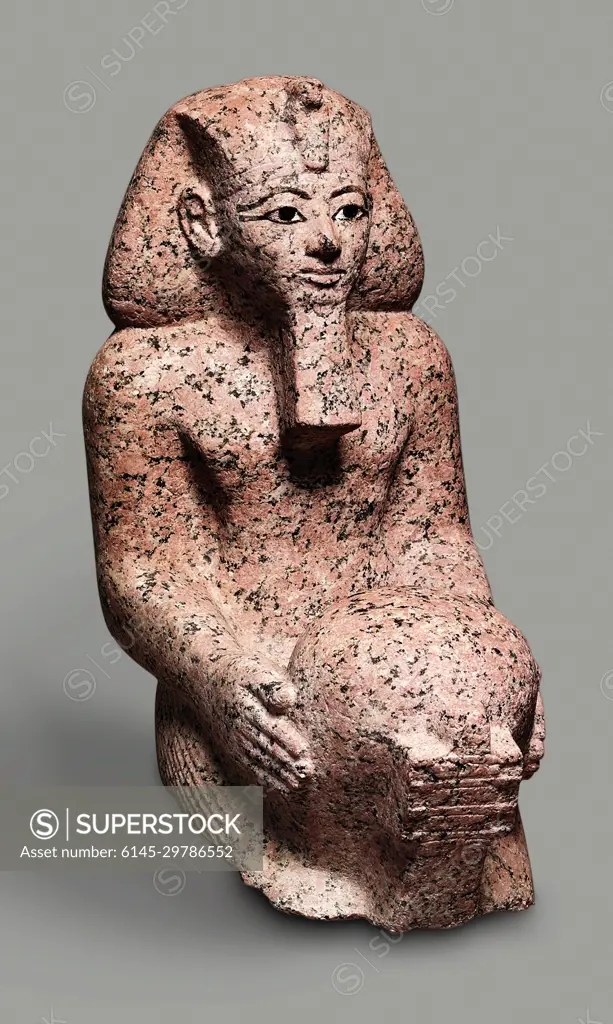
SuperStock offers millions of photos, videos, and stock assets to creatives around the world. This image of Kneeling statue of Hatshepsut ca. 1479-1458 B.C. New Kingdom At least eight, and perhaps as many as twelve small kneeling statues of Hatshepsut are thought to have been placed somewhere in the uppermost court of her temple at Deir el-Bahri. In these statues Hatshepsut is represented wearing the khat headcloth, and she offers a nemset vessel with a djed pillar superimposed on the front. It has been suggested that the combined use of the headdress, the vessel, and the djed pillar, which symbolizes endurance, is intended to evoke the setting up of a djed pillar at a kings rejuvenation festival, or Heb Sed. It has also been suggested that Hatshepsut intended to celebrate a Heb Sed toward the end of her reign.. Kneeling statue of Hatshepsut. ca. 1479-1458 B.C.. Granite, paint. New Kingdom. From Egypt, Upper Egypt, Thebes, Deir el-Bahri, "Hatshepsut Hole" (depression east of temple of Thutmose III), MMA excavations, 1922-23. Dynasty 18 by Piemags/PL Photography Limited is available for licensing today.
Looking for a license?
Click here, and we'll help you find it! Questions? Just ask!
Click here, and we'll help you find it! Questions? Just ask!
DETAILS
Image Number: 6145-29786552Royalty FreeCredit Line:Piemags/PL Photography Limited/SuperStockCollection:PL Photography Limited Contributor:Piemags Model Release:NoProperty Release:NoResolution:1471×2457