Khonsu. Dimensions: H. 11.3 cm (4 7/6 in.); W. 2.9 cm (1 1/8 in.); D. 2 cm (13/16 in.). Date: 664-30 B.C..This figure represents a child deity standing and holding a scepter. The moon disk, sidelock, and close-fitting mummiform garment identifies him as Khonsu the Child, the son of the deities Amun and Mut, who together formed the great Theban triad. The sidelock worn just below the moon disk marks him as a child god. Child gods grew to great prominence in the first millennium BC, and many statuettes of such gods were produced beginning in the Third Intermediate Period through the Ptolemaic Period. After Horus the Child (Harpokrates), the son of Isis and Osiris, Khonsu was one of the most celebrated and most frequently represented child gods. Museum: Metropolitan Museum of Art, New York, USA.
This asset has restrictions and cannot be purchased online. Get in touch for more details.
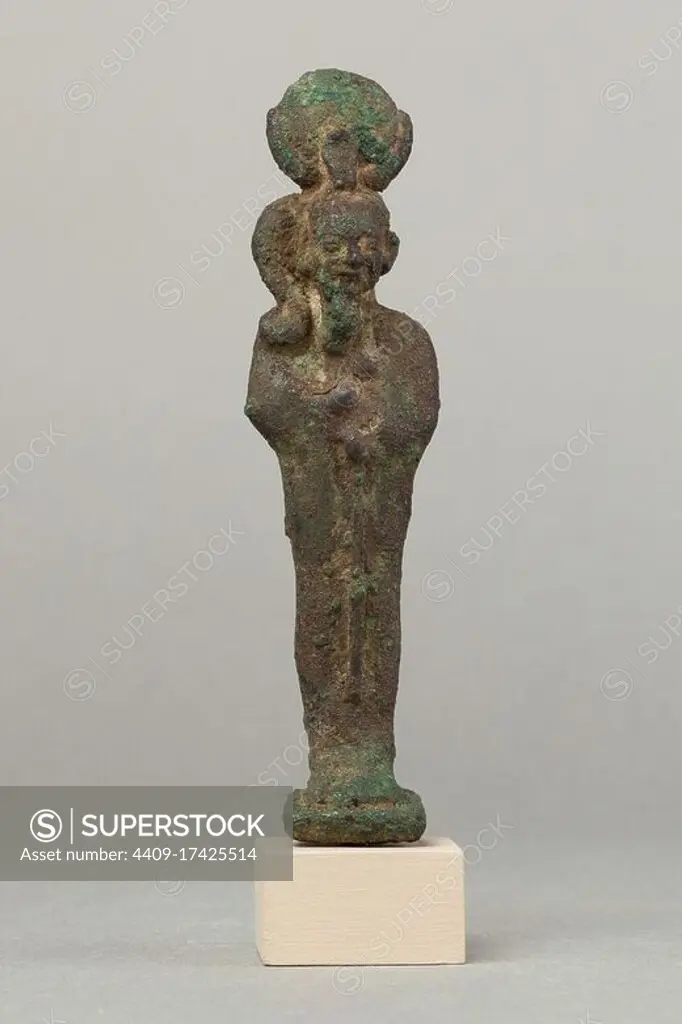
SuperStock offers millions of photos, videos, and stock assets to creatives around the world. This image of Khonsu. Dimensions: H. 11.3 cm (4 7/6 in.); W. 2.9 cm (1 1/8 in.); D. 2 cm (13/16 in.). Date: 664-30 B.C..This figure represents a child deity standing and holding a scepter. The moon disk, sidelock, and close-fitting mummiform garment identifies him as Khonsu the Child, the son of the deities Amun and Mut, who together formed the great Theban triad. The sidelock worn just below the moon disk marks him as a child god. Child gods grew to great prominence in the first millennium BC, and many statuettes of such gods were produced beginning in the Third Intermediate Period through the Ptolemaic Period. After Horus the Child (Harpokrates), the son of Isis and Osiris, Khonsu was one of the most celebrated and most frequently represented child gods. Museum: Metropolitan Museum of Art, New York, USA. by Album/Metropolitan Museum of Art, NY/Album Archivo is available for licensing today.
Looking for a license?
Click here, and we'll help you find it! Questions? Just ask!
Click here, and we'll help you find it! Questions? Just ask!
DETAILS
Image Number: 4409-17425514Rights ManagedCredit Line:Album/Metropolitan Museum of Art, NY/Album Archivo/SuperStockCollection:Album Archivo Contributor:Album / Metropolitan Museum of Art, NY Model Release:NoProperty Release:NoResolution:2933×4400