Kero 17th-18th century Quechua The painted faces on keros of this type indicate that they are meant to represent the forest-dwelling Anti. The eastern slopes of the Andes, descending to the tropical forest of the great river basins, were populated by this ethnically separate group, also called Chunchos and considered savages by the inhabitants of the Inkan empire in the high plateaus and the Pacific coast. Despite their resemblance to face beakers of the Precolombian era, keros shaped in the form of human heads are widely believed to have evolved in a later colonial phase.Unlike the Museum's other head-shaped kero with its narrative frieze (1994.35.26), the back of this kero is simply decorated with traditional Andean floral devices.. Kero 316855
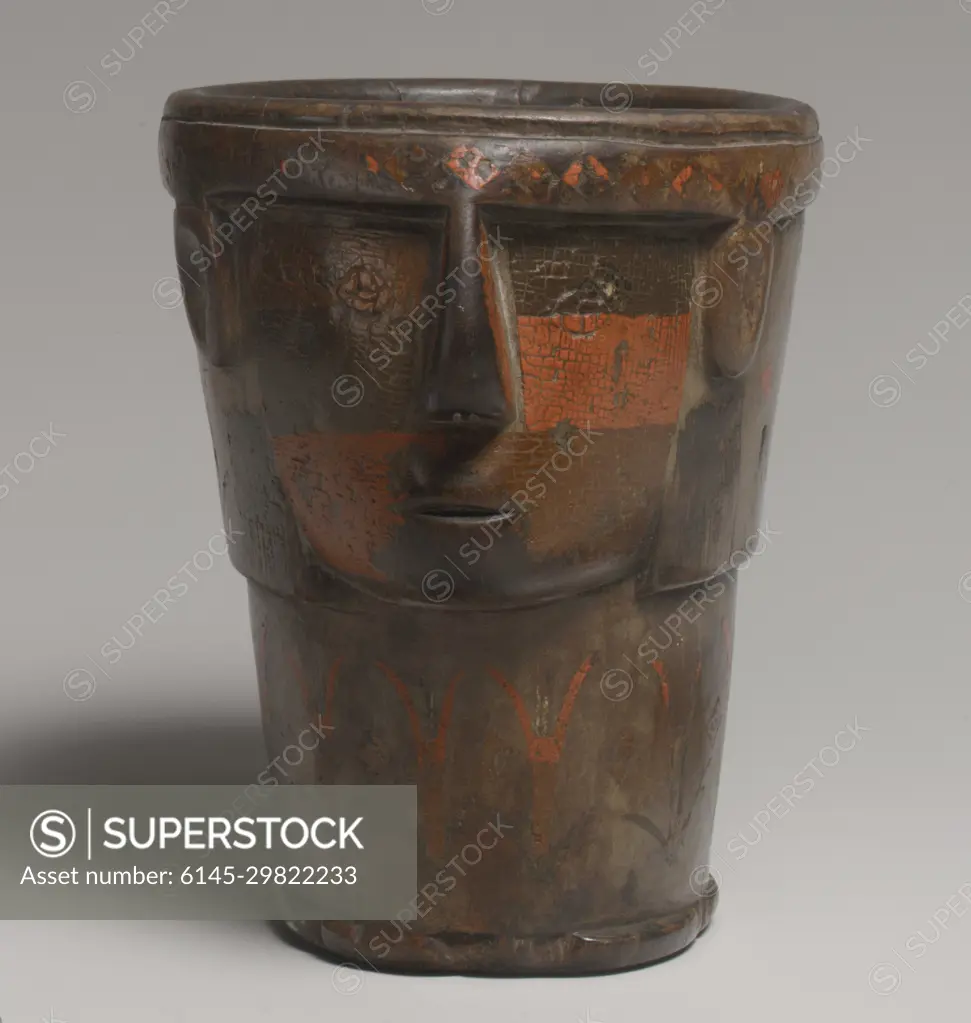
SuperStock offers millions of photos, videos, and stock assets to creatives around the world. This image of Kero 17th-18th century Quechua The painted faces on keros of this type indicate that they are meant to represent the forest-dwelling Anti. The eastern slopes of the Andes, descending to the tropical forest of the great river basins, were populated by this ethnically separate group, also called Chunchos and considered savages by the inhabitants of the Inkan empire in the high plateaus and the Pacific coast. Despite their resemblance to face beakers of the Precolombian era, keros shaped in the form of human heads are widely believed to have evolved in a later colonial phase.Unlike the Museum's other head-shaped kero with its narrative frieze (1994.35.26), the back of this kero is simply decorated with traditional Andean floral devices.. Kero 316855 by Piemags/PL Photography Limited is available for licensing today.
Looking for a license?
Click here, and we'll help you find it! Questions? Just ask!
Click here, and we'll help you find it! Questions? Just ask!
DETAILS
Image Number: 6145-29822233Royalty FreeCredit Line:Piemags/PL Photography Limited/SuperStockCollection:PL Photography Limited Contributor:Piemags Model Release:NoProperty Release:NoResolution:1868×1968