Jug ca. 1000-750 B.C. Iran This jug has a globular body, a flat base and a narrow mouth. It is made of pinkish-buff clay. It was excavated at It was excavated at Shaffe, a cemetery site in Luristan in the Zagros Mountains of western Iran. It is often thought that the inhabitants of Luristan in this period were pastoral nomads, who moved with their herds from the high valleys of the Zagros during the summer to lowland pastures in the winter. This theory arises from the dearth of evidence for settlements, and the occurrence of isolated cemetery sites, such as Shaffe. At the same time, the infrastructure necessary for bronze working, an important industry in Luristan, suggests that some sedentary settlements must have existed. In all likelihood these settlements were not located on mounds, but at lower elevations near water sources where agriculture could be practiced.. Jug 324003
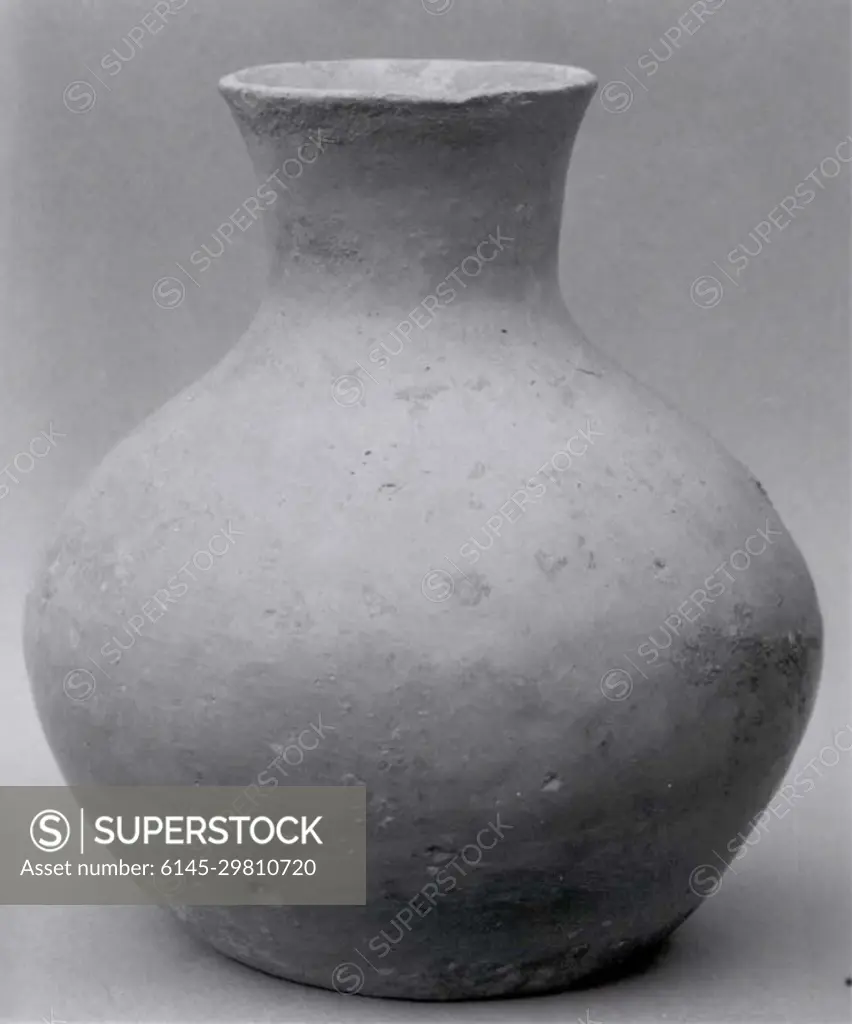
SuperStock offers millions of photos, videos, and stock assets to creatives around the world. This image of Jug ca. 1000-750 B.C. Iran This jug has a globular body, a flat base and a narrow mouth. It is made of pinkish-buff clay. It was excavated at It was excavated at Shaffe, a cemetery site in Luristan in the Zagros Mountains of western Iran. It is often thought that the inhabitants of Luristan in this period were pastoral nomads, who moved with their herds from the high valleys of the Zagros during the summer to lowland pastures in the winter. This theory arises from the dearth of evidence for settlements, and the occurrence of isolated cemetery sites, such as Shaffe. At the same time, the infrastructure necessary for bronze working, an important industry in Luristan, suggests that some sedentary settlements must have existed. In all likelihood these settlements were not located on mounds, but at lower elevations near water sources where agriculture could be practiced.. Jug 324003 by Piemags/PL Photography Limited is available for licensing today.
Looking for a license?
Click here, and we'll help you find it! Questions? Just ask!
Click here, and we'll help you find it! Questions? Just ask!
DETAILS
Image Number: 6145-29810720Royalty FreeCredit Line:Piemags/PL Photography Limited/SuperStockCollection:PL Photography Limited Contributor:Piemags Model Release:NoProperty Release:NoResolution:666×800