Jug ca. 1590-1600 Decoration after a design by Sebald Beham German This stoneware was produced on speculation for a middle-market clientele. Though handmade, its decoration was quick work, pressed on with reusable molds based on designs lifted from prints. Siegburg potters developed a reputation for interesting forms and the latest styles rendered in a distinctive gray-white glaze; higher end pieces (like a related Siegburg stoneware ewer, 17.190.2058) boasted silver rather than pewter mounts. They were able to reach a huge market by distributing their work via trading posts controlled by the Hanseatic League, a powerful federation of merchant guilds and their market towns that included Lübeck, Cologne, London, Bruges, and later Antwerp and, to the north, Riga and Tallinn.Elizabeth Cleland, 2017. Jug. German, Siegburg. ca. 1590-1600. Salt-glazed stoneware; pewter lid. Ceramics-Pottery
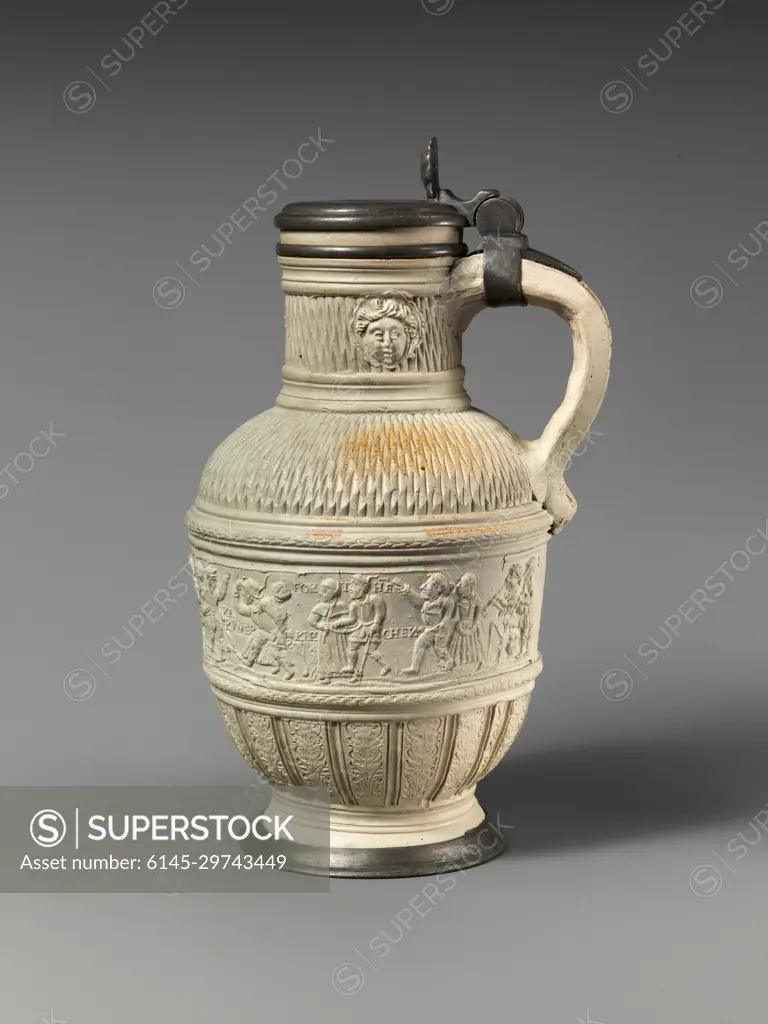
SuperStock offers millions of photos, videos, and stock assets to creatives around the world. This image of Jug ca. 1590-1600 Decoration after a design by Sebald Beham German This stoneware was produced on speculation for a middle-market clientele. Though handmade, its decoration was quick work, pressed on with reusable molds based on designs lifted from prints. Siegburg potters developed a reputation for interesting forms and the latest styles rendered in a distinctive gray-white glaze; higher end pieces (like a related Siegburg stoneware ewer, 17.190.2058) boasted silver rather than pewter mounts. They were able to reach a huge market by distributing their work via trading posts controlled by the Hanseatic League, a powerful federation of merchant guilds and their market towns that included Lübeck, Cologne, London, Bruges, and later Antwerp and, to the north, Riga and Tallinn.Elizabeth Cleland, 2017. Jug. German, Siegburg. ca. 1590-1600. Salt-glazed stoneware; pewter lid. Ceramics-Pottery by Piemags/PL Photography Limited is available for licensing today.
Looking for a license?
Click here, and we'll help you find it! Questions? Just ask!
Click here, and we'll help you find it! Questions? Just ask!
DETAILS
Image Number: 6145-29743449Royalty FreeCredit Line:Piemags/PL Photography Limited/SuperStockCollection:PL Photography Limited Contributor:Piemags Model Release:NoProperty Release:NoResolution:3000×4000