Javanese dance is the dances and art forms that were created and influenced by Javanese culture. Javanese dance is usually associated with the courtly, refined and sophisticated culture of the Javanese kratons, such as the Bedhaya and Srimpi dance. However, in a wider sense, Javanese dance also includes the dances of Javanese commoners and villagers such as Ronggeng, Tayub, Reog, and Kuda Lumping. Javanese dance is usually associated with Wayang wong, and the palaces of Yogyakarta and Surakarta due to the nature of dance being a pusaka or sacred heirloom from ancestors of the palace rulers. These expressive dances are more than just dances, they are also used for moral education, emotional expression, and spreading of the Javanese culture.
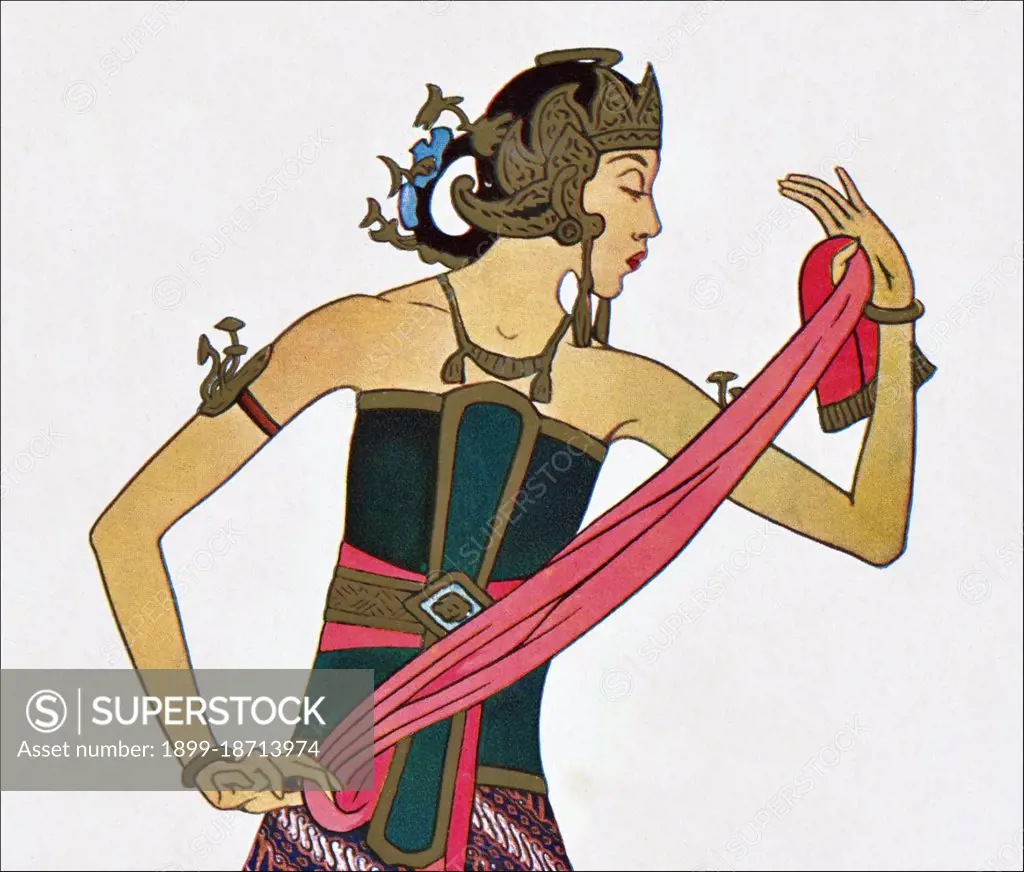
SuperStock offers millions of photos, videos, and stock assets to creatives around the world. This image of Javanese dance is the dances and art forms that were created and influenced by Javanese culture. Javanese dance is usually associated with the courtly, refined and sophisticated culture of the Javanese kratons, such as the Bedhaya and Srimpi dance. However, in a wider sense, Javanese dance also includes the dances of Javanese commoners and villagers such as Ronggeng, Tayub, Reog, and Kuda Lumping. Javanese dance is usually associated with Wayang wong, and the palaces of Yogyakarta and Surakarta due to the nature of dance being a pusaka or sacred heirloom from ancestors of the palace rulers. These expressive dances are more than just dances, they are also used for moral education, emotional expression, and spreading of the Javanese culture. by Pictures From History/Universal Images is available for licensing today.
Looking for a license?
Click here, and we'll help you find it! Questions? Just ask!
Click here, and we'll help you find it! Questions? Just ask!
DETAILS
Image Number: 1899-18713974Rights ManagedCredit Line:Pictures From History/Universal Images/SuperStockCollection: