Jar ca. 1st century B.C.-1st century A.D. Parthian This vessel, which has been reconstructed from several sherds, has a globular body and a narrow neck. It is made of a pale gray clay, using a potters wheel. It was excavated at Shahr-i Qumis in northern Iran, which has been identified as the ancient city of Hecatompylos established by the Parthians as their capital by about 200 B.C. In Greek Hecatompylos means ‘a hundred gates, suggesting that the city was quite large. Indeed, the modern archaeological site includes several mounds, only a few of which have been excavated, and a vast area covered with potsherds. This vessel was found in a well at Site IV. The well appears to be have been filled deliberately, but it is difficult to say whether this vessel was placed in the well for a specific reason or if it was simply discarded. The large building at Site IV was completely filled with dirt sometime in the late 1st century B.C. or early 1st century A.D., perhaps when the Parthian capit
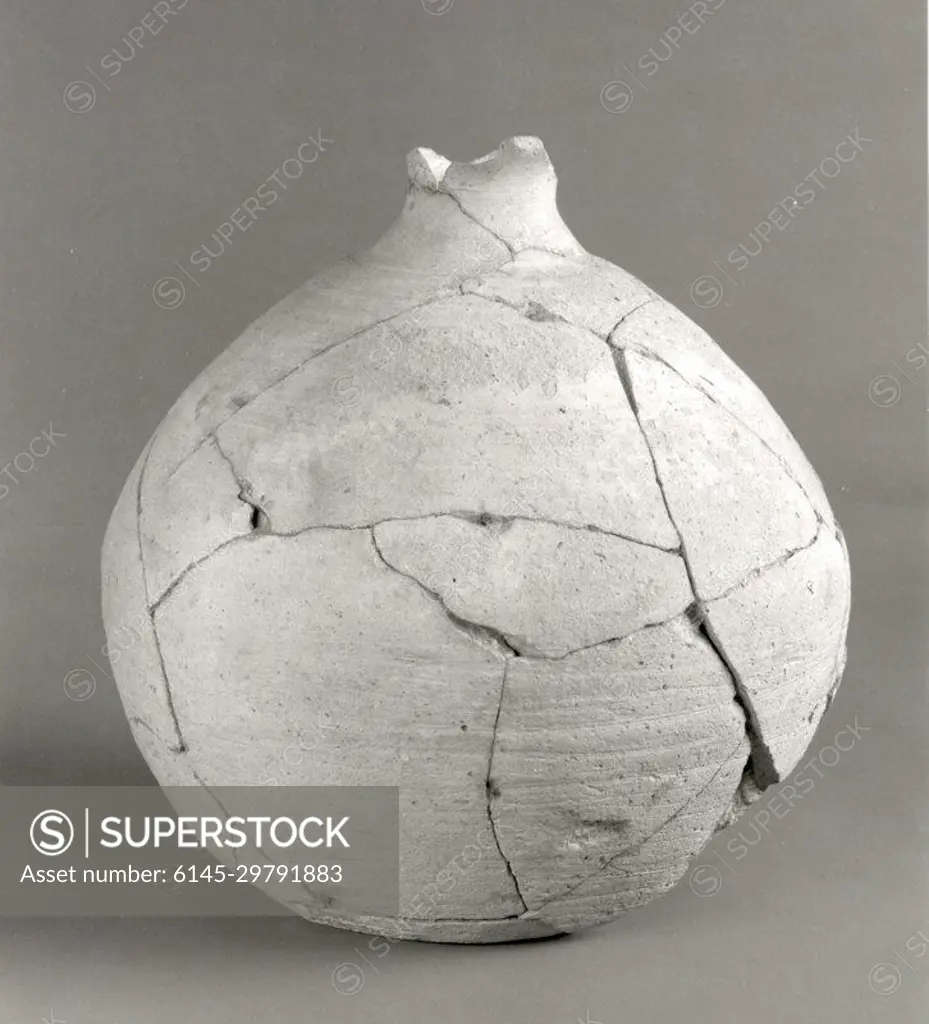
SuperStock offers millions of photos, videos, and stock assets to creatives around the world. This image of Jar ca. 1st century B.C.-1st century A.D. Parthian This vessel, which has been reconstructed from several sherds, has a globular body and a narrow neck. It is made of a pale gray clay, using a potters wheel. It was excavated at Shahr-i Qumis in northern Iran, which has been identified as the ancient city of Hecatompylos established by the Parthians as their capital by about 200 B.C. In Greek Hecatompylos means ‘a hundred gates, suggesting that the city was quite large. Indeed, the modern archaeological site includes several mounds, only a few of which have been excavated, and a vast area covered with potsherds. This vessel was found in a well at Site IV. The well appears to be have been filled deliberately, but it is difficult to say whether this vessel was placed in the well for a specific reason or if it was simply discarded. The large building at Site IV was completely filled with dirt sometime in the late 1st century B.C. or early 1st century A.D., perhaps when the Parthian capit by Piemags/PL Photography Limited is available for licensing today.
Looking for a license?
Click here, and we'll help you find it! Questions? Just ask!
Click here, and we'll help you find it! Questions? Just ask!
DETAILS
Image Number: 6145-29791883Royalty FreeCredit Line:Piemags/PL Photography Limited/SuperStockCollection:PL Photography Limited Contributor:Piemags Model Release:NoProperty Release:NoResolution:726×800