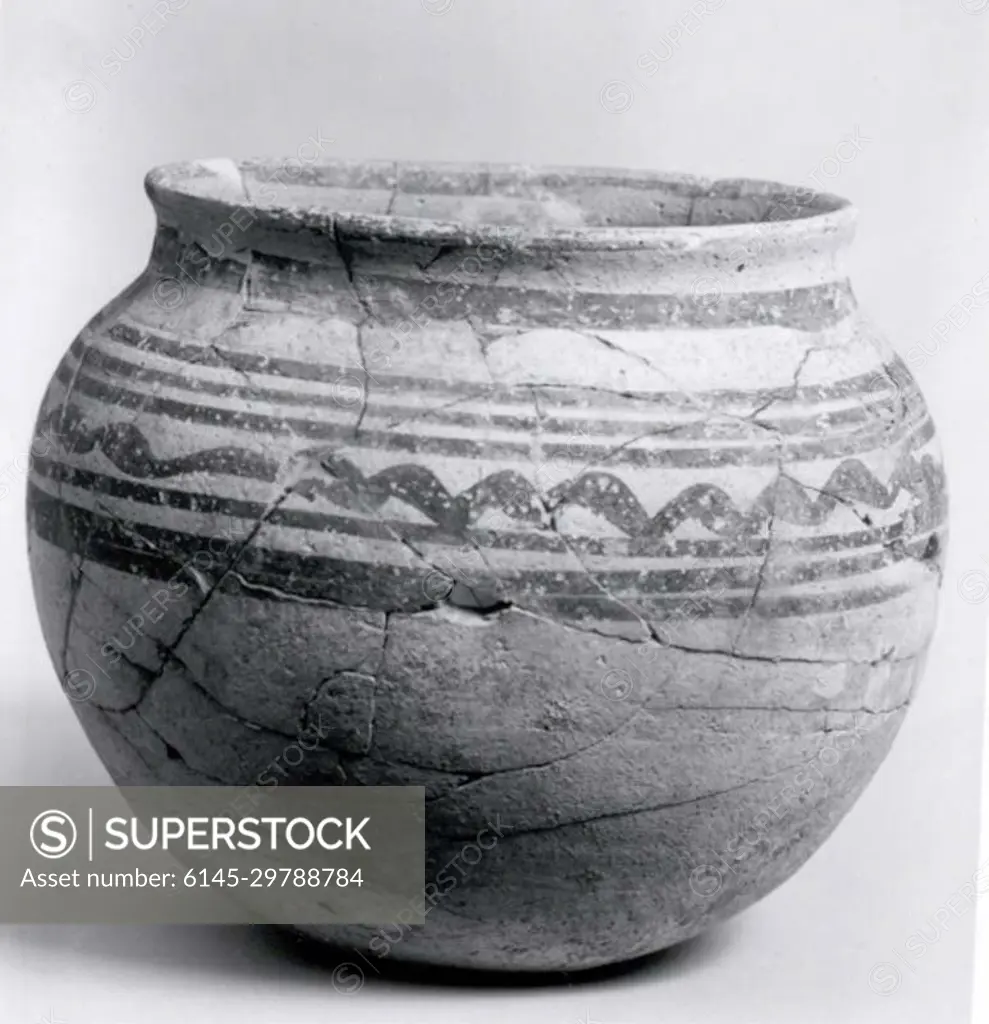
Jar ca. 2600-2300 B.C. Iran This globular jar has a ring base and an everted rim. It is made of a buff clay, and decorated with dark brown horizontal lines. It was found in a grave at Kamterlan I, a mound in Luristan in the Zagros Mountains of western Iran that was the site of both settlement and burials. It is difficult to say what purpose this bowl served, or even to determine whether it was a special funerary item or an object of everyday use.It is often thought that the inhabitants of Luristan in this period were pastoral nomads, who moved with their herds from the high valleys of the Zagros during the summer to lowland pastures in the winter. This theory arises from the dearth of evidence for settlements, and the occurrence of isolated cemetery sites. The remains of buildings at Kamterlan I, however, indicates sedentary society, and it is likely pastoralism was practiced alongside agriculture there.. Jar 323956
SuperStock offers millions of photos, videos, and stock assets to creatives around the world. This image of Jar ca. 2600-2300 B.C. Iran This globular jar has a ring base and an everted rim. It is made of a buff clay, and decorated with dark brown horizontal lines. It was found in a grave at Kamterlan I, a mound in Luristan in the Zagros Mountains of western Iran that was the site of both settlement and burials. It is difficult to say what purpose this bowl served, or even to determine whether it was a special funerary item or an object of everyday use.It is often thought that the inhabitants of Luristan in this period were pastoral nomads, who moved with their herds from the high valleys of the Zagros during the summer to lowland pastures in the winter. This theory arises from the dearth of evidence for settlements, and the occurrence of isolated cemetery sites. The remains of buildings at Kamterlan I, however, indicates sedentary society, and it is likely pastoralism was practiced alongside agriculture there.. Jar 323956 by Piemags/PL Photography Limited is available for licensing today.
Looking for a license?
Click here, and we'll help you find it! Questions? Just ask!
Click here, and we'll help you find it! Questions? Just ask!
DETAILS
Image Number: 6145-29788784Royalty FreeCredit Line:Piemags/PL Photography Limited/SuperStockCollection:PL Photography Limited Contributor:Piemags Model Release:NoProperty Release:NoResolution:773×800