Ivory fragment. Culture: Assyrian. Dimensions: 3.27 x 2.09 x 0.63 in. (8.31 x 5.31 x 1.6 cm). Date: ca. 9th-7th century B.C..This plaque has a flat back and a raised surface, carved in relief with a central design resembling plaited hair or tufts of hair, bordered at each side with a plain strip and a fluted edge. It must have been part of another object such as a statue or piece of furniture, but was found as a fragment, making it difficult to reconstruct the original design. Carved ivory pieces such as this were widely used in the production of elite furniture during the early first millennium B.C. They were often inlaid into a wooden frame using joinery techniques and glue, and could be overlaid with gold foil or inlaid with colored glass or stone pieces to create a dazzling effect of gleaming surfaces and bright colors.Built by the Assyrian king Ashurnasirpal II, the palaces and storerooms of Nimrud housed thousands of pieces of carved ivory. Most of the ivories served as furnitu
This asset has restrictions and cannot be purchased online. Get in touch for more details.
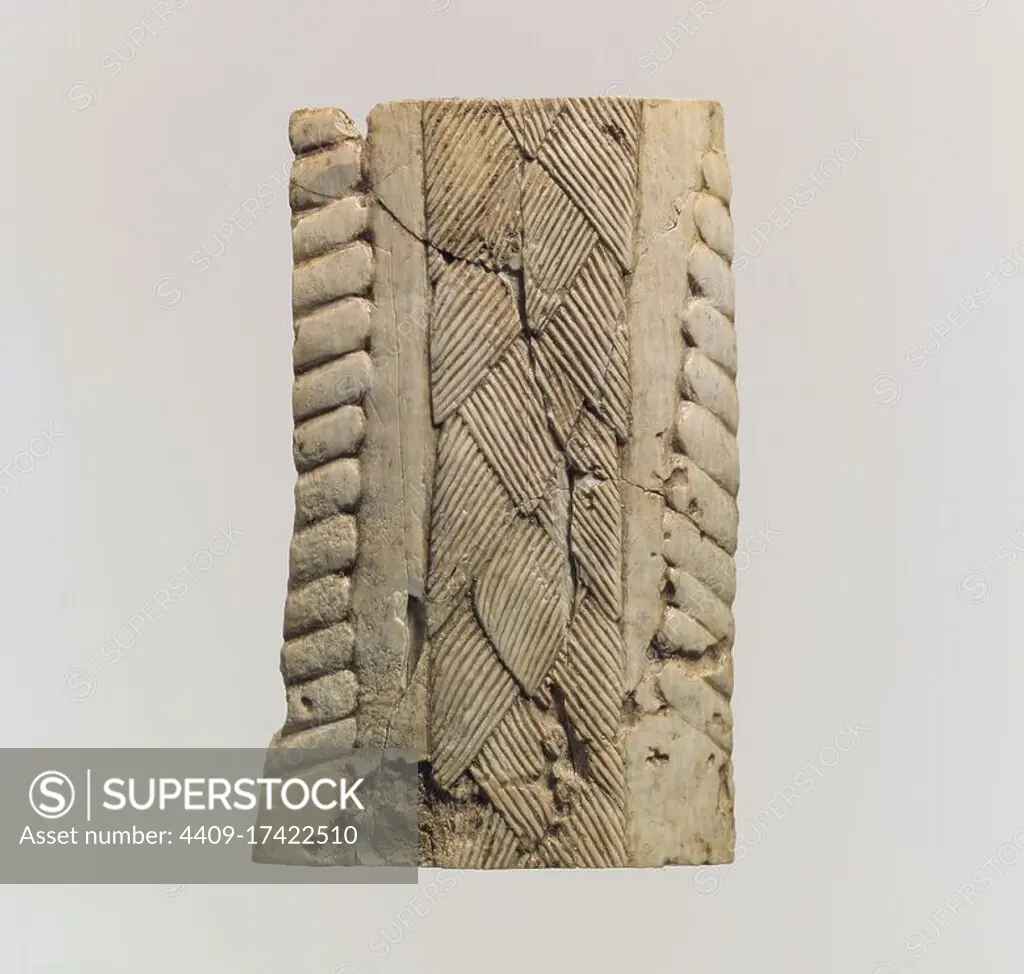
SuperStock offers millions of photos, videos, and stock assets to creatives around the world. This image of Ivory fragment. Culture: Assyrian. Dimensions: 3.27 x 2.09 x 0.63 in. (8.31 x 5.31 x 1.6 cm). Date: ca. 9th-7th century B.C..This plaque has a flat back and a raised surface, carved in relief with a central design resembling plaited hair or tufts of hair, bordered at each side with a plain strip and a fluted edge. It must have been part of another object such as a statue or piece of furniture, but was found as a fragment, making it difficult to reconstruct the original design. Carved ivory pieces such as this were widely used in the production of elite furniture during the early first millennium B.C. They were often inlaid into a wooden frame using joinery techniques and glue, and could be overlaid with gold foil or inlaid with colored glass or stone pieces to create a dazzling effect of gleaming surfaces and bright colors.Built by the Assyrian king Ashurnasirpal II, the palaces and storerooms of Nimrud housed thousands of pieces of carved ivory. Most of the ivories served as furnitu by Album/Metropolitan Museum of Art, NY/Album Archivo is available for licensing today.
Looking for a license?
Click here, and we'll help you find it! Questions? Just ask!
Click here, and we'll help you find it! Questions? Just ask!
DETAILS
Image Number: 4409-17422510Rights ManagedCredit Line:Album/Metropolitan Museum of Art, NY/Album Archivo/SuperStockCollection:Album Archivo Contributor:Album / Metropolitan Museum of Art, NY Model Release:NoProperty Release:NoResolution:4172×3970