Ivory fragment ca. 8th-7th century B.C. Assyrian This small ivory fragment is rounded in shape and was probably blackened through exposure to fire when the palace complexes at Nimrud were sacked during the final defeat of Assyria at the end of the seventh century B.C. It is incised with overlapping triangles filled with cross-hatched decoration and outlined by a single-line border. A hole drilled through the piece horizontally may have allowed it to be attached to another element by a nail or peg. Carved ivory pieces such as this were widely used in the production of elite furniture during the early first millennium B.C. They were often inlaid into a wooden frame using joinery techniques and glue, and could be overlaid with gold foil or inlaid with colored glass or stone pieces to create a dazzling effect of gleaming surfaces and bright colors. This piece is too broken to reconstruct its original appearance, although its cylindrical form suggests it may have formed part of a decorative
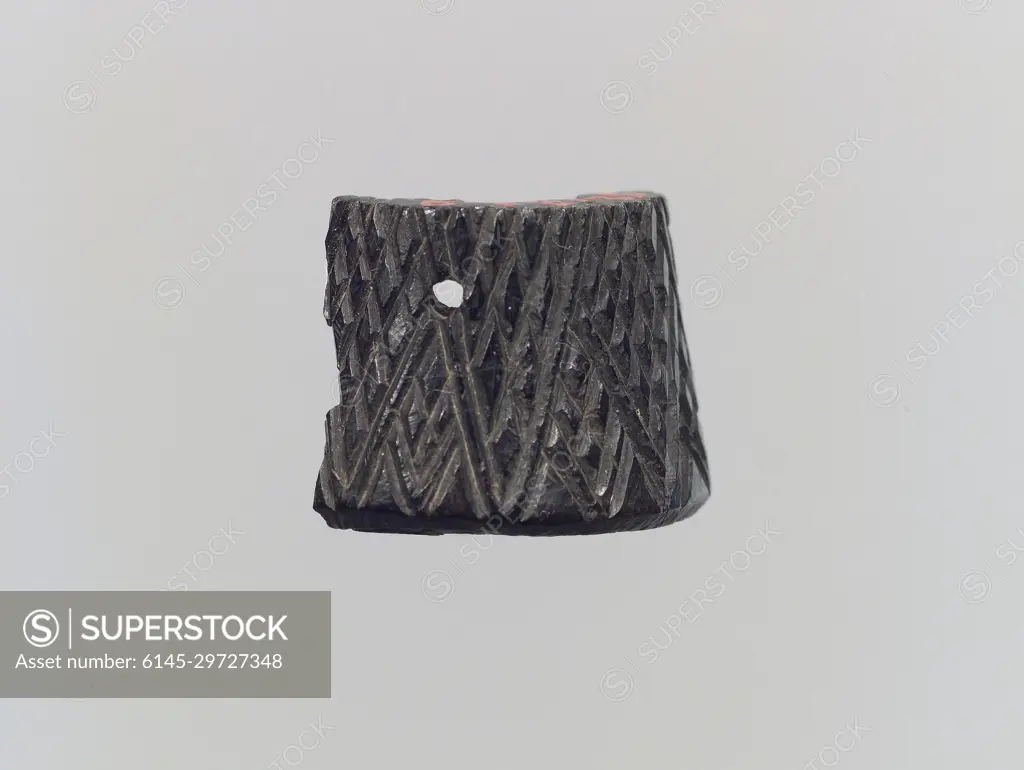
SuperStock offers millions of photos, videos, and stock assets to creatives around the world. This image of Ivory fragment ca. 8th-7th century B.C. Assyrian This small ivory fragment is rounded in shape and was probably blackened through exposure to fire when the palace complexes at Nimrud were sacked during the final defeat of Assyria at the end of the seventh century B.C. It is incised with overlapping triangles filled with cross-hatched decoration and outlined by a single-line border. A hole drilled through the piece horizontally may have allowed it to be attached to another element by a nail or peg. Carved ivory pieces such as this were widely used in the production of elite furniture during the early first millennium B.C. They were often inlaid into a wooden frame using joinery techniques and glue, and could be overlaid with gold foil or inlaid with colored glass or stone pieces to create a dazzling effect of gleaming surfaces and bright colors. This piece is too broken to reconstruct its original appearance, although its cylindrical form suggests it may have formed part of a decorative by Piemags/PL Photography Limited is available for licensing today.
Looking for a license?
Click here, and we'll help you find it! Questions? Just ask!
Click here, and we'll help you find it! Questions? Just ask!
DETAILS
Image Number: 6145-29727348Royalty FreeCredit Line:Piemags/PL Photography Limited/SuperStockCollection:PL Photography Limited Contributor:Piemags Model Release:NoProperty Release:NoResolution:4000×3011