Interior Hanging 19th century Mali or Ghana; Fulani () This textile, with its checkerboard-within-checkerboard pattern, is a masterful example of the art of narrow strip weaving. The fabric is kept lively by subtle changes in the woven design and by additional motifs featuring triangles and chevrons. Bundles of warp threads produce thick lines at three-quarter-inch intervals, further dividing the pattern and adding subtle richness to the surface. The cloth consists of fifteen strips woven on a horizontal double-heddle loom. Using this method, the weaver plans the patterns carefully, holding in mind an overall concept of what the finished textile will look like. Consistency is important if the strips are to align when sewn together. In this African region such weaving is usually a male occupation. Easily transportable, cloth has long been a valued trade commodity throughout West Africa. The origins of this textile are uncertain. Although purchased in the 1870s in Ghana by Joseph Upton,
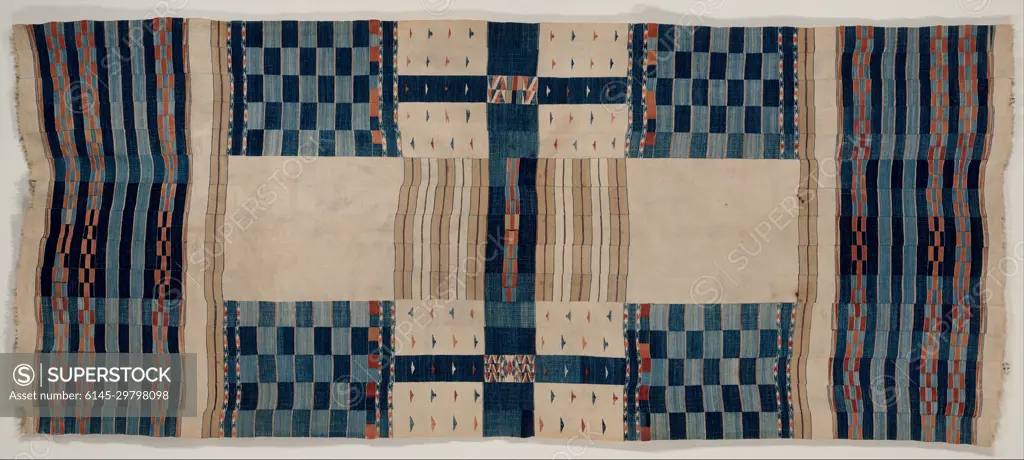
SuperStock offers millions of photos, videos, and stock assets to creatives around the world. This image of Interior Hanging 19th century Mali or Ghana; Fulani () This textile, with its checkerboard-within-checkerboard pattern, is a masterful example of the art of narrow strip weaving. The fabric is kept lively by subtle changes in the woven design and by additional motifs featuring triangles and chevrons. Bundles of warp threads produce thick lines at three-quarter-inch intervals, further dividing the pattern and adding subtle richness to the surface. The cloth consists of fifteen strips woven on a horizontal double-heddle loom. Using this method, the weaver plans the patterns carefully, holding in mind an overall concept of what the finished textile will look like. Consistency is important if the strips are to align when sewn together. In this African region such weaving is usually a male occupation. Easily transportable, cloth has long been a valued trade commodity throughout West Africa. The origins of this textile are uncertain. Although purchased in the 1870s in Ghana by Joseph Upton, by Piemags/PL Photography Limited is available for licensing today.
Looking for a license?
Click here, and we'll help you find it! Questions? Just ask!
Click here, and we'll help you find it! Questions? Just ask!
DETAILS
Image Number: 6145-29798098Royalty FreeCredit Line:Piemags/PL Photography Limited/SuperStockCollection:PL Photography Limited Contributor:Piemags Model Release:NoProperty Release:NoResolution:1905×857