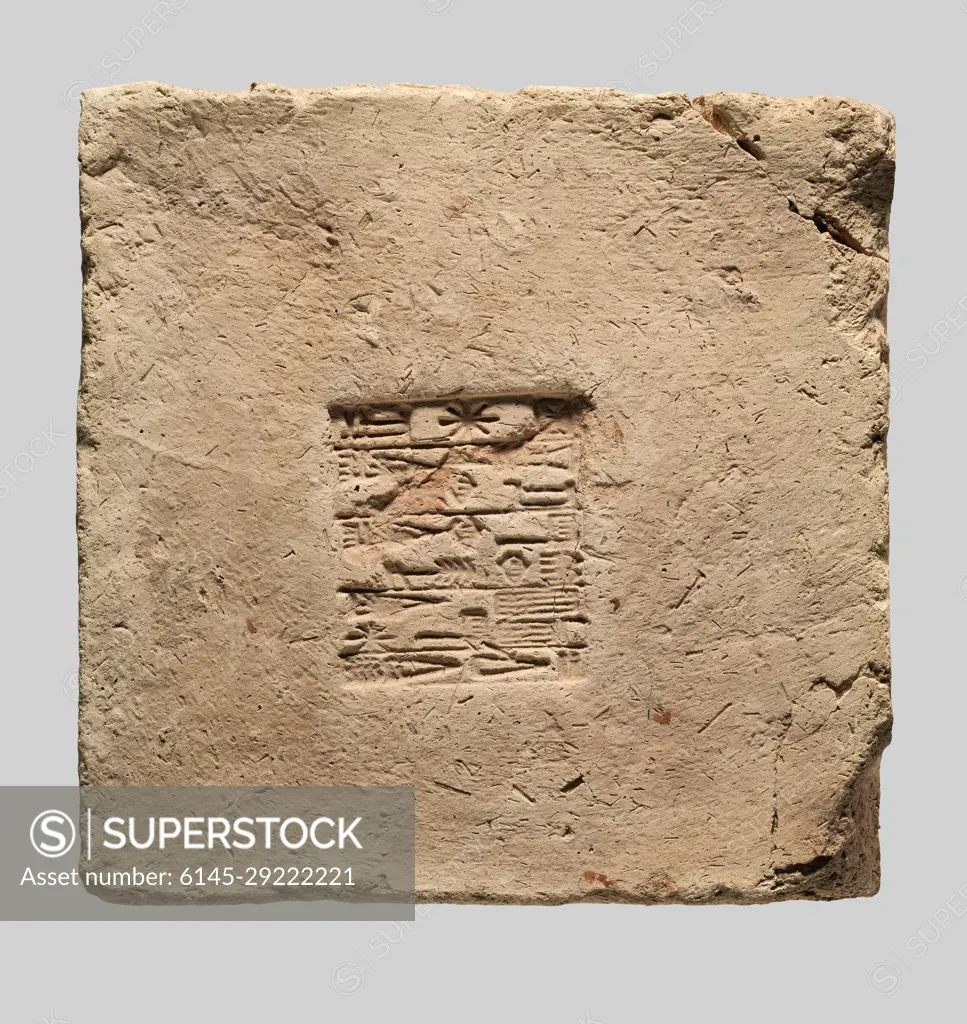
Inscribed brick ca. 2112-2095 B.C. Neo-Sumerian This ceramic brick was found during excavations at Nippur, the religious capital of Mesopotamia in the third and early second millennia B.C. Nippur was home to Enlil, the chief god of the pantheon. Rulers from other Mesopotamian cities sought to promote their kingship and garner this gods favor by maintaining, repairing, and at times rebuilding his temple, the Ekur. The repair of a temple created an opportunity for a ruler to bury his own inscription within the walls, leaving a record for future generations.The brick is stamped with an inscription written in the Sumerian language. It names the Ur III period ruler Ur-Nammu (ca. 2112-2095 B.C.). Royal power fragmented after the collapse of the Akkadian empire (ca. 2350-2150 B.C.). Ur-Nammu is credited for the reunification of Mesopotamia, an accomplishment evoked by the title "King of Sumer and Akkad", new to this king. Today, Ur-Nammu is known for his many building works, particularly at
SuperStock offers millions of photos, videos, and stock assets to creatives around the world. This image of Inscribed brick ca. 2112-2095 B.C. Neo-Sumerian This ceramic brick was found during excavations at Nippur, the religious capital of Mesopotamia in the third and early second millennia B.C. Nippur was home to Enlil, the chief god of the pantheon. Rulers from other Mesopotamian cities sought to promote their kingship and garner this gods favor by maintaining, repairing, and at times rebuilding his temple, the Ekur. The repair of a temple created an opportunity for a ruler to bury his own inscription within the walls, leaving a record for future generations.The brick is stamped with an inscription written in the Sumerian language. It names the Ur III period ruler Ur-Nammu (ca. 2112-2095 B.C.). Royal power fragmented after the collapse of the Akkadian empire (ca. 2350-2150 B.C.). Ur-Nammu is credited for the reunification of Mesopotamia, an accomplishment evoked by the title "King of Sumer and Akkad", new to this king. Today, Ur-Nammu is known for his many building works, particularly at by Piemags/PL Photography Limited is available for licensing today.
Looking for a license?
Click here, and we'll help you find it! Questions? Just ask!
Click here, and we'll help you find it! Questions? Just ask!
DETAILS
Image Number: 6145-29222221Royalty FreeCredit Line:Piemags/PL Photography Limited/SuperStockCollection:PL Photography Limited Contributor:Piemags Model Release:NoProperty Release:NoResolution:3779×4000