Incised furniture plaque with a kneeling bull. Culture: Assyrian. Dimensions: 1.54 x 2.13 x 0.16 in. (3.91 x 5.41 x 0.41 cm). Date: ca. 9th-8th century B.C..This trapezoidal plaque was found in a room that has been identified as part of the royal residency at Fort Shalmaneser, a royal building at Nimrud that was probably used to store tribute and booty collected by the Assyrians while on military campaign. Ivories with incised decoration like this one have been attributed to an Assyrian style similar to the large reliefs lining the walls of the Northwest Palace. The kneeling bull depicted on this plaque, with its stylized musculature and elaborately incised anatomy, recalls the animals embroidered on the robes worn by the figures in the palace reliefs and can be compared with depictions of animals in glyptic art and glazed ceramics from the Neo-Assyrian period. Two dowel holes that pierce the plaque were probably used to fasten it to a frame or other backing that does not survive. At
This asset has restrictions and cannot be purchased online. Get in touch for more details.
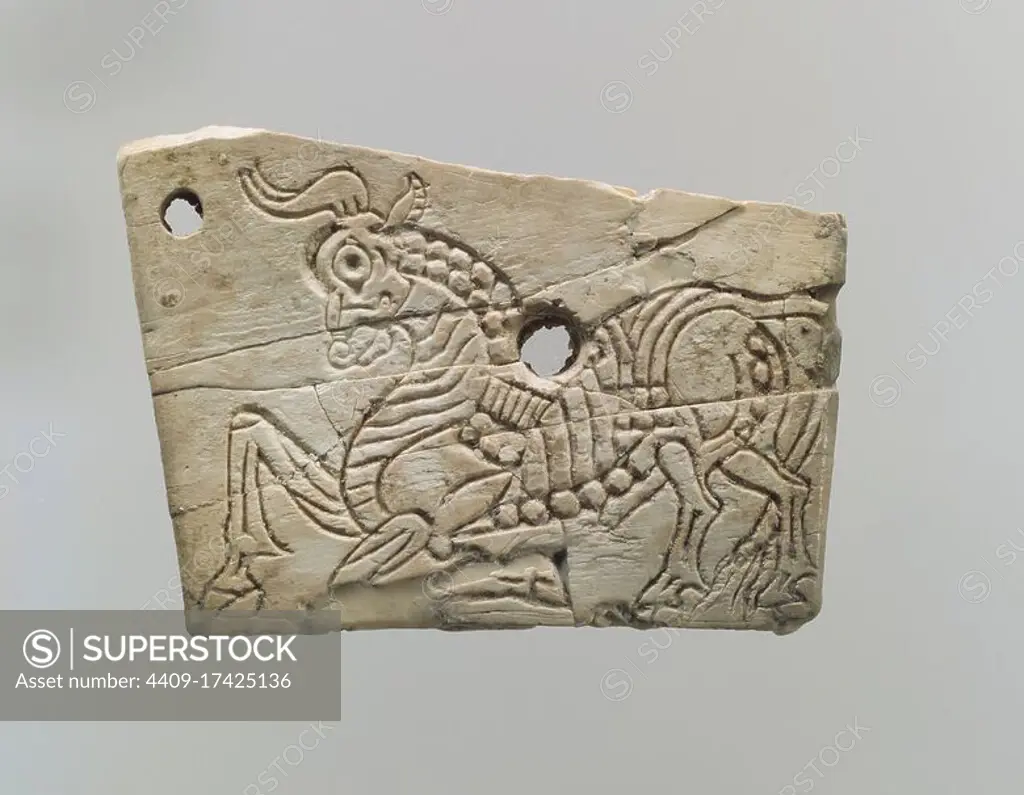
SuperStock offers millions of photos, videos, and stock assets to creatives around the world. This image of Incised furniture plaque with a kneeling bull. Culture: Assyrian. Dimensions: 1.54 x 2.13 x 0.16 in. (3.91 x 5.41 x 0.41 cm). Date: ca. 9th-8th century B.C..This trapezoidal plaque was found in a room that has been identified as part of the royal residency at Fort Shalmaneser, a royal building at Nimrud that was probably used to store tribute and booty collected by the Assyrians while on military campaign. Ivories with incised decoration like this one have been attributed to an Assyrian style similar to the large reliefs lining the walls of the Northwest Palace. The kneeling bull depicted on this plaque, with its stylized musculature and elaborately incised anatomy, recalls the animals embroidered on the robes worn by the figures in the palace reliefs and can be compared with depictions of animals in glyptic art and glazed ceramics from the Neo-Assyrian period. Two dowel holes that pierce the plaque were probably used to fasten it to a frame or other backing that does not survive. At by Album/Metropolitan Museum of Art, NY/Album Archivo is available for licensing today.
Looking for a license?
Click here, and we'll help you find it! Questions? Just ask!
Click here, and we'll help you find it! Questions? Just ask!
DETAILS
Image Number: 4409-17425136Rights ManagedCredit Line:Album/Metropolitan Museum of Art, NY/Album Archivo/SuperStockCollection:Album Archivo Contributor:Album / Metropolitan Museum of Art, NY Model Release:NoProperty Release:NoResolution:4269×3314