Incense burner ca. 1530-40 Northern Italian, probably Padua Ancient authors mentioned the sanitary benefits of fumigation and the widespread ceremonial use of incense in the rites of various religions in many parts of the then-known world. The form of this incense burner seems to have been inspired by classical Roman funerary monuments or altars. Its sculptural body supports a container with arched openings for the release of fragrant smoke, crowned by a flamelike finial representing eternal fire. As sensuous appreciation for pleasant perfumes grew, their often-exotic origins sparked the curiosity of Europeans. Incense might have improved the intellectually stimulating ambience of a Kunstkammer, thus enhancing the visual appreciation of the variety of objects displayed therein.The incense burner is decorated with images of satyrs and sphinxes. Satyrs symbolized the mythological world of lust. They were lazy, lecherous, and misspent their time drinking and chasing nymphs, whereas sphinx
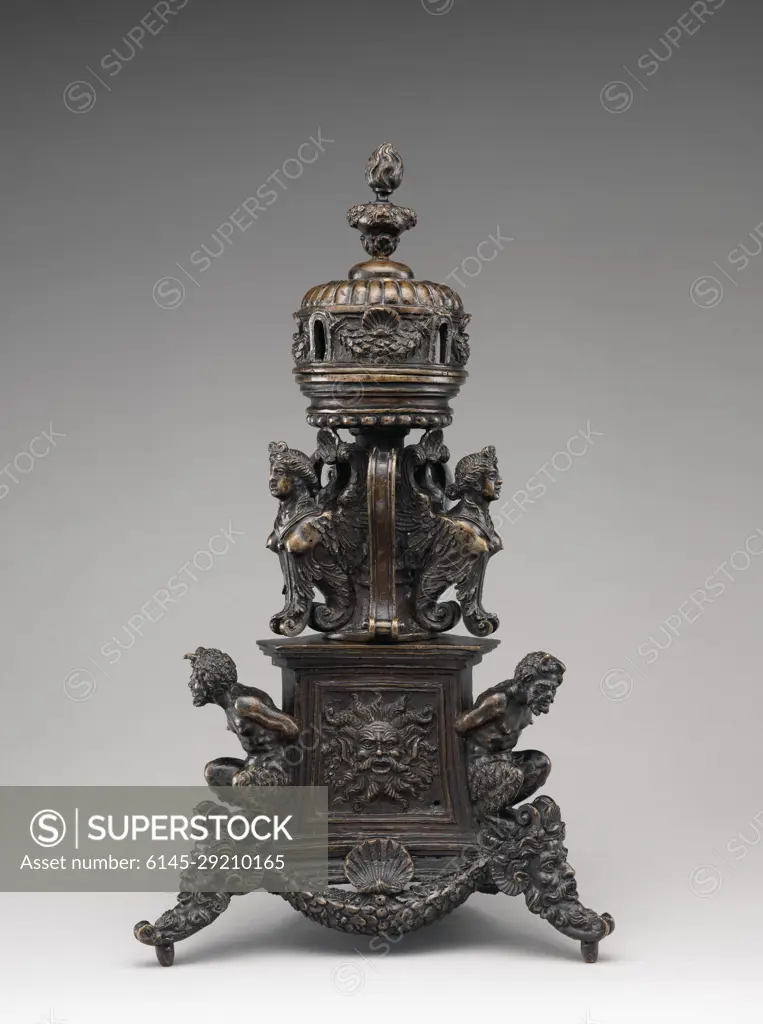
SuperStock offers millions of photos, videos, and stock assets to creatives around the world. This image of Incense burner ca. 1530-40 Northern Italian, probably Padua Ancient authors mentioned the sanitary benefits of fumigation and the widespread ceremonial use of incense in the rites of various religions in many parts of the then-known world. The form of this incense burner seems to have been inspired by classical Roman funerary monuments or altars. Its sculptural body supports a container with arched openings for the release of fragrant smoke, crowned by a flamelike finial representing eternal fire. As sensuous appreciation for pleasant perfumes grew, their often-exotic origins sparked the curiosity of Europeans. Incense might have improved the intellectually stimulating ambience of a Kunstkammer, thus enhancing the visual appreciation of the variety of objects displayed therein.The incense burner is decorated with images of satyrs and sphinxes. Satyrs symbolized the mythological world of lust. They were lazy, lecherous, and misspent their time drinking and chasing nymphs, whereas sphinx by Piemags/PL Photography Limited is available for licensing today.
Looking for a license?
Click here, and we'll help you find it! Questions? Just ask!
Click here, and we'll help you find it! Questions? Just ask!
DETAILS
Image Number: 6145-29210165Royalty FreeCredit Line:Piemags/PL Photography Limited/SuperStockCollection:PL Photography Limited Contributor:Piemags Model Release:NoProperty Release:NoResolution:2982×4000