Imported Luster Bowl 10th century This luster ware bowl represents just one of the ceramic types from Iraq that was found in Nishapur. Its true metallic sheenderived from a technique not known to Nishapuri pottersconfirms that it was made in Iraq, and its single color dates it to the tenth century. Together with other examples, this bowl is evidence of the active trade between the two regions once Nishapur was incorporated into the Abbasid empire in the eighth century. It does not appear that Nishapur ceramics were very popular in the west, though; they only seem to have traveled in the immediate vicinity of Samarqand, Herat, and Merv, and perhaps to Kirman in southeastern Iran.. Imported Luster Bowl. 10th century. Earthenware; luster-painted on an opaque white glaze. Made in Iraq. Excavated in Iran, Nishapur. Ceramics
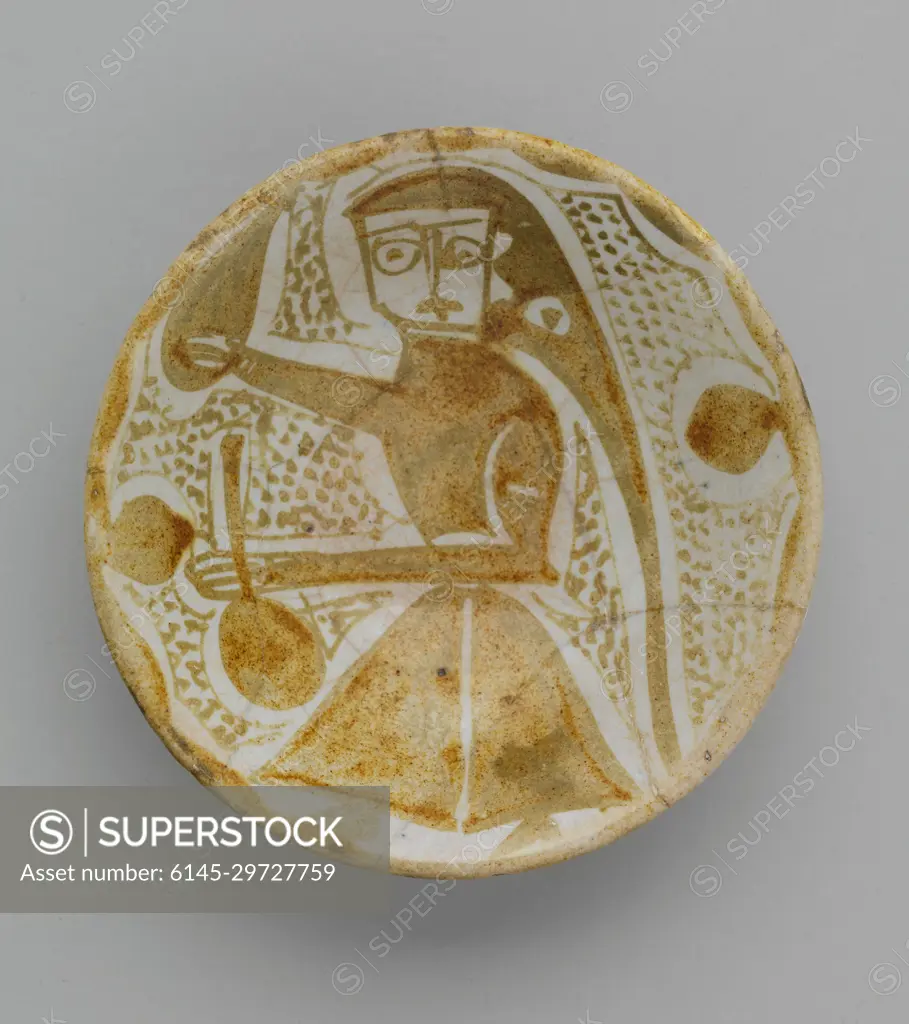
SuperStock offers millions of photos, videos, and stock assets to creatives around the world. This image of Imported Luster Bowl 10th century This luster ware bowl represents just one of the ceramic types from Iraq that was found in Nishapur. Its true metallic sheenderived from a technique not known to Nishapuri pottersconfirms that it was made in Iraq, and its single color dates it to the tenth century. Together with other examples, this bowl is evidence of the active trade between the two regions once Nishapur was incorporated into the Abbasid empire in the eighth century. It does not appear that Nishapur ceramics were very popular in the west, though; they only seem to have traveled in the immediate vicinity of Samarqand, Herat, and Merv, and perhaps to Kirman in southeastern Iran.. Imported Luster Bowl. 10th century. Earthenware; luster-painted on an opaque white glaze. Made in Iraq. Excavated in Iran, Nishapur. Ceramics by Piemags/PL Photography Limited is available for licensing today.
Looking for a license?
Click here, and we'll help you find it! Questions? Just ask!
Click here, and we'll help you find it! Questions? Just ask!
DETAILS
Image Number: 6145-29727759Royalty FreeCredit Line:Piemags/PL Photography Limited/SuperStockCollection:PL Photography Limited Contributor:Piemags Model Release:NoProperty Release:NoResolution:3552×4000