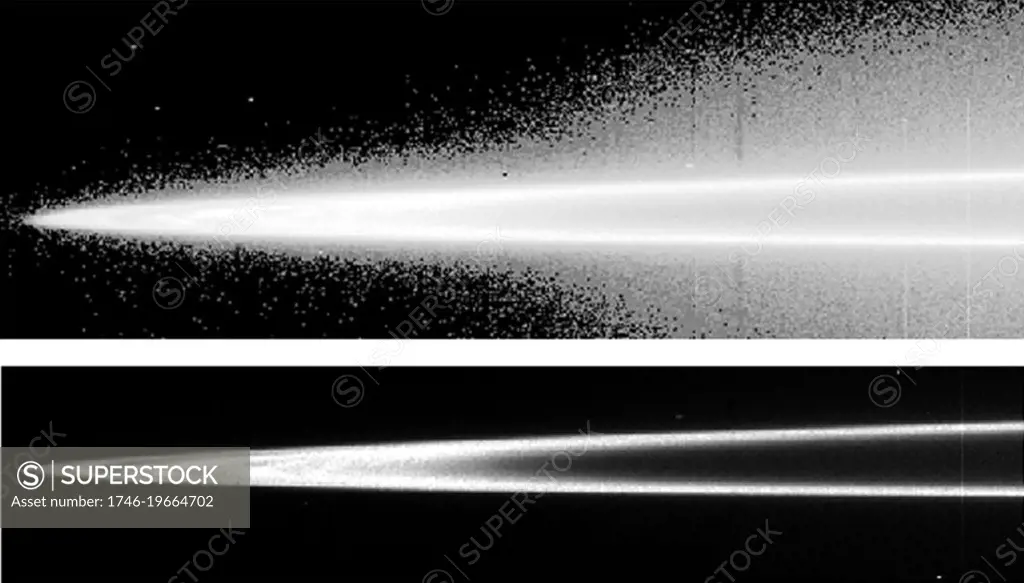
these images were taken through the clear filter of Galileos on-board solid state imaging camera system on November 9, 1996. The resolution is approximately 24 kilometres (14 miles) per picture element along Jupiters rings. Because the spacecraft was only about 0.5 degrees above the ring plane, the image is highly foreshortened vertically. The images were obtained when Galileo was in Jupiters shadow, peering back toward the Sun, when the ring was approximately 2.3 million kilometres (1.4 million miles) away. The view of Earths moon in the explanatory graphics was created from images returned by the Clementine lunar Orbiter, launched in 1994 by NASA and the Ballistic Missile Defence Organization.
SuperStock offers millions of photos, videos, and stock assets to creatives around the world. This image of these images were taken through the clear filter of Galileos on-board solid state imaging camera system on November 9, 1996. The resolution is approximately 24 kilometres (14 miles) per picture element along Jupiters rings. Because the spacecraft was only about 0.5 degrees above the ring plane, the image is highly foreshortened vertically. The images were obtained when Galileo was in Jupiters shadow, peering back toward the Sun, when the ring was approximately 2.3 million kilometres (1.4 million miles) away. The view of Earths moon in the explanatory graphics was created from images returned by the Clementine lunar Orbiter, launched in 1994 by NASA and the Ballistic Missile Defence Organization. by World History Archive/Image Asset Management is available for licensing today.
Looking for a license?
Click here, and we'll help you find it! Questions? Just ask!
Click here, and we'll help you find it! Questions? Just ask!
DETAILS
Image Number: 1746-19664702Rights ManagedCredit Line:World History Archive/Image Asset Management/SuperStockCollection:Image Asset Management Contributor:World History Archive Model Release:NoProperty Release:NoResolution:6981×3975