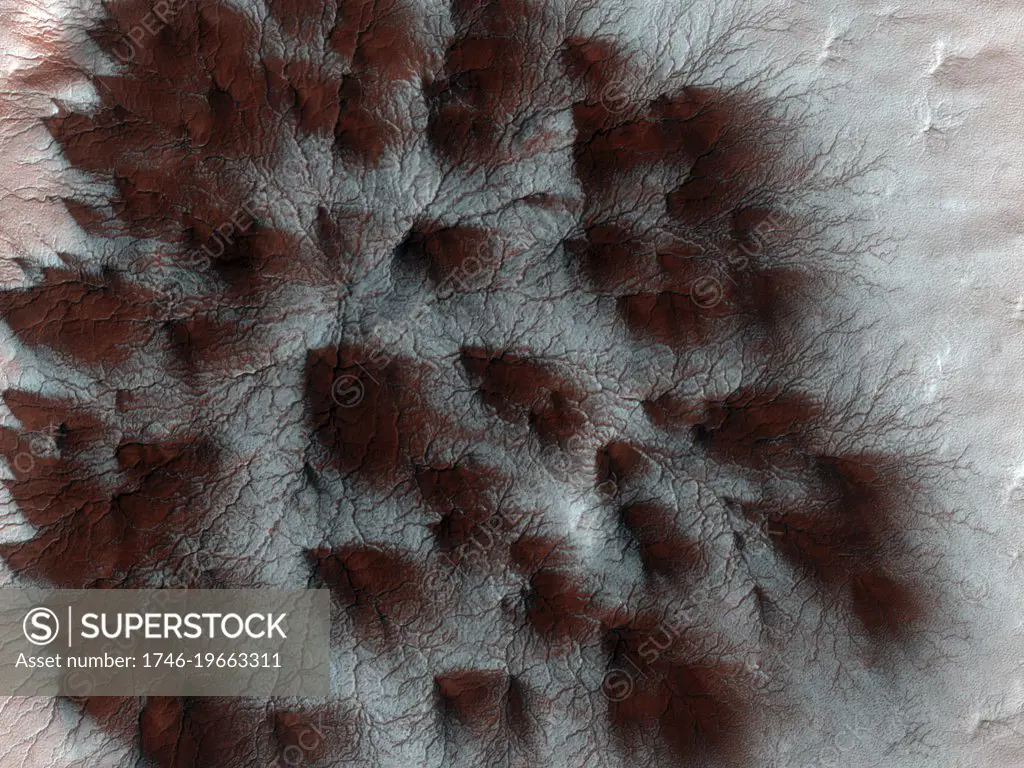
This image is of the carbon dioxide ice cap at the south pole of Mars. The pattern is formed by the ice vaporizing. Scientists think that as the ice cap melts from the bottom up, the carbon dioxide turns directly into gas. It flows beneath the ice to openings, eroding the ground below into a spiderlike network of troughs. The flowing gas also carries dust that escapes with it and settles into fan-shaped deposits on top of the ice. This image was taken in February 2009 by the High Resolution Imaging Science Experiment (HI RISE) camera on NASAs Mars Reconnaissance Orbiter. It covers an area around .6 miles across.
SuperStock offers millions of photos, videos, and stock assets to creatives around the world. This image of This image is of the carbon dioxide ice cap at the south pole of Mars. The pattern is formed by the ice vaporizing. Scientists think that as the ice cap melts from the bottom up, the carbon dioxide turns directly into gas. It flows beneath the ice to openings, eroding the ground below into a spiderlike network of troughs. The flowing gas also carries dust that escapes with it and settles into fan-shaped deposits on top of the ice. This image was taken in February 2009 by the High Resolution Imaging Science Experiment (HI RISE) camera on NASAs Mars Reconnaissance Orbiter. It covers an area around .6 miles across. by World History Archive/Image Asset Management is available for licensing today.
Looking for a license?
Click here, and we'll help you find it! Questions? Just ask!
Click here, and we'll help you find it! Questions? Just ask!
DETAILS
Image Number: 1746-19663311Rights ManagedCredit Line:World History Archive/Image Asset Management/SuperStockCollection:Image Asset Management Contributor:World History Archive Model Release:NoProperty Release:NoResolution:4900×3675