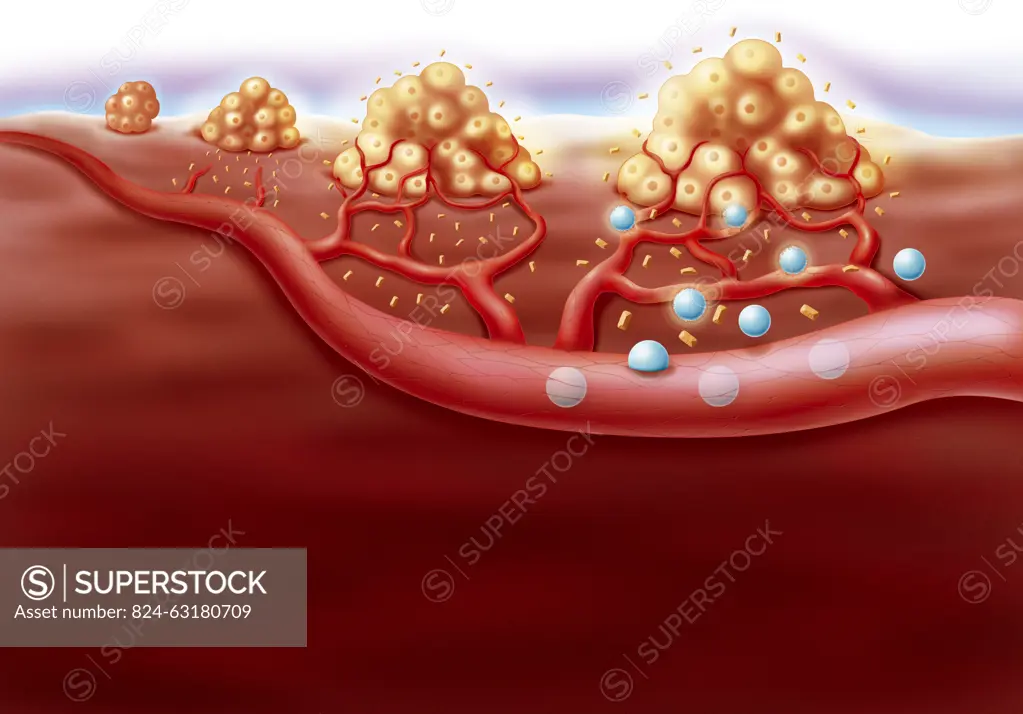
Illustration from left to right of angiogenesis. When a tumour forms it produces substances called VEGF (yellow) that stimulate the production of small vessels from neighbouring vessels by latching onto receptors (purple) located on the vessel wall. A new vascularisation surrounds the tumour and nourishes it, allowing it to grow. Anti-angiogenic drugs (blue) will stop this process by trapping the VEGF and preventing them from latching onto the receptors, which destroys the tumour vascularisation. The latter ends up shrinking and dying. This treatment improves the efficiency of chemotherapy and is always used with it.
SuperStock offers millions of photos, videos, and stock assets to creatives around the world. This image of Illustration from left to right of angiogenesis. When a tumour forms it produces substances called VEGF (yellow) that stimulate the production of small vessels from neighbouring vessels by latching onto receptors (purple) located on the vessel wall. A new vascularisation surrounds the tumour and nourishes it, allowing it to grow. Anti-angiogenic drugs (blue) will stop this process by trapping the VEGF and preventing them from latching onto the receptors, which destroys the tumour vascularisation. The latter ends up shrinking and dying. This treatment improves the efficiency of chemotherapy and is always used with it. by JACOPIN/BSIP is available for licensing today.
Looking for a license?
Click here, and we'll help you find it! Questions? Just ask!
Click here, and we'll help you find it! Questions? Just ask!
DETAILS
Image Number: 824-63180709Rights ManagedCredit Line:JACOPIN/BSIP/SuperStockCollection:BSIP Contributor:JACOPIN / BSIP Model Release:NoProperty Release:NoResolution:5079×3543