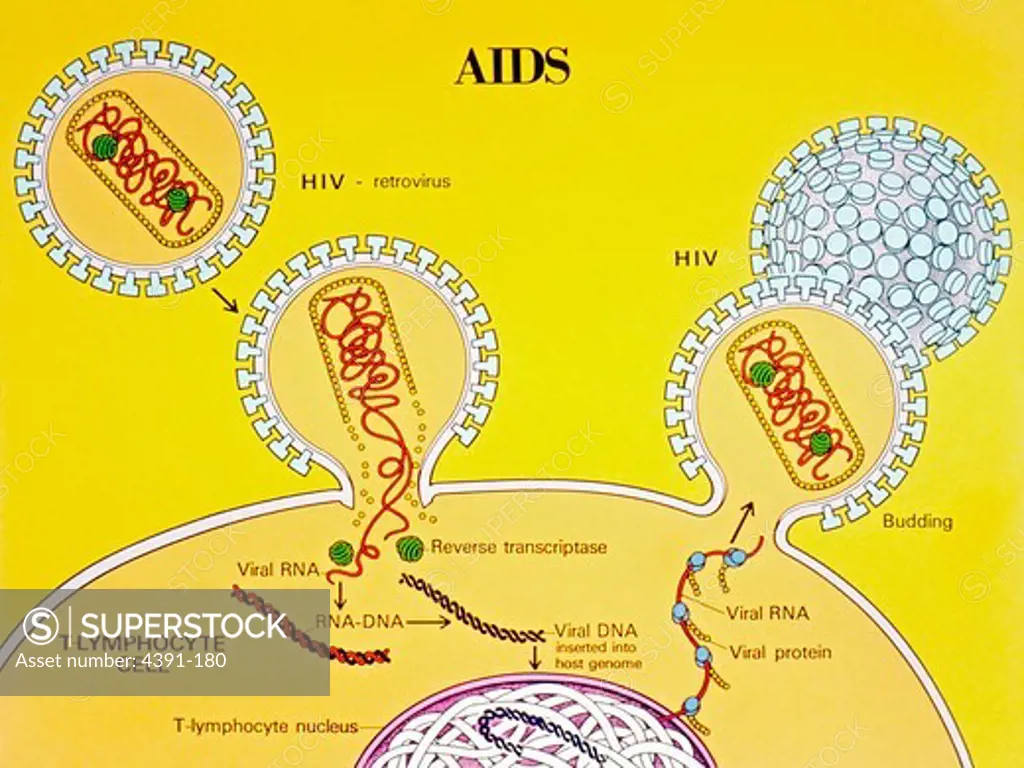
The human immunodeficiency virus (HIV-I) enters the T-lymphocyte where the virus loses its outer envelop, releasing its RNA and its reverse transcriptase. The reverse transcriptase builds a complimentary DNA strand from the viral RNA template. The DNA helix is inserted into the host genome. When this is transcribed by the infected cell, the new viral RNA and proteins are produced to form new viruses that then bud from the cell membrane, thus completing the life cycle of the virus. Illustration b
SuperStock offers millions of photos, videos, and stock assets to creatives around the world. This image of The human immunodeficiency virus (HIV-I) enters the T-lymphocyte where the virus loses its outer envelop, releasing its RNA and its reverse transcriptase. The reverse transcriptase builds a complimentary DNA strand from the viral RNA template. The DNA helix is inserted into the host genome. When this is transcribed by the infected cell, the new viral RNA and proteins are produced to form new viruses that then bud from the cell membrane, thus completing the life cycle of the virus. Illustration b by National Cancer Institute is available for licensing today.
Looking for a license?
Click here, and we'll help you find it! Questions? Just ask!
Click here, and we'll help you find it! Questions? Just ask!
DETAILS
Image Number: 4391-180Rights ManagedCredit Line:National Cancer Institute/SuperStockCollection:National Cancer Institute Model Release:NoProperty Release:NoResolution:5062×3796