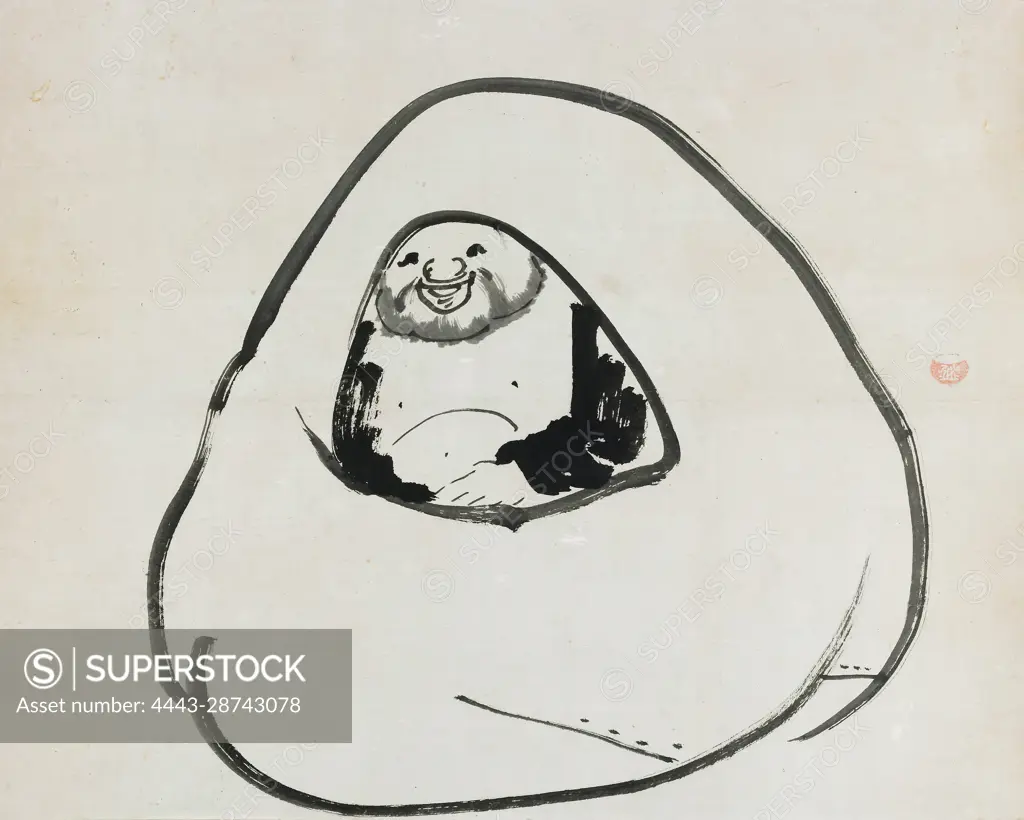
Hotei Within his Sack, 1800, Kōgan Gengei, Japanese, 1748 - 1821, 16 1/2 x 20 3/4 in. (41.91 x 52.71 cm) (image)48 3/4 x 21 15/16 in. (123.83 x 55.72 cm) (without roller), Ink on paper, Japan, 19th century, Budai (Jp. Hotei) grins broadly as he sits enveloped in his large bag. Budai was an eccentric Tang-dynasty (618-907) itinerant monk who was skilled at ink painting. His nickname, which literally translates to 'jute bag,' refers to the large traveling sack he used for carrying belongings and food as well as accepting alms. He is often depicted with a large belly and a broad smile to reflect his cheery nature. In Japan, he became part of the seven gods of fortune and was associated with wealth and prosperity. Within Chan (Jp. Zen) Buddhism, Budai was considered the incarnation of Maitreya, the present bodhisattva and future Buddha.
SuperStock offers millions of photos, videos, and stock assets to creatives around the world. This image of Hotei Within his Sack, 1800, Kōgan Gengei, Japanese, 1748 - 1821, 16 1/2 x 20 3/4 in. (41.91 x 52.71 cm) (image)48 3/4 x 21 15/16 in. (123.83 x 55.72 cm) (without roller), Ink on paper, Japan, 19th century, Budai (Jp. Hotei) grins broadly as he sits enveloped in his large bag. Budai was an eccentric Tang-dynasty (618-907) itinerant monk who was skilled at ink painting. His nickname, which literally translates to 'jute bag,' refers to the large traveling sack he used for carrying belongings and food as well as accepting alms. He is often depicted with a large belly and a broad smile to reflect his cheery nature. In Japan, he became part of the seven gods of fortune and was associated with wealth and prosperity. Within Chan (Jp. Zen) Buddhism, Budai was considered the incarnation of Maitreya, the present bodhisattva and future Buddha. by Artokoloro is available for licensing today.
Looking for a license?
Click here, and we'll help you find it! Questions? Just ask!
Click here, and we'll help you find it! Questions? Just ask!
DETAILS
Image Number: 4443-28743078Rights ManagedCredit Line:Artokoloro/SuperStockCollection:Artokoloro Model Release:NoProperty Release:NoResolution:4846×3881