Hotei after 1704 Ogata Krin Hotei (Chinese: Budai) is one of the most beloved characters of Zen Buddhism and is believed to be an avatar of Maitreya, the Buddha of the Future. Potbellied with a shaven head, this cheerful, blissful monk is said to have roamed the countryside in the late ninth to early tenth century in the area of Mount Siming, in southern China, carrying his few belongings in a patched cloth bag. Hotei was probably first portrayed in painting soon after his death and later entered the folklore of China and Japan as one of the Seven Gods of Good Fortune (Shichi fukujin). In his ink paintings of august East Asian mythological and historical personages, Ogata Krin often portrayed the seven gods in a more playful aspect, as seen here.. Hotei. Ogata Krin (Japanese, 1658-1716). Japan. after 1704. Hanging scroll; ink on paper. Edo period (1615-1868). Paintings
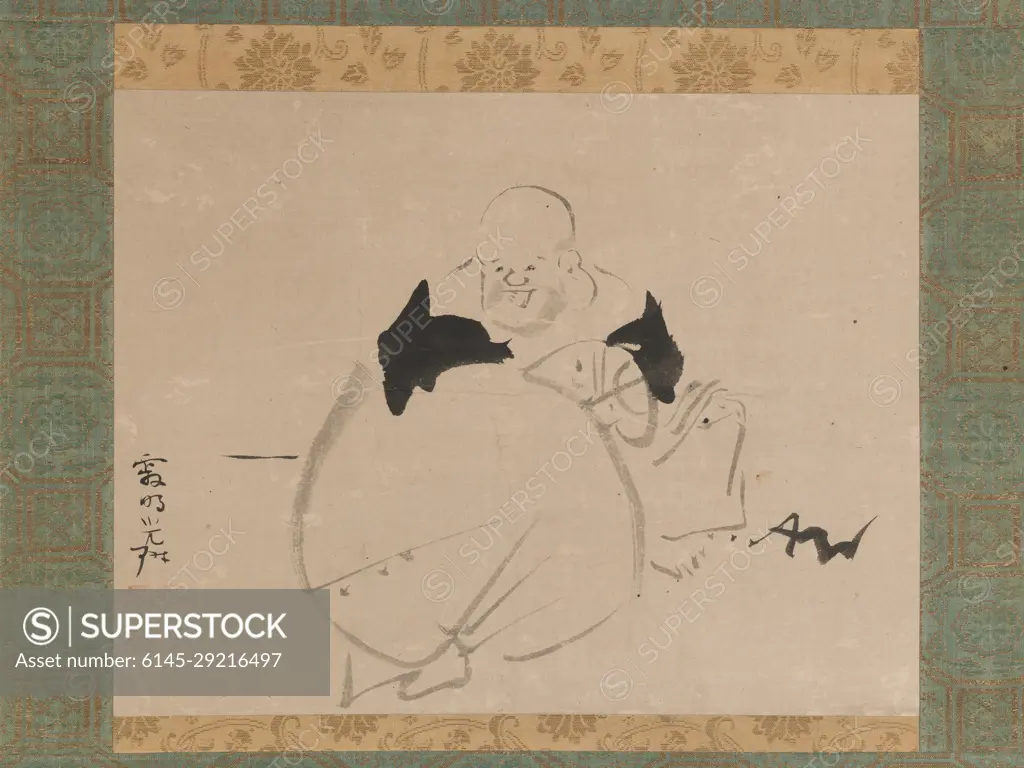
SuperStock offers millions of photos, videos, and stock assets to creatives around the world. This image of Hotei after 1704 Ogata Krin Hotei (Chinese: Budai) is one of the most beloved characters of Zen Buddhism and is believed to be an avatar of Maitreya, the Buddha of the Future. Potbellied with a shaven head, this cheerful, blissful monk is said to have roamed the countryside in the late ninth to early tenth century in the area of Mount Siming, in southern China, carrying his few belongings in a patched cloth bag. Hotei was probably first portrayed in painting soon after his death and later entered the folklore of China and Japan as one of the Seven Gods of Good Fortune (Shichi fukujin). In his ink paintings of august East Asian mythological and historical personages, Ogata Krin often portrayed the seven gods in a more playful aspect, as seen here.. Hotei. Ogata Krin (Japanese, 1658-1716). Japan. after 1704. Hanging scroll; ink on paper. Edo period (1615-1868). Paintings by Piemags/PL Photography Limited is available for licensing today.
Looking for a license?
Click here, and we'll help you find it! Questions? Just ask!
Click here, and we'll help you find it! Questions? Just ask!
DETAILS
Image Number: 6145-29216497Royalty FreeCredit Line:Piemags/PL Photography Limited/SuperStockCollection:PL Photography Limited Contributor:Piemags Model Release:NoProperty Release:NoResolution:4000×3002