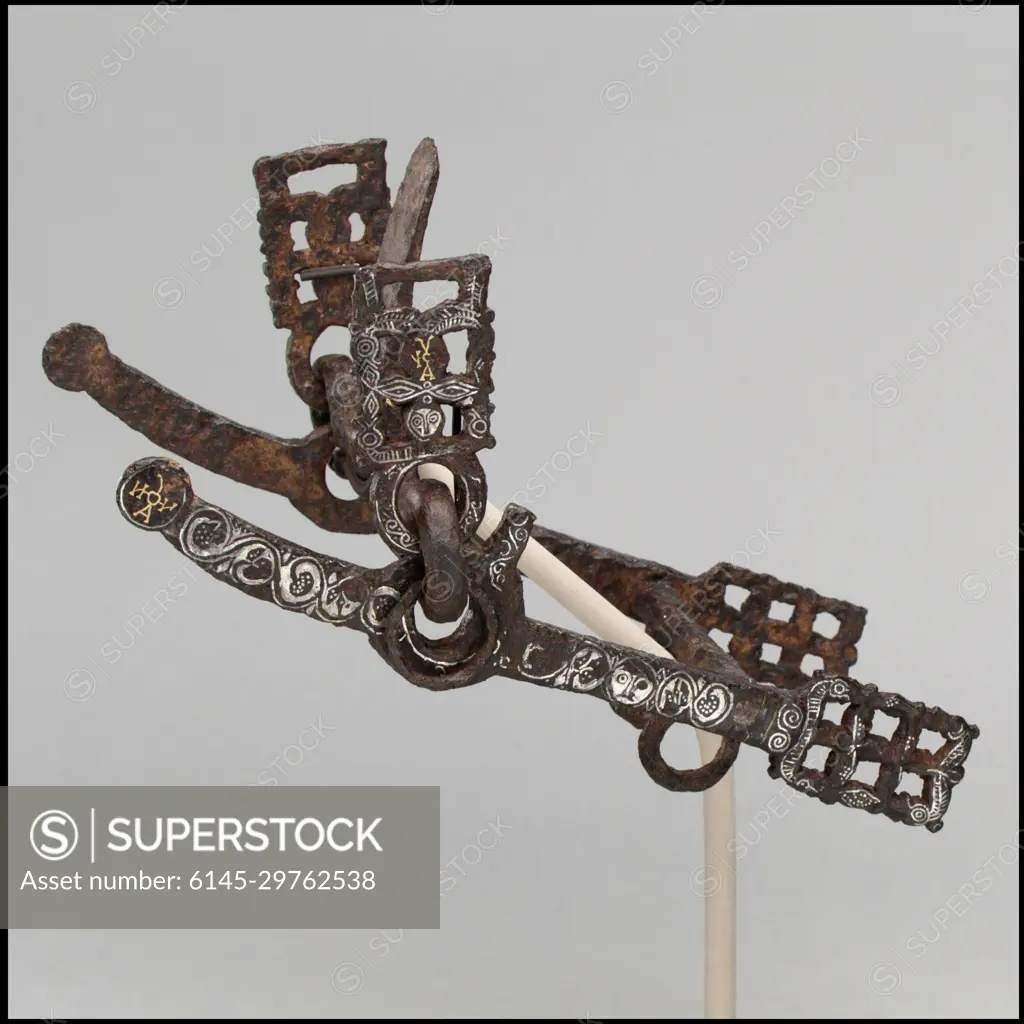
Horse Bit 7th-9th century Visigothic or Byzantine This elaborately decorated bit, resembling the spade bit used by some (Western-style) riders today, has a large projecting tongue, or port, that would have been inserted into the horses mouth. The bridle was attached to the moveable rectangular plaques, while the reins were strung through the rings on the straight bar, beneath the horses jaw. The severity of the bit implies both a well-schooled horse and a skilled rider; a misstep by either would inflict great pain on the beast. The rich inlaid decoration includes Greek monograms, human faces, animal heads, and vine scrolls. Perhaps copied from or inspired by Byzantine art, the Greek monogram likely indicated the importance of the horses owner.. Horse Bit. Visigothic or Byzantine. 7th-9th century. Iron inlaid with copper alloy, gold, and silver. Made in Andalusia, Spain. Metalwork-Iron
SuperStock offers millions of photos, videos, and stock assets to creatives around the world. This image of Horse Bit 7th-9th century Visigothic or Byzantine This elaborately decorated bit, resembling the spade bit used by some (Western-style) riders today, has a large projecting tongue, or port, that would have been inserted into the horses mouth. The bridle was attached to the moveable rectangular plaques, while the reins were strung through the rings on the straight bar, beneath the horses jaw. The severity of the bit implies both a well-schooled horse and a skilled rider; a misstep by either would inflict great pain on the beast. The rich inlaid decoration includes Greek monograms, human faces, animal heads, and vine scrolls. Perhaps copied from or inspired by Byzantine art, the Greek monogram likely indicated the importance of the horses owner.. Horse Bit. Visigothic or Byzantine. 7th-9th century. Iron inlaid with copper alloy, gold, and silver. Made in Andalusia, Spain. Metalwork-Iron by Piemags/PL Photography Limited is available for licensing today.
Looking for a license?
Click here, and we'll help you find it! Questions? Just ask!
Click here, and we'll help you find it! Questions? Just ask!
DETAILS
Image Number: 6145-29762538Royalty FreeCredit Line:Piemags/PL Photography Limited/SuperStockCollection:PL Photography Limited Contributor:Piemags Model Release:NoProperty Release:NoResolution:2048×2048