Hollow-Base Projectile Point ca. 7,000-5,000 B.C. Neolithic The Paleolithic Period covers the thousands of years during which hunters and gatherers followed herds of wild animals as they moved through the Nile Valley and the western desert's oases. The Lower Paleolithic, beginning about 300,000 B.C., saw the first human occupation in Egypt. At that time the most distinctive tool was the Acheulian hand ax (a core tool). No skeletal material has been found in Egypt, but similar hand axes from elsewhere belonged to people known as Homo erectus. Flake tools, especially those showing the Levallois technique, and not core tools, characterize the Middle Paleolithic Period (90,000-35,000 B.C.). A number of industries, each with slightly different tool kits, may be noted. By 35,000 B.C. modern humans occupied Egypt. The Upper Paleolithic (ca. 35,000-6900 B.C.) tool kit consisted largely of blades, thin strips of flint knapped from a core and fashioned into a variety of tools.Flint, a silica min
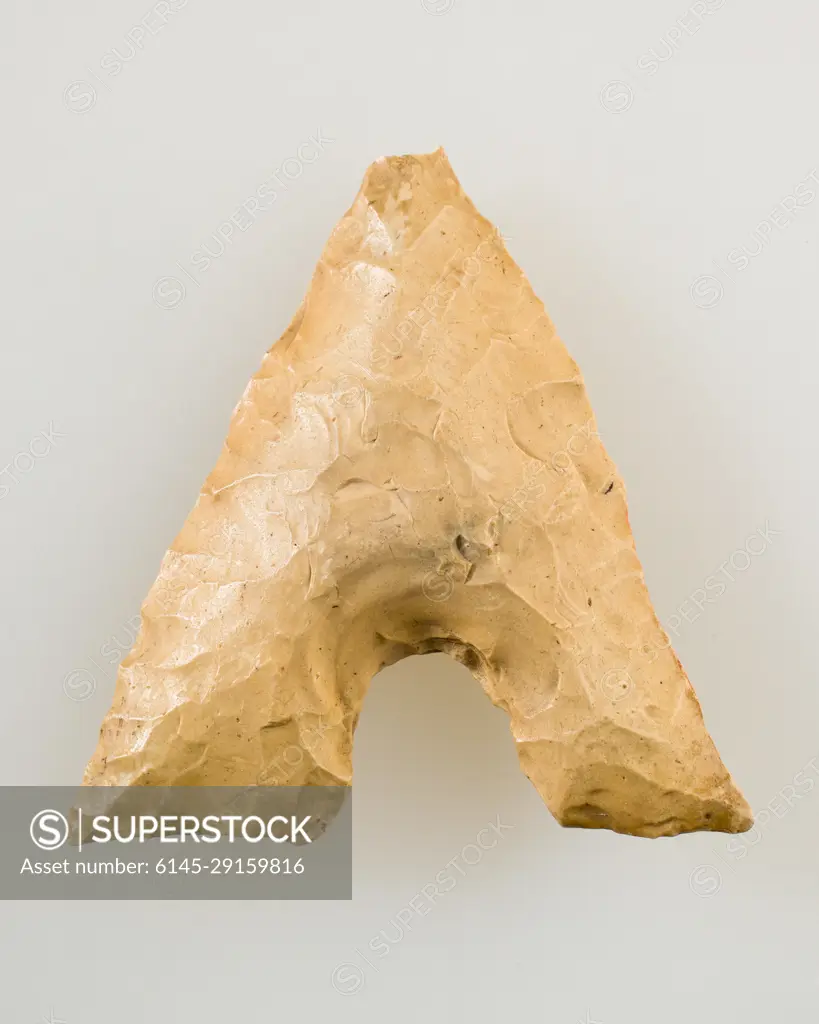
SuperStock offers millions of photos, videos, and stock assets to creatives around the world. This image of Hollow-Base Projectile Point ca. 7,000-5,000 B.C. Neolithic The Paleolithic Period covers the thousands of years during which hunters and gatherers followed herds of wild animals as they moved through the Nile Valley and the western desert's oases. The Lower Paleolithic, beginning about 300,000 B.C., saw the first human occupation in Egypt. At that time the most distinctive tool was the Acheulian hand ax (a core tool). No skeletal material has been found in Egypt, but similar hand axes from elsewhere belonged to people known as Homo erectus. Flake tools, especially those showing the Levallois technique, and not core tools, characterize the Middle Paleolithic Period (90,000-35,000 B.C.). A number of industries, each with slightly different tool kits, may be noted. By 35,000 B.C. modern humans occupied Egypt. The Upper Paleolithic (ca. 35,000-6900 B.C.) tool kit consisted largely of blades, thin strips of flint knapped from a core and fashioned into a variety of tools.Flint, a silica min by Piemags/PL Photography Limited is available for licensing today.
Looking for a license?
Click here, and we'll help you find it! Questions? Just ask!
Click here, and we'll help you find it! Questions? Just ask!
DETAILS
Image Number: 6145-29159816Royalty FreeCredit Line:Piemags/PL Photography Limited/SuperStockCollection:PL Photography Limited Contributor:Piemags Model Release:NoProperty Release:NoResolution:1600×2000