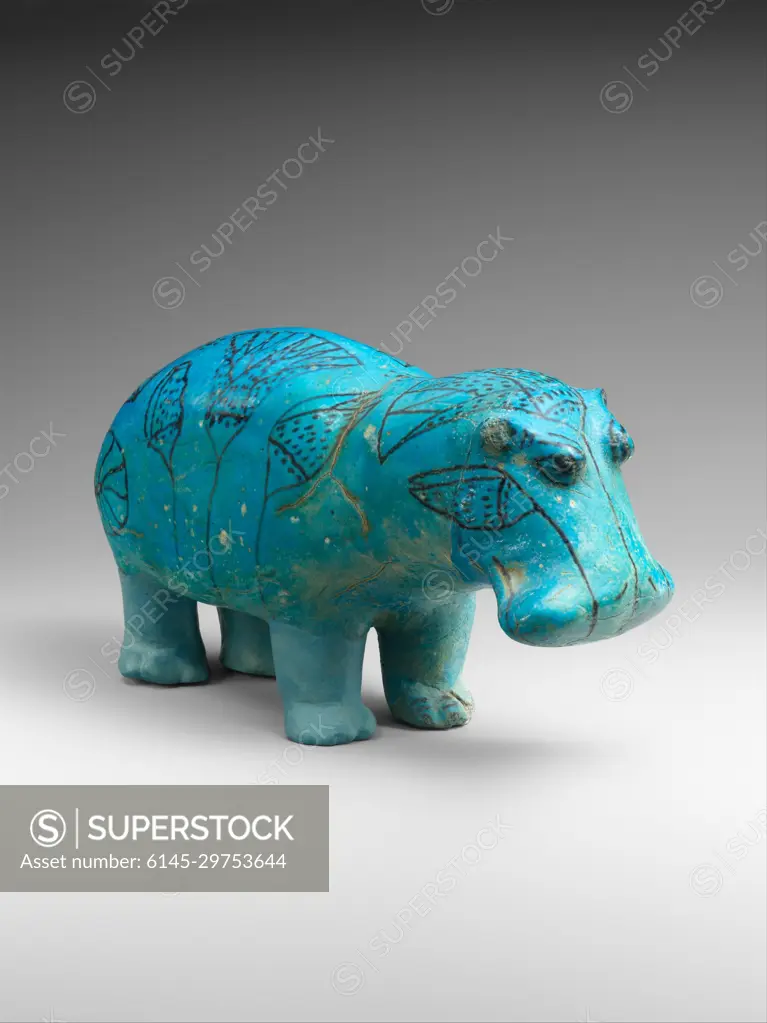
Hippopotamus ("William") ca. 1961-1878 B.C. Middle Kingdom This statuette of a hippopotamus (popularly called "William") was molded in faience, a ceramic material made of ground quartz. Beneath the blue glaze, the body was painted with lotuses. These river plants depict the marshes in which the animal lived, but at the same time their flowers also symbolize regeneration and rebirth as they close every night and open again in the morning.The seemingly benign appearance that this figurine presents is deceptive. To the ancient Egyptians, the hippopotamus was one of the most dangerous animals in their world. The huge creatures were a hazard for small fishing boats and other rivercraft. The beast might also be encountered on the waterways in the journey to the afterlife. As such, the hippopotamus was a force of nature that needed to be propitiated and controlled, both in this life and the next. This example was one of a pair found in a shaft associated with the tomb chapel of the steward Se
SuperStock offers millions of photos, videos, and stock assets to creatives around the world. This image of Hippopotamus ("William") ca. 1961-1878 B.C. Middle Kingdom This statuette of a hippopotamus (popularly called "William") was molded in faience, a ceramic material made of ground quartz. Beneath the blue glaze, the body was painted with lotuses. These river plants depict the marshes in which the animal lived, but at the same time their flowers also symbolize regeneration and rebirth as they close every night and open again in the morning.The seemingly benign appearance that this figurine presents is deceptive. To the ancient Egyptians, the hippopotamus was one of the most dangerous animals in their world. The huge creatures were a hazard for small fishing boats and other rivercraft. The beast might also be encountered on the waterways in the journey to the afterlife. As such, the hippopotamus was a force of nature that needed to be propitiated and controlled, both in this life and the next. This example was one of a pair found in a shaft associated with the tomb chapel of the steward Se by Piemags/PL Photography Limited is available for licensing today.
Looking for a license?
Click here, and we'll help you find it! Questions? Just ask!
Click here, and we'll help you find it! Questions? Just ask!
DETAILS
Image Number: 6145-29753644Royalty FreeCredit Line:Piemags/PL Photography Limited/SuperStockCollection:PL Photography Limited Contributor:Piemags Model Release:NoProperty Release:NoResolution:2899×3870