Helmet Crest (Maidate) 18th-19th century Japanese The symbolism conveyed by a representational helmet and face mask could be enhanced by the use of a detachable crest (maidate), usually mounted on the front of the helmet just above the brim. Crests are sometimes made of iron, but more frequently they combine delicate materials such as leather, paper-mché, or gilt and lacquered wood. Crest designs of the Edo period include a wide range of family heraldry (mon), naturalistic renditions of plants and animals, and sacred imagery. These same decorative themes are also featured on embossed iron breastplates of the period. The relatively broad surface of a breastplate afforded a skilled armorer ample room to display his talents as a metalworker and his inventiveness as an artist.This crest and breastplate (36.25.347) share a common sacred theme: the invocation of the war god Hachiman through the display of the characters representing his name. Hachiman, one of the principal Shintō deities (k
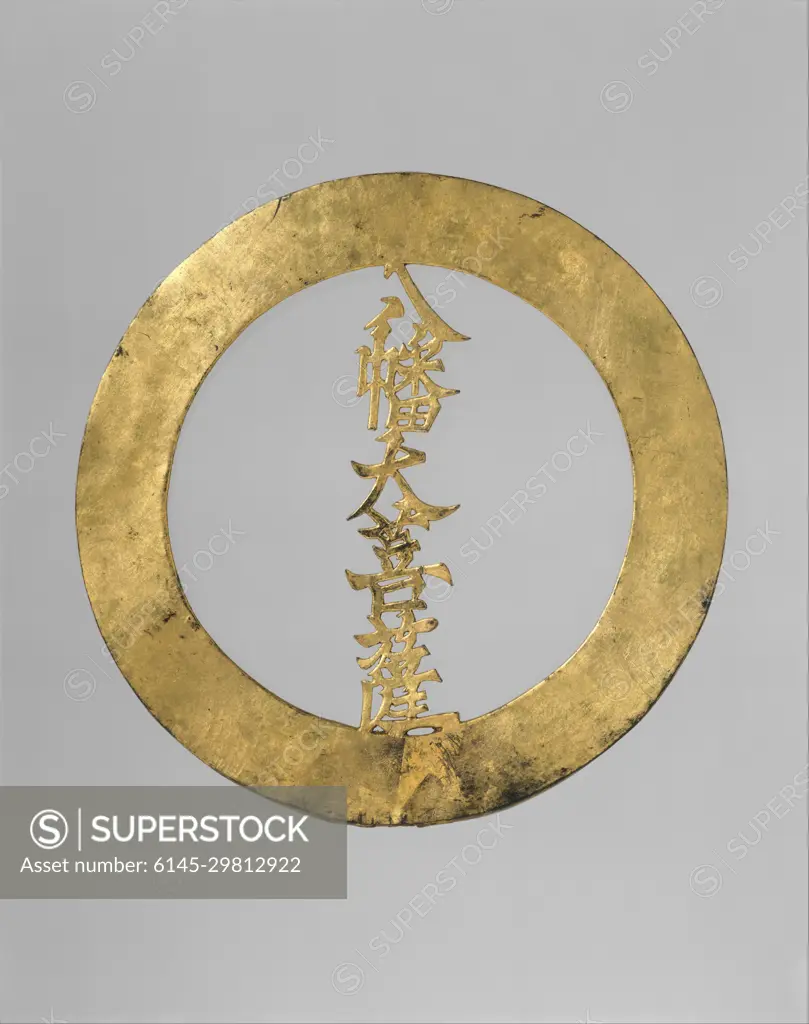
SuperStock offers millions of photos, videos, and stock assets to creatives around the world. This image of Helmet Crest (Maidate) 18th-19th century Japanese The symbolism conveyed by a representational helmet and face mask could be enhanced by the use of a detachable crest (maidate), usually mounted on the front of the helmet just above the brim. Crests are sometimes made of iron, but more frequently they combine delicate materials such as leather, paper-mché, or gilt and lacquered wood. Crest designs of the Edo period include a wide range of family heraldry (mon), naturalistic renditions of plants and animals, and sacred imagery. These same decorative themes are also featured on embossed iron breastplates of the period. The relatively broad surface of a breastplate afforded a skilled armorer ample room to display his talents as a metalworker and his inventiveness as an artist.This crest and breastplate (36.25.347) share a common sacred theme: the invocation of the war god Hachiman through the display of the characters representing his name. Hachiman, one of the principal Shintō deities (k by Piemags/PL Photography Limited is available for licensing today.
Looking for a license?
Click here, and we'll help you find it! Questions? Just ask!
Click here, and we'll help you find it! Questions? Just ask!
DETAILS
Image Number: 6145-29812922Royalty FreeCredit Line:Piemags/PL Photography Limited/SuperStockCollection:PL Photography Limited Contributor:Piemags Model Release:NoProperty Release:NoResolution:2944×3722