"Heartvine" ("Aoi") chapter from The Tale of Genji (Genji monogatari) 16th century Japan This scroll, with its engagingly childlike rendition of scenes from the ninth chapter of The Tale of Genji, is an example of a ko-e (small pictures”) handscroll, a format popular among amateur painters, including court ladies, during the Muromachi period. Scenes executed in a simplified version of the classic hakuby? (white drawing) method of monochrome painting alternate with sections of text. The compositional device known as fukinuki-yatai, or blown-away roof,” permits viewers to peer into several rooms of Prince Genji’s residence at once. Genji’s wife Aoi has just given birth to his son Y?giri, but she dies shortly thereafter, a victim of the jealous spirit of Genji’s former lover, the Rokuj? lady.. "Heartvine" ("Aoi") chapter from The Tale of Genji (Genji monogatari). Japan. 16th century. Handscroll; ink on paper. Muromachi period (1392-1573). Paintings
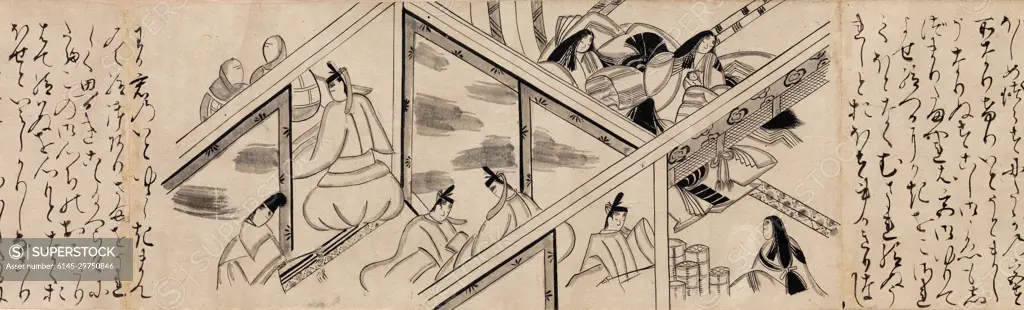
SuperStock offers millions of photos, videos, and stock assets to creatives around the world. This image of "Heartvine" ("Aoi") chapter from The Tale of Genji (Genji monogatari) 16th century Japan This scroll, with its engagingly childlike rendition of scenes from the ninth chapter of The Tale of Genji, is an example of a ko-e (small pictures”) handscroll, a format popular among amateur painters, including court ladies, during the Muromachi period. Scenes executed in a simplified version of the classic hakuby? (white drawing) method of monochrome painting alternate with sections of text. The compositional device known as fukinuki-yatai, or blown-away roof,” permits viewers to peer into several rooms of Prince Genji’s residence at once. Genji’s wife Aoi has just given birth to his son Y?giri, but she dies shortly thereafter, a victim of the jealous spirit of Genji’s former lover, the Rokuj? lady.. "Heartvine" ("Aoi") chapter from The Tale of Genji (Genji monogatari). Japan. 16th century. Handscroll; ink on paper. Muromachi period (1392-1573). Paintings by Piemags/PL Photography Limited is available for licensing today.
Looking for a license?
Click here, and we'll help you find it! Questions? Just ask!
Click here, and we'll help you find it! Questions? Just ask!
DETAILS
Image Number: 6145-29750846Royalty FreeCredit Line:Piemags/PL Photography Limited/SuperStockCollection:PL Photography Limited Contributor:Piemags Model Release:NoProperty Release:NoResolution:4000×1212